Arpita Akhanda
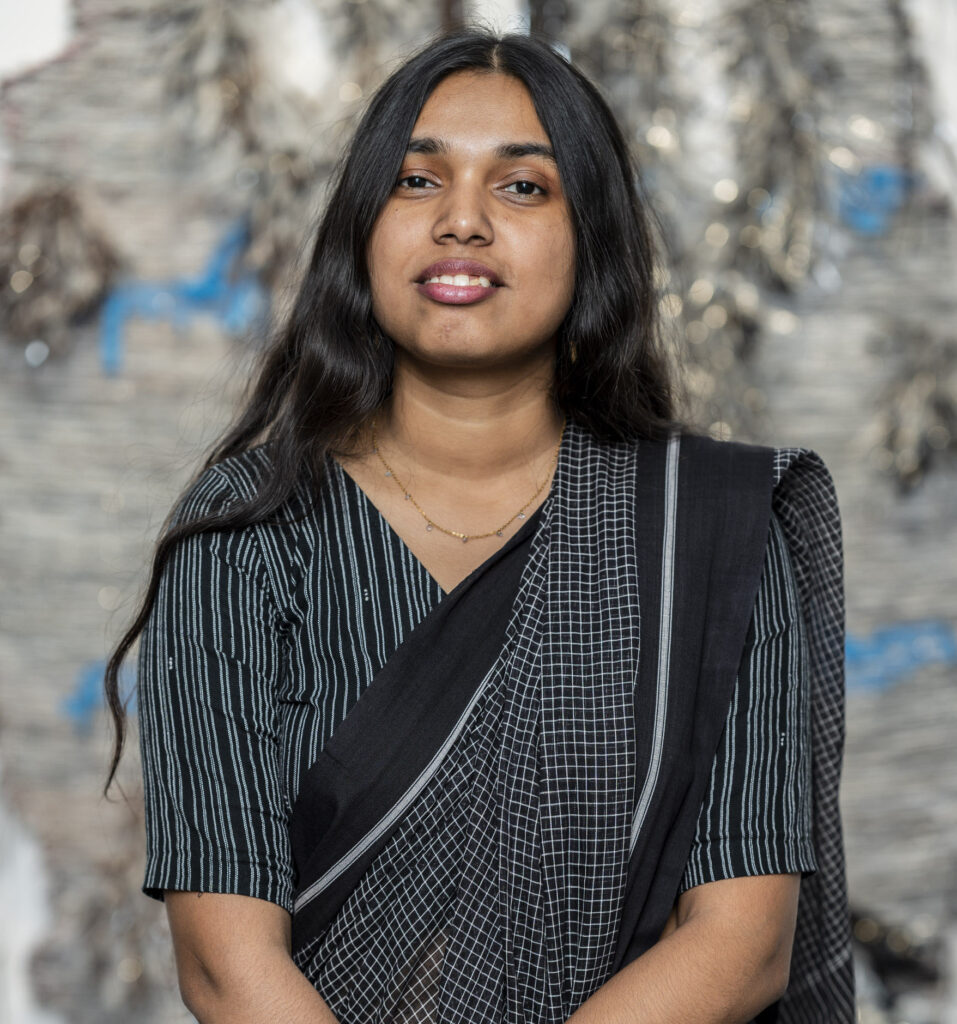
Born in 1992, Cuttack, India. Lives and works in Santiniketan, West Bengal.
2025 Jester Days, Jester (Genk, Belgium)
2025 Weaving water, open studio at Kyoto Art Center (Kyoto, Japan)
2025 Dialogues Across Time: Indian Contemporary and Folk Art, Indian Museum (Kolkata, India)
2025 Grand Prize Winner, The 2025 Sovereign Asian Art Prize (Hong Kong)
2024 Paanch, Cinci, Fünf, Wǔ, Cinque, Galerie Russi Klenner (Berlin)
[Residence Program] Jan 13, 2026〜Mar 25, 2026
Arpita Akhanda Official Website
Arpita Akhanda Official Instagram
Arpita Akhanda Official Facebook
Profile
Akhanda works across paper weaving, photography, performance, installation, drawing, and video to explore the body as a memory collector and a site of post-memorial reconstruction. Through metaphorical processes such as paper weaving, she intertwines the warp of inherited memory with the weft of contemporary experience to examine identity, displacement, and erasure. Her fragmented and obscured visual language evokes lost, silenced, and displaced narratives.
During the residency, she will investigate the relationship between water bodies and embodied memory. Fukuoka’s rivers—shaped by layered histories of migration and cultural exchange—offer a compelling site for this exploration. By weaving personal narratives researched during her stay with the riverine landscape, she aims to create work that bridges geographies, histories, and collective memory.
WINDS OF ARTIST IN RESIDENCE 2025 Memory, in Texture: Where the Imagined Holds the World Together
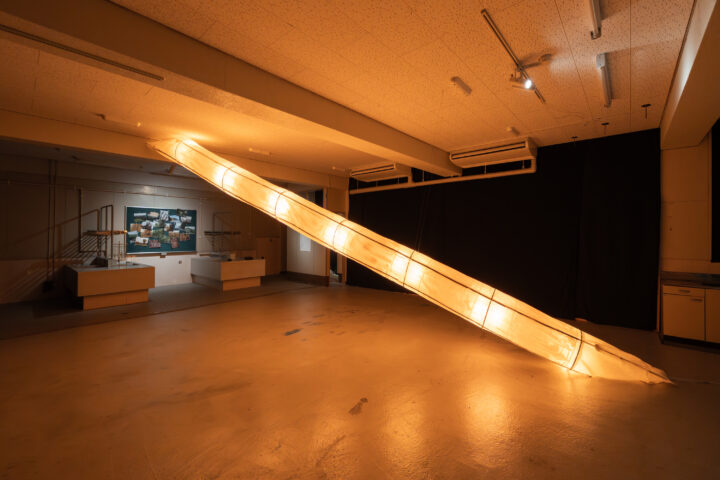
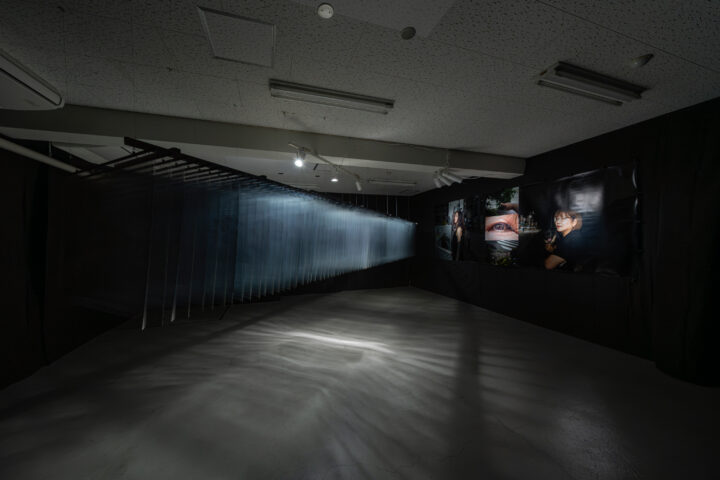
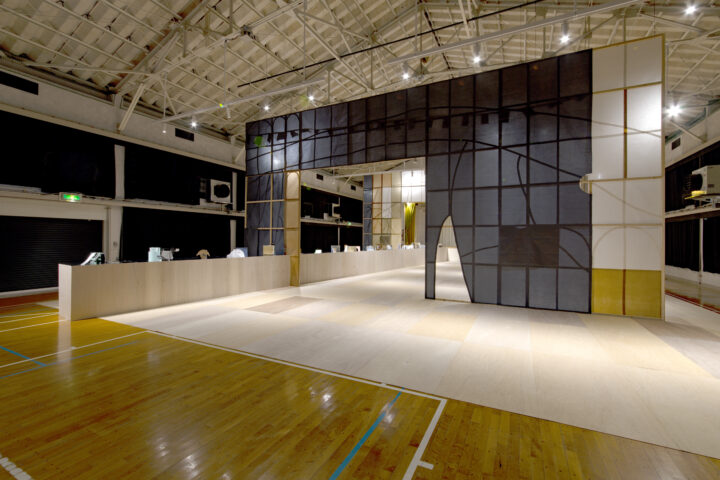
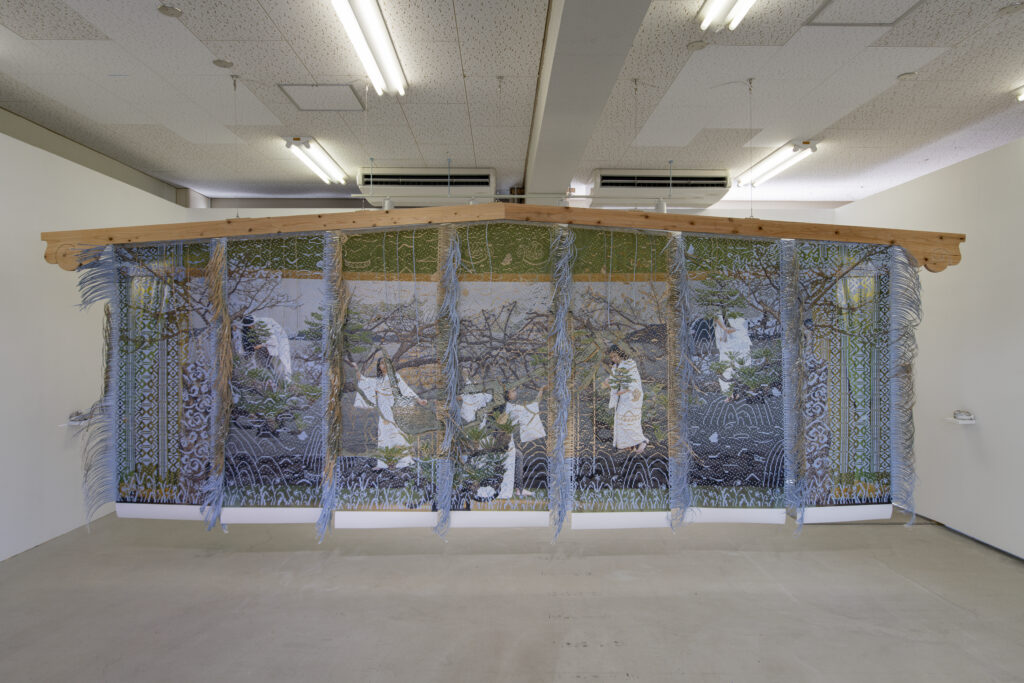 Hazama I, 2026 Photo by Nagano Satoshi
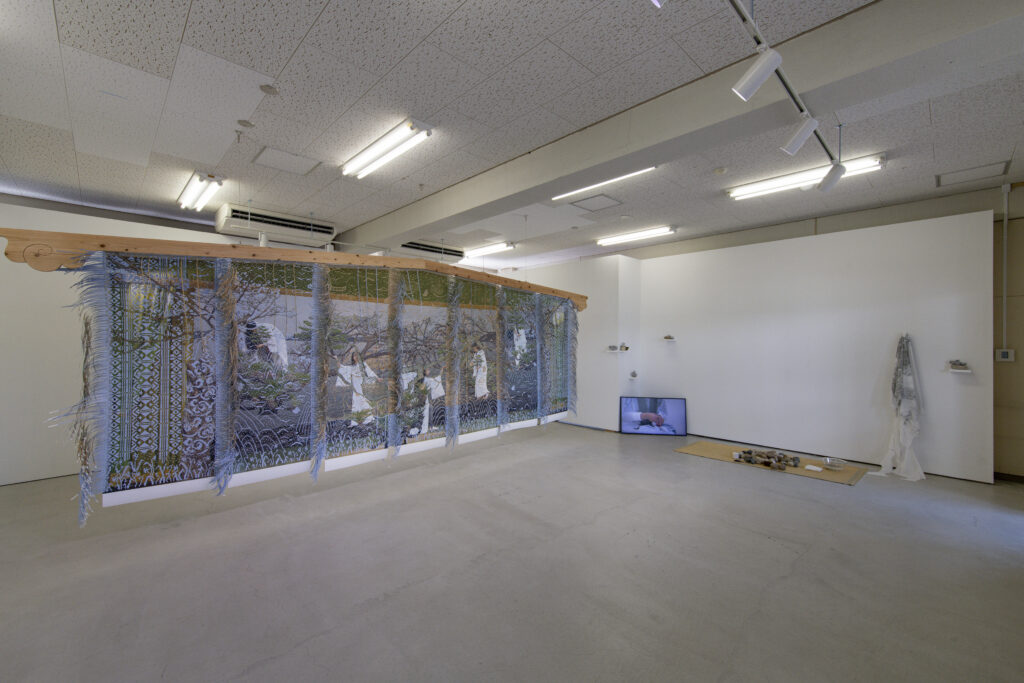 Hazama I, 2026 Photo by Nagano Satoshi
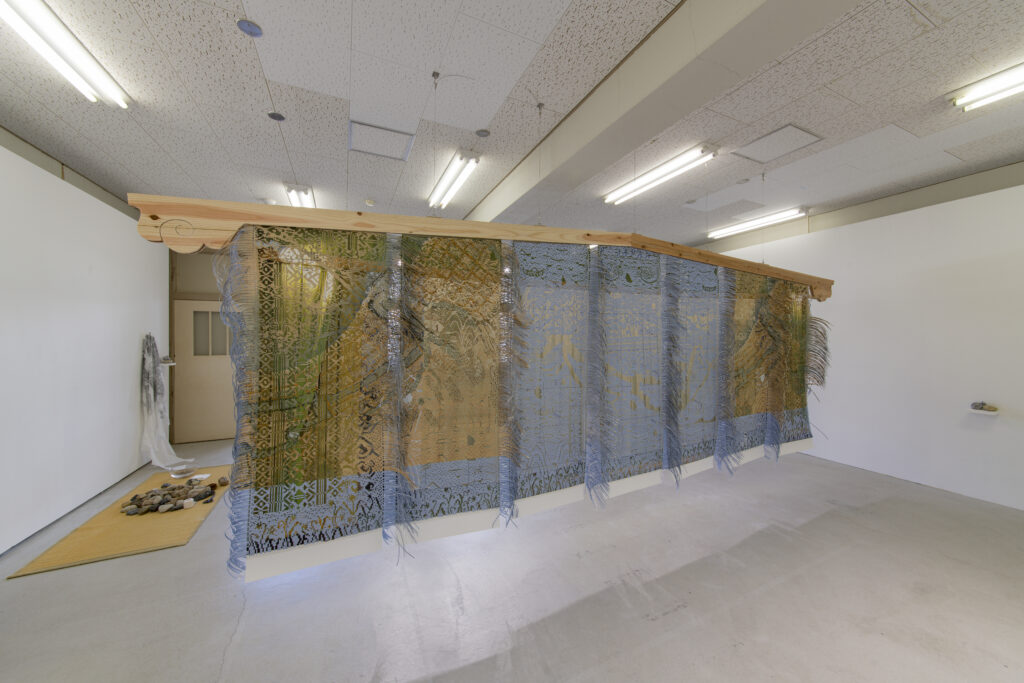 Hazama I, 2026 Photo by Nagano Satoshi
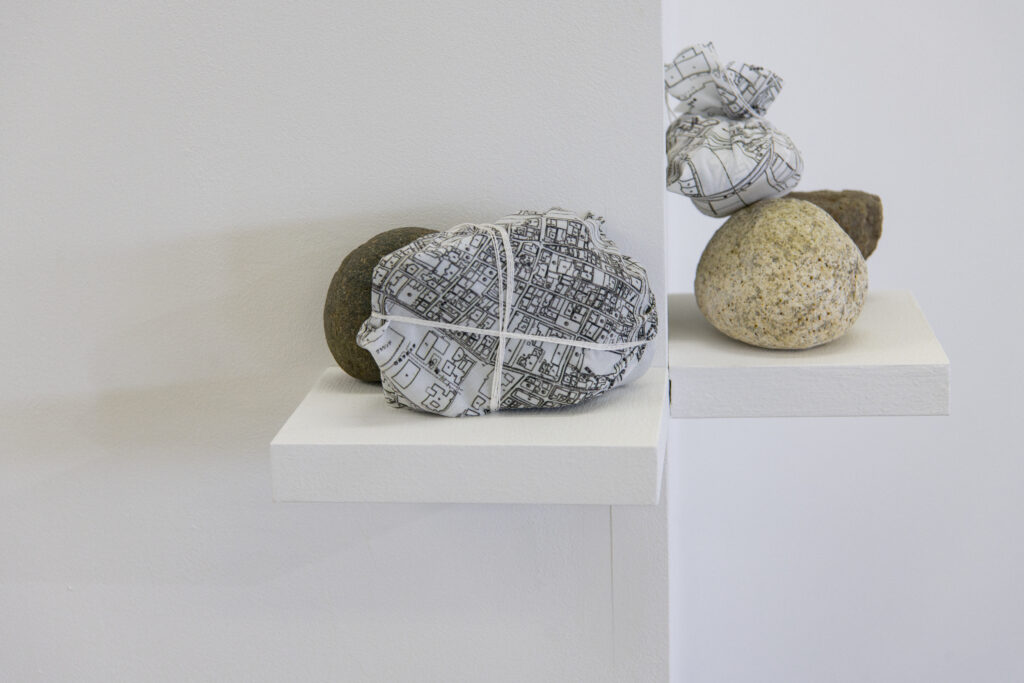 Hazama I, 2026 Photo by Nagano Satoshi
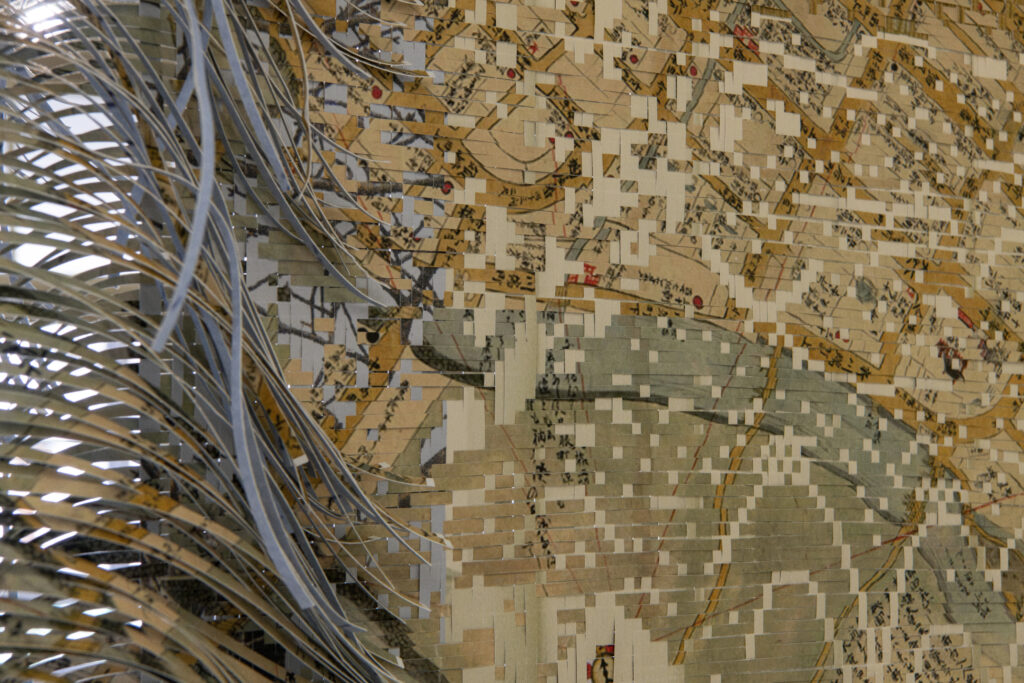 Hazama I, 2026 Photo by Nagano Satoshi
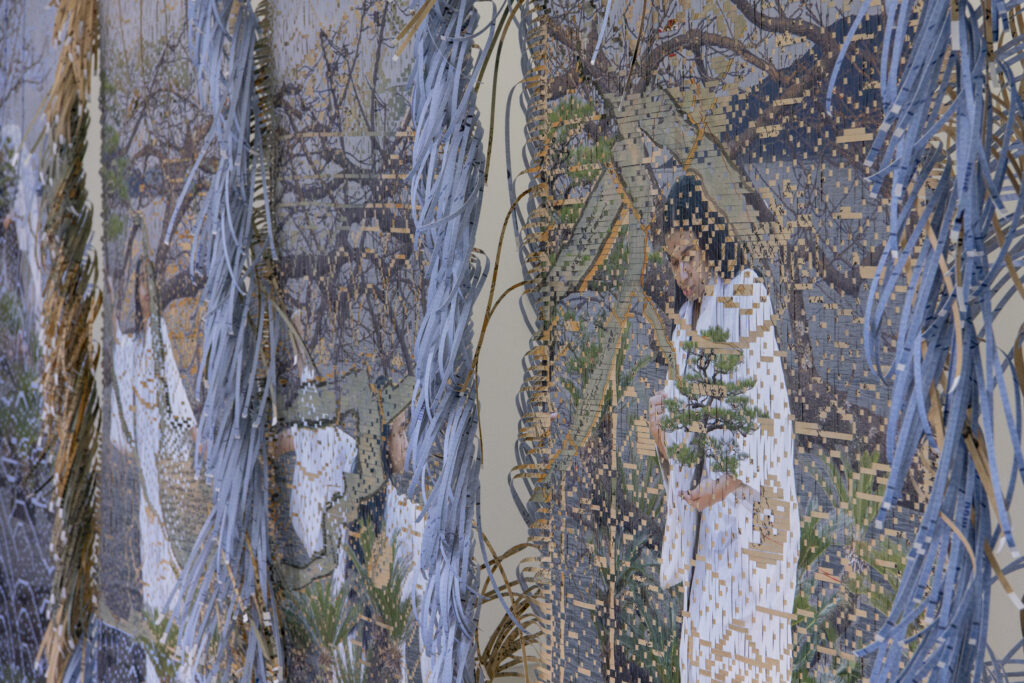 Hazama I, 2026 Photo by Nagano Satoshi
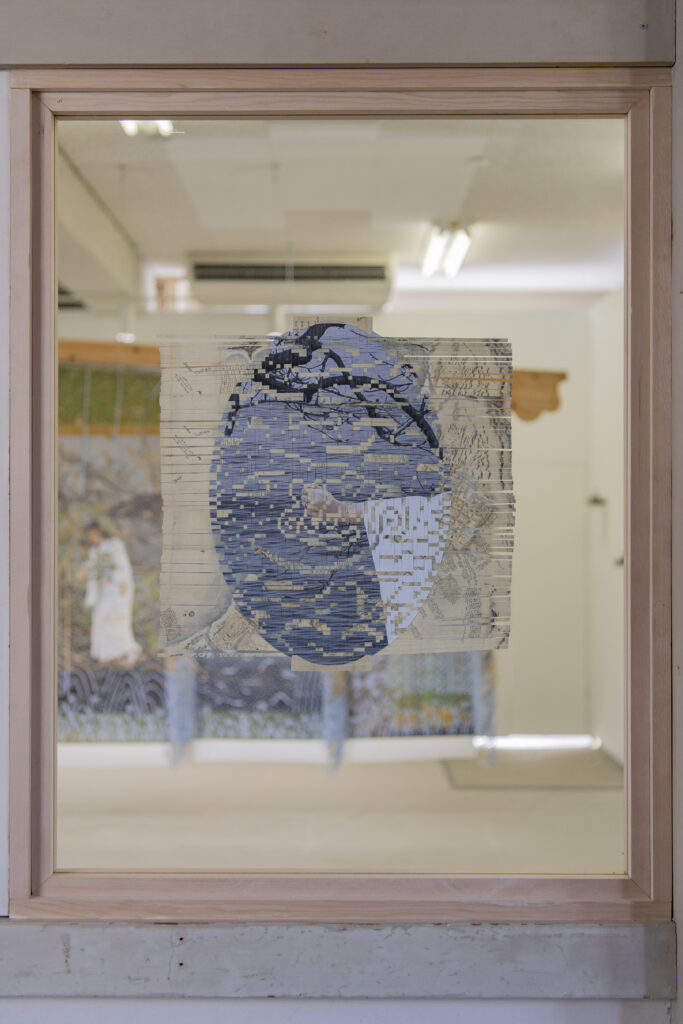 Hazama II, 2026 Photo by Nagano Satoshi
Interaction Diary
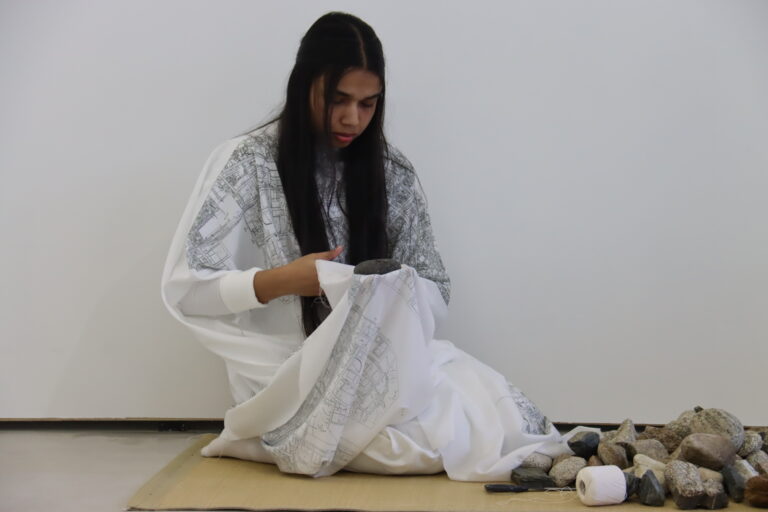
March 20 Performance Toki o Tsutsumu
During her performance, Akhanda cleaned the stones found in Mikasa River, wrapped them carefully in cloths printed with a city map of Fukuoka, and placed them on the shelves attached to the wall in the studio.
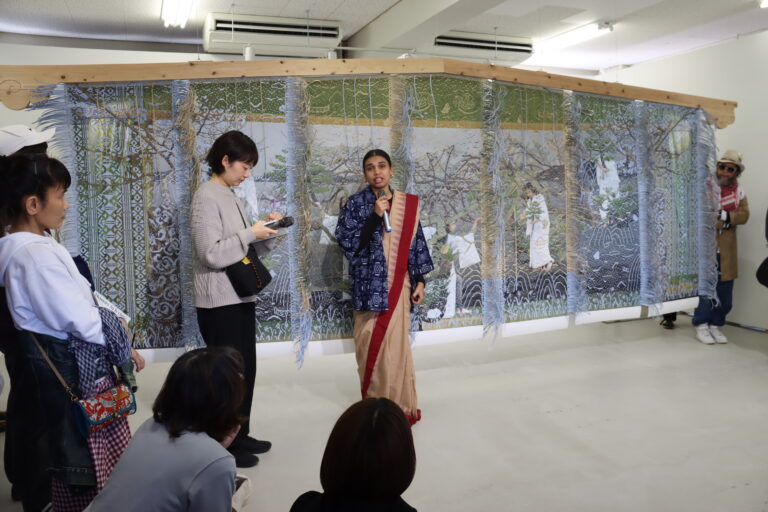
March 20 Artist Talk (Artist Cafe Fukuoka)
Akhanda shared stories of her research and art-making in Fukuoka and described her performance in front of her own artwork. She and the other three artists later gathered at the Community Space and gave reflections on their overall experiences in Fukuoka.
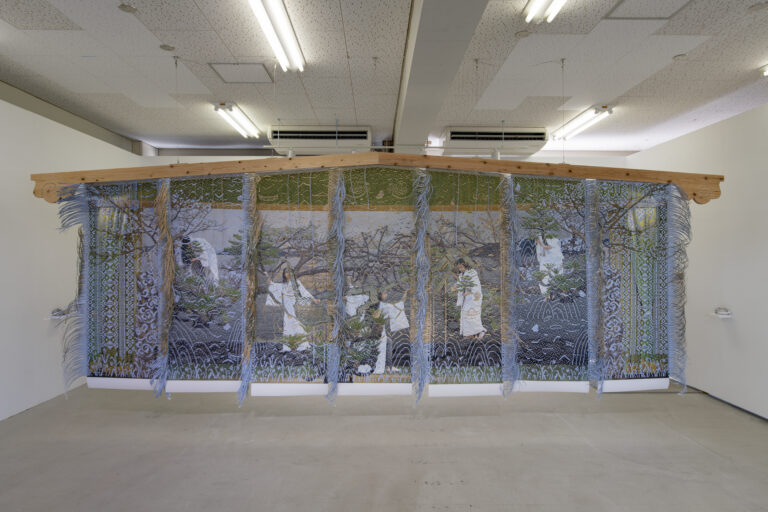
March 20 WINDS OF ARTIST IN RESIDENCE 2025 Memory, in Texture: Where the Imagined Holds the World Together (Artist Cafe Fukuoka)
Akhanda exhibited her works HazamaⅠand HazamaⅡ.
Photo by Nagano Satoshi
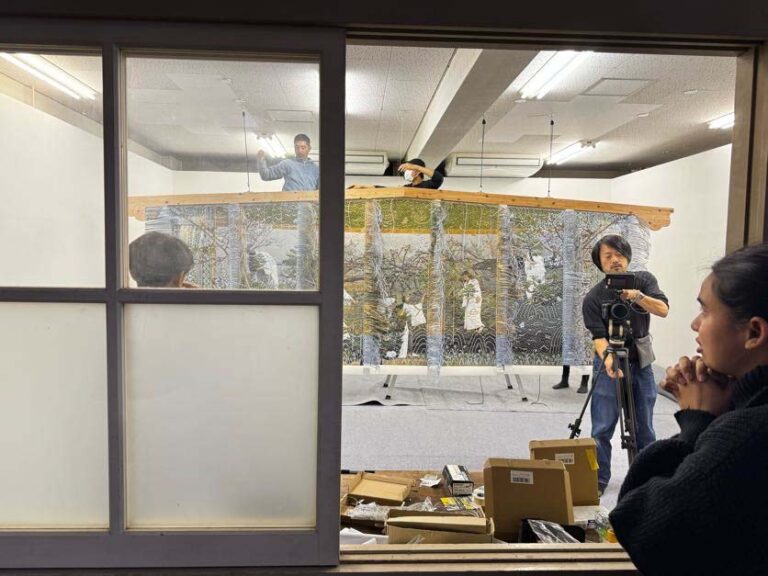
March 18 Installation
After finishing the weaving stage, the artist installed her work with assistance from Koga Yoshihiro to ensure the six panels were hung down horizontally.
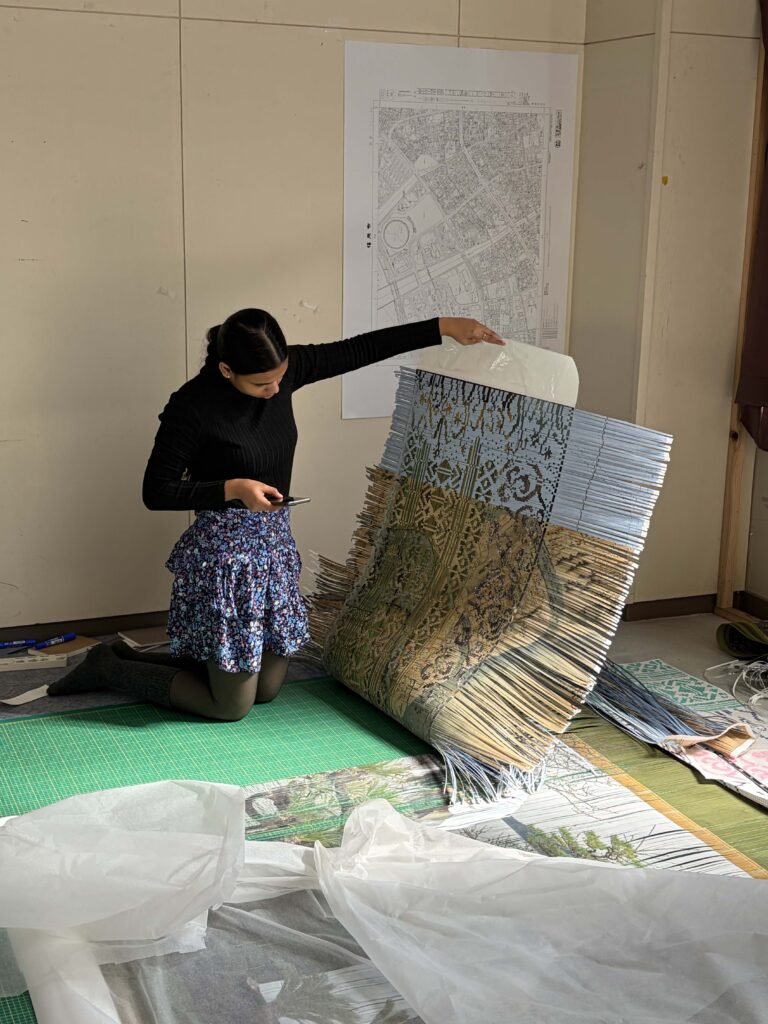
February 28 Artmaking
Tracing her encounters on the warp and representing water moving through the city on the weft, Akhanda concentrated on the paper weaving process.
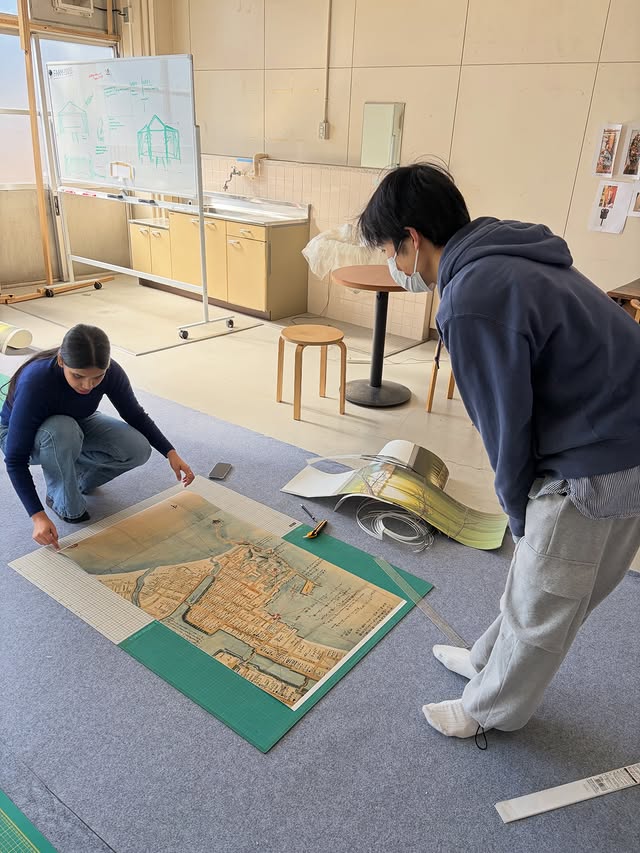
February 18 Artmaking
While continuing to work on printing on bamboo paper in FAAM since the 12th, she also started cutting washi papers in studio, which will be woven later.
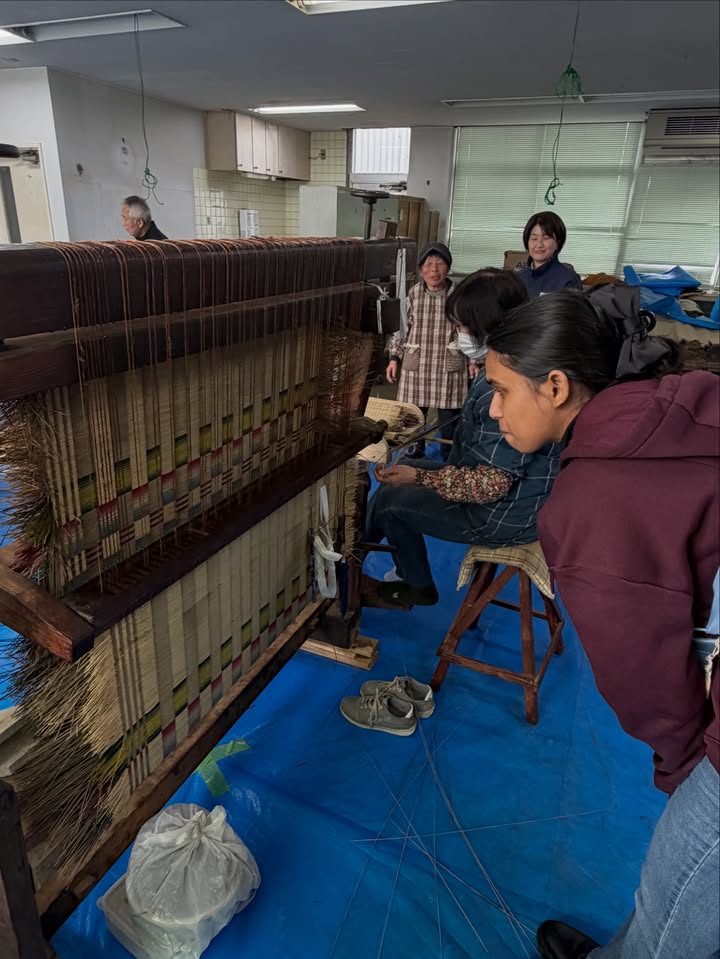
February 4 Research on Kurume-kasuri and Kakegawa-ori Textile
Akhanda visited a textile company, Sakara Orinomo Inc., where they produce and sell Kurume-kasuri. Upon hearing stories and seeing the manufacturing process inside the factory, Akhanda found many commonalities between ikat from India and Kurume-kasuri, which intrigued her very much. Later, she also made a visit to Ikehiko Corporation, a long-established interior design company, where she saw many kinds of items, including tatami mats incorporating traditional Kakegawa-ori textile with some essence of contemporary taste. At the end of the day, Akhanda went to Igyoukaikan (Igusa Weaver Business Center), where historical resources on Igusa and tatami industry in Fukuoka Prefecture are presented. She also had a chance to speak with local weavers.
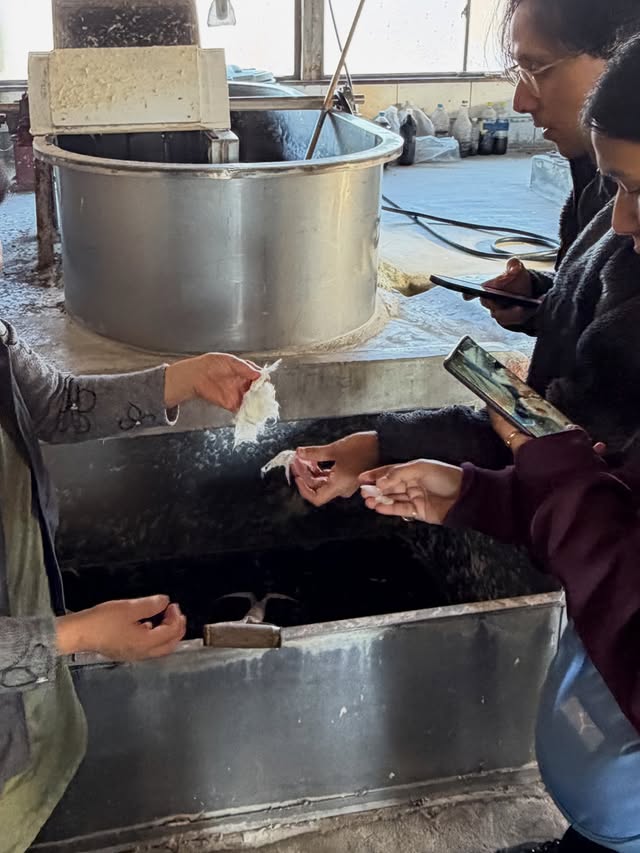
February 3 Second Visit to Yame city
Akhanda visited several places to conduct research focusing on washi in Yame, including Shiraki Kougei, where they make structural designs of traditional Yame lanterns, Ito Gonziro Shoten, an old lantern shop launched in 1815, and the Matsuo Washi Kobo, a washi craft studio that has more than a hundred years of history.
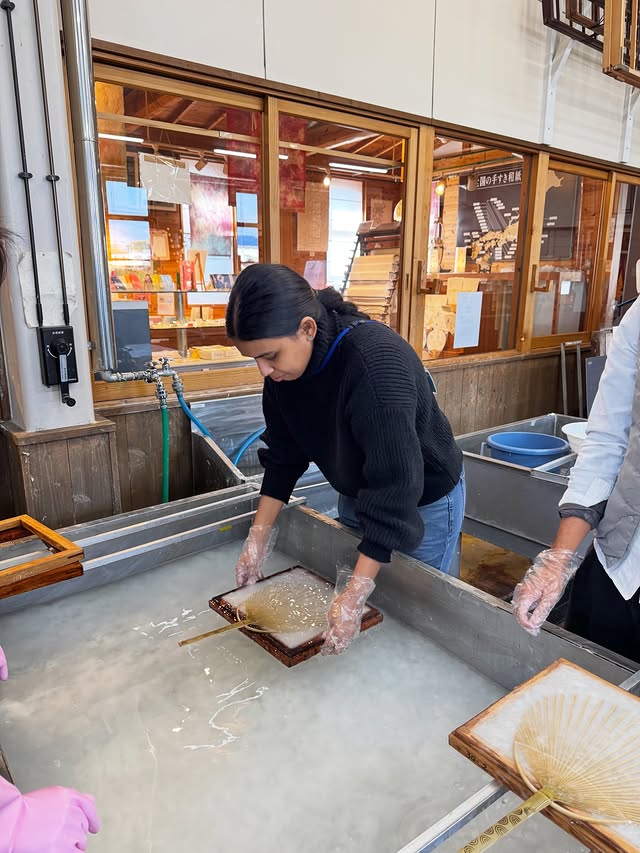
February 1 Visit to Yame city
After experiencing handmade washi at the Yame Traditional Crafts Center, the artist visited Hana-goyomi, an antique shop, where the owner Minematsu gave her a tour in the storage and explained architectural shifts found on the doors built between Taisho and early Showa era. Later in the Gallery Ki to Te, Akhanda saw a variety of works intricately crafted from washi. Many kinds of washi papers that she saw at the Matsuo Washi Kobo also left her with a strong impression. At the end of the day, Akhanda went to see the exhibition of the Kyu-Kaminosho (Former Kaminosho School) Residency Program, where she met the invited artists for 2025, Ikenana and Hanada Tomohiro.
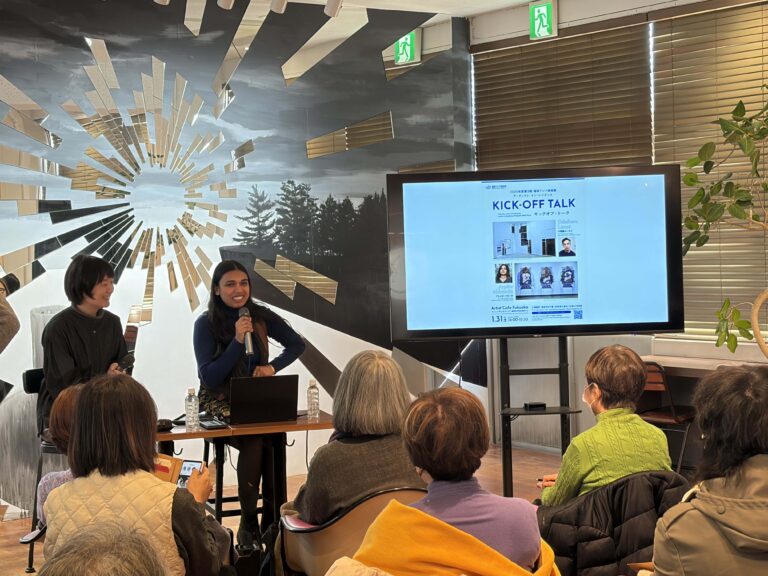
January 31 Kick-off Talk (Artist Cafe Fukuoka)
Akhanda gave a talk about her work and experience, including stories from her family who experienced the Partition of India, her artistic practice that delves into memory through paper weaving, and her previous residencies in other places. She mentioned that traditional patterns in Fukuoka may be the focus of her research during her stay.
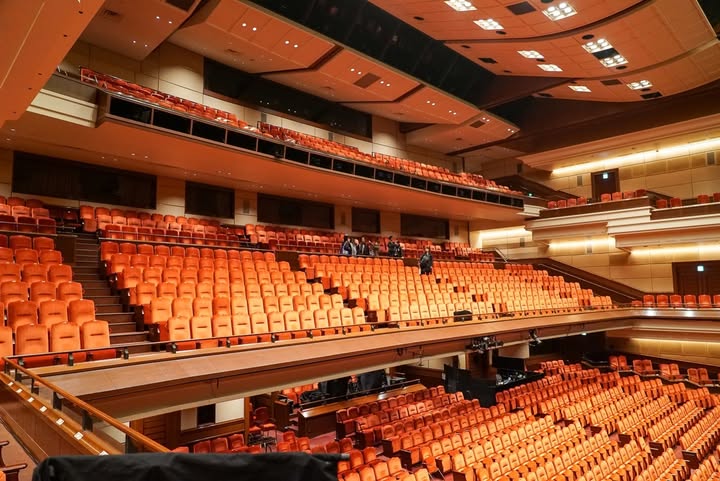
January 29 Joined a backyard tour in Hakata-za theater.
On this day, Akhanda joined a private tour at Hakataza, where she had the chance to see backstage, including naraku, an underground space beneath the stage, stage wings, and dressing rooms. At the end of the tour, everyone went to see the auditorium, which accommodates approximately 1,500 people, constructed within the three-tiered structure that maintains a good view from any seat.
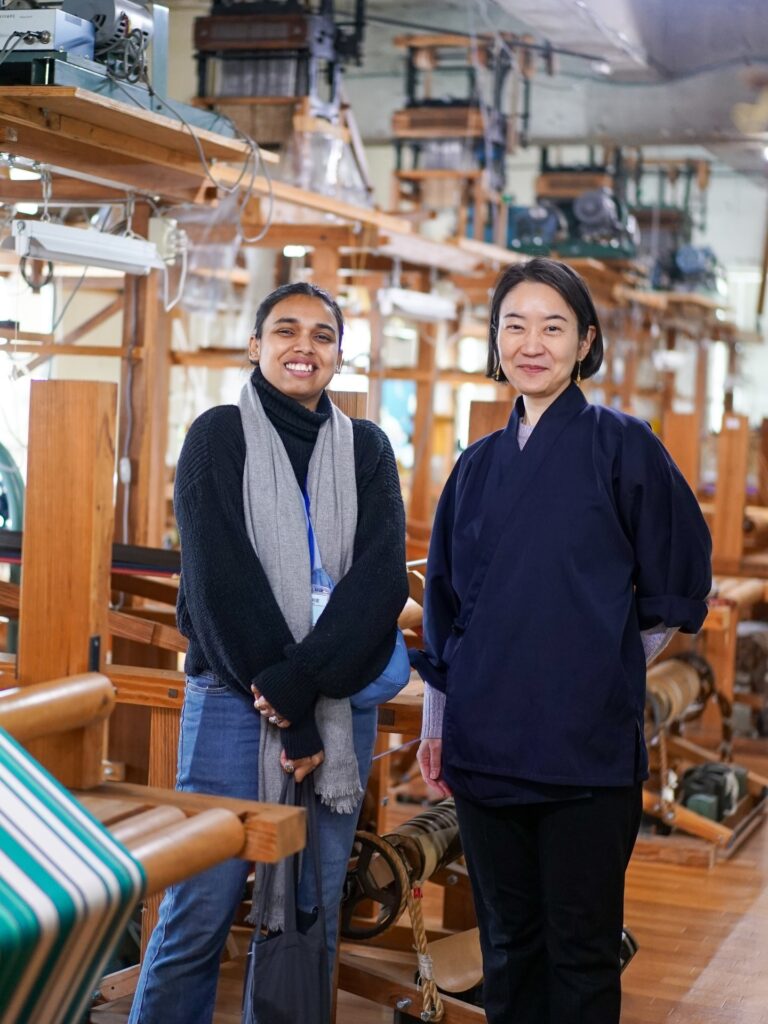
January 23 Visit to Hakata-ori DC (Textile School)
Guided by Miyajma Miki, who is a master craftsman of Hakata-ori textile, Akhanda heard about the history of Hakata-ori and its traditions passed down to the present. She also had a chance to see the weaving machine, patterns, and designs, to get a better understanding of how the Hakata-ori is made.
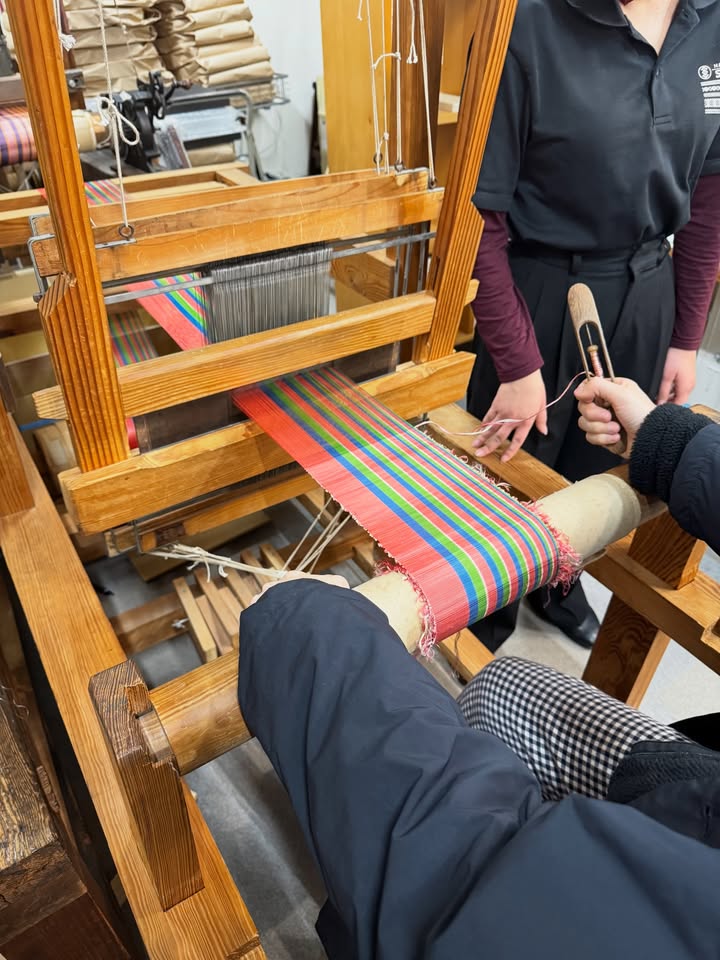
January 20 Research on Hakata Culture
Visited Hakata Machiya Folk Museum, Hakataori Kogeikan, and Iki Shrine. At Hakataori Kogeikan, she learned about Hakata-ori textile, which has been inherited for 780 years, and tried some weaving on a handloom.
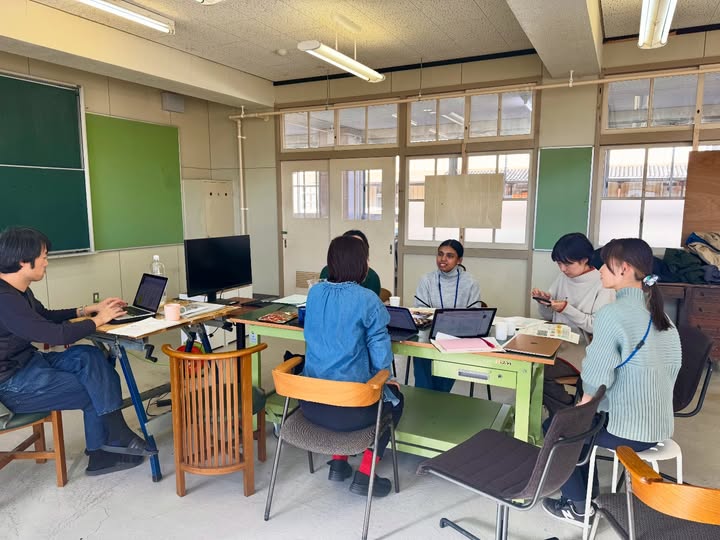
January 14 First Meeting in Artist Cafe Fukuoka
Akhanda arrived in Fukuoka on January 13th and the next day she joined a meeting in Artist Cafe Fukuoka to discuss her work during the residency.