-720x1024.jpg)
Blaze Carved in Darkness: Woodcut Movements in Asia 1930s-2010s
- Period
- Nov 23, 2018 〜 Jan 20, 2019
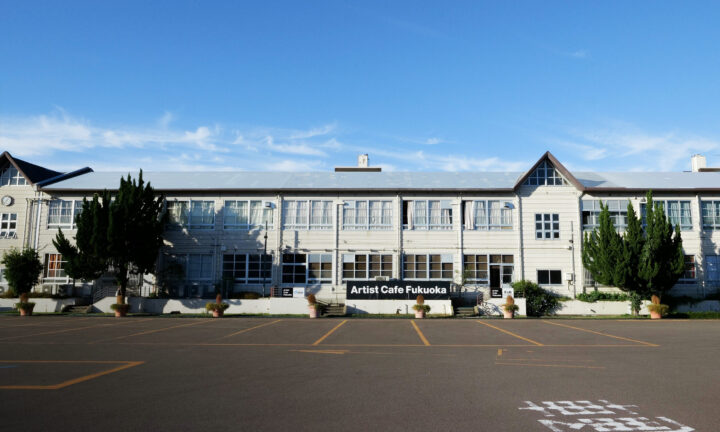
- Venue
Exhibition
About the Exhibition
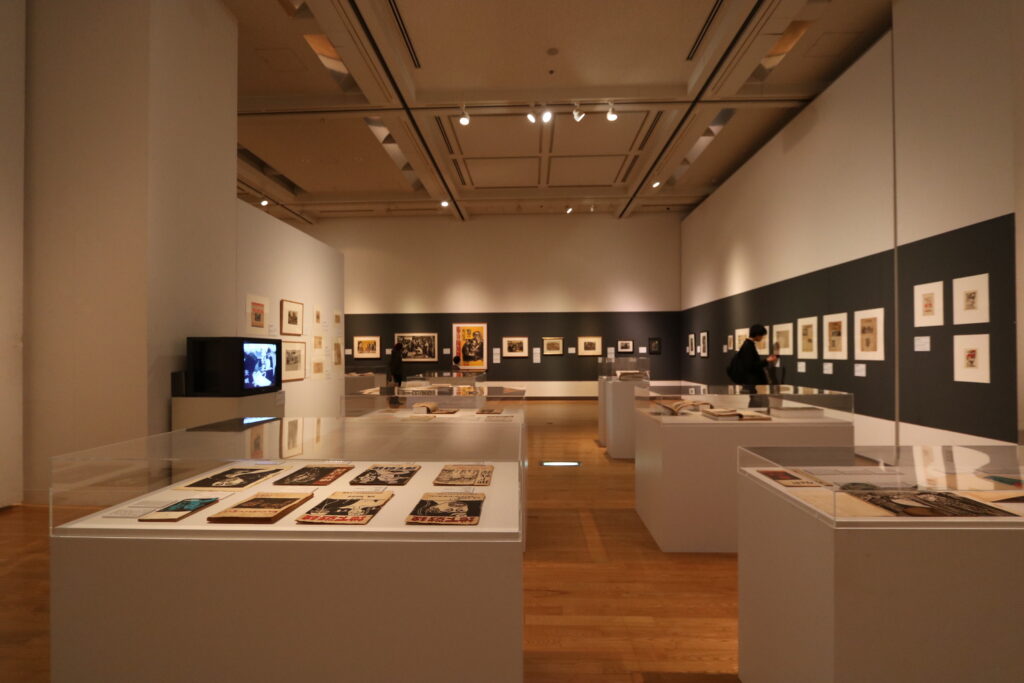
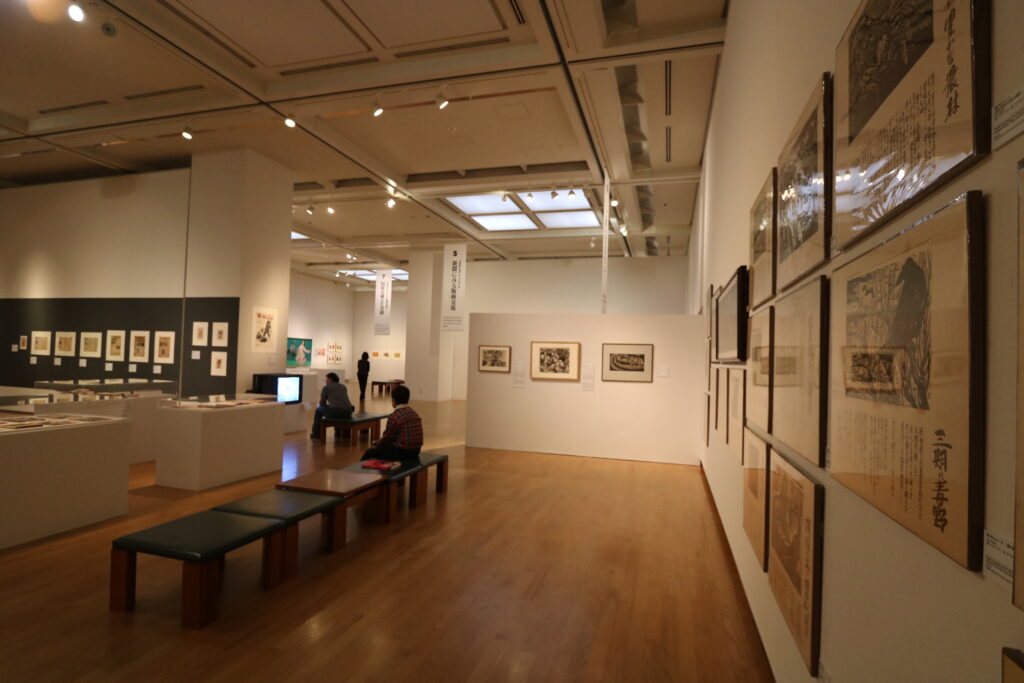
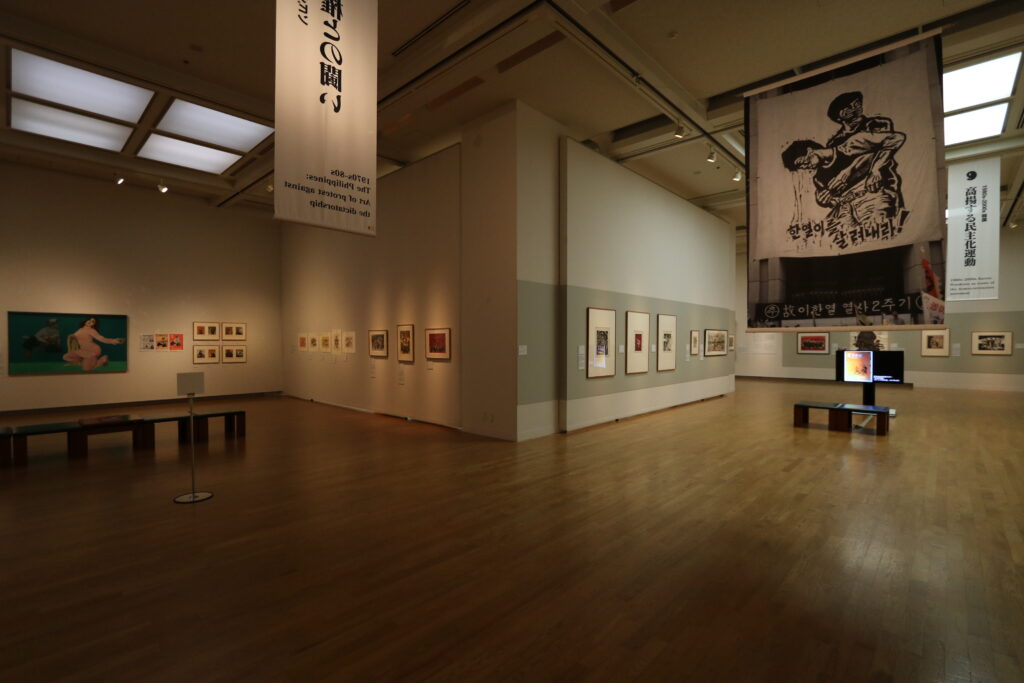
This exhibition contains about 400 works and is the first large-scale exhibition on Asia’s woodcut movements in the world. The exhibition seeks to articulate how woodcut was developed in Asia and how this small yet important media played a role in the social and historical context of the region.
Carve, Print, and Post!—Pioneer of SNS
You can create woodcuts (woodblock prints) with handy and cheap materials, and print as many copies as you like, so that you can convey your feeling and report what happens around you. The audience will grow by posting prints, hanging posters, and reproducing the images in publications. Thus the woodcut is a ‘democratic’ media both for creator and audience, which far exceeds the common presentation of artwork—the woodcut is a pioneer of today’s SNS.
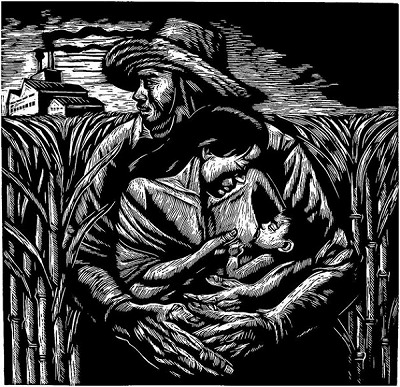
Leonilo Ortega Doloricon [Philippines] Inside the Hacienda, 2014, Collection: Fukuoka Asian Art Museum
Big History Written in Tiny Prints
Woodcut as a ‘democratic’ media was often created and disseminated in political and social movements in Asian cities, such as those for independence from colonial rule, democratization against the dictatorship, reformation of labor situation, and the protest against environmental pollution. The woodcut has contributed in such activisms by conveying the hardship of people, disclosing problems of societies, seeking the solidarity with other communities, and mobilizing actions for better societies.
Light of Humanity Cuts into the Dark World
Carving on wooden board produces white light on black background in printing. The woodcut as such has been an appropriate media for people who seek freedom and independence from the sheer darkness of societies. The history of woodcut in Asian cities does not only represent agony, struggle, or propaganda—it is a history of liberation in the subjective expression of oppressed people.

ong Sungdam May-25: The World of Unity-1, 1984, Collection: Fukuoka Asian Art Museum
Solidarity beyond Exchange: Inter-Asian Network
The cultural and ethnic diversities in Asian traditional societies, as well as ideological gaps after the 20th Century, caused uncountable divisions and confrontations both domestically and internationally, which led to omnipresent tragedies. The woodcut has contributed in connecting people who lived in different communities but shared the problems far earlier than the globalization, not merely as cultural exchanges but also as a network of sympathy.
Exhibition Structure
1. 1930s- Shanghai: China’s encountering with European woodcuts
Lu Xun introduced modern woodcuts by Käthe Kollwitz and other European artists in Shanghai, which formed a basis for emerging woodcut movement.
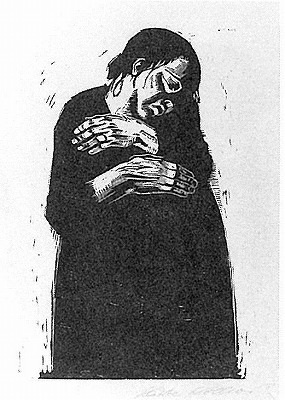
Käthe Kollwitz The Widow Ⅰ (Sheet 4 of “War”), 1922-23, Collection: Fukuoka Art Museum
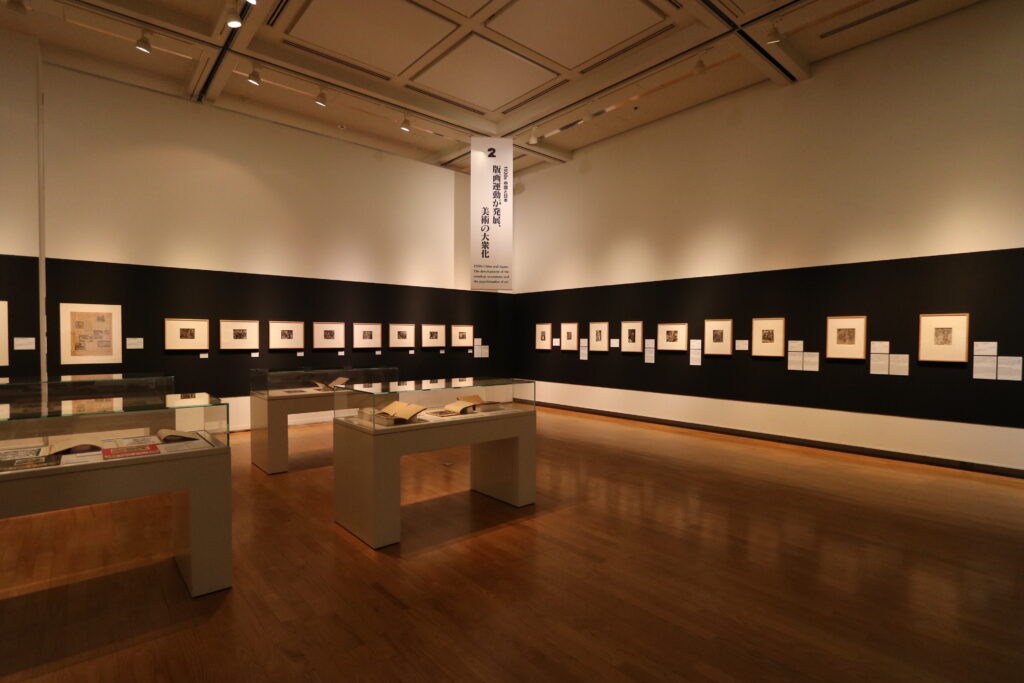
2. 1930s China and Japan: Growth of woodcut movements seeking popularization of art
Promoted by Lu Xun, modern woodcut developed among young Chinese artists in Shanghai, and the movements spread to other cities. In Japan, the proletarian art movement explored the popularization of art.
3. 1940s–50s Japan: Exploration of democratic art and a boom of Chinese woodcuts
Postwar expectation for democracy revitalized woodcut movements in North Kanto region (northern outskirt of Tokyo). More than 200 exhibitions of Chinese woodcuts were held in Japan. Workers and regional communities engaged in woodcuts in circle activities.
4. 1940s–50s Bengal: Return our land
Woodcuts depicting anti-imperialism movements and peasant movements were created in Bengal (today’s West Bengal [India] and Bangladesh).
.jpg)
Suhardjija Pudjanadi Land for Peasant, from Harian Rakyat, 25 October 1964, (exhibited in reproduction)
5. 1950s–60s Indonesia: International exchange of woodcuts in newspaper
An Indonesian newspaper introduced woodcuts from Asian cities as a part of national policy to enhance Third World solidarity during the Cold War period.
6. Singapore in the 1950s–60s: Shifting identity to the local, and woodcut as cartoon
Chinese artists in Singapore with a strong sense of attachment to the mainland started to find new identities in local life in a Nanyang (tropical) city.
7. 1960s–70s Era of Vietnam War: Joint-struggle beyond national borders
Vietnamese folk prints depicted war subjects; a Chinese print was copied in Pakistan and the United States, as an icon of the anti-imperialism and woman’s liberation struggles.
8. 1970s–80s The Philippines: Art of protest against the dictatorship
Kaisahan (Unity) and other artists’ groups formed in the late 70s supported the struggles of laborers and farmers against President Marcos’ dictatorship.
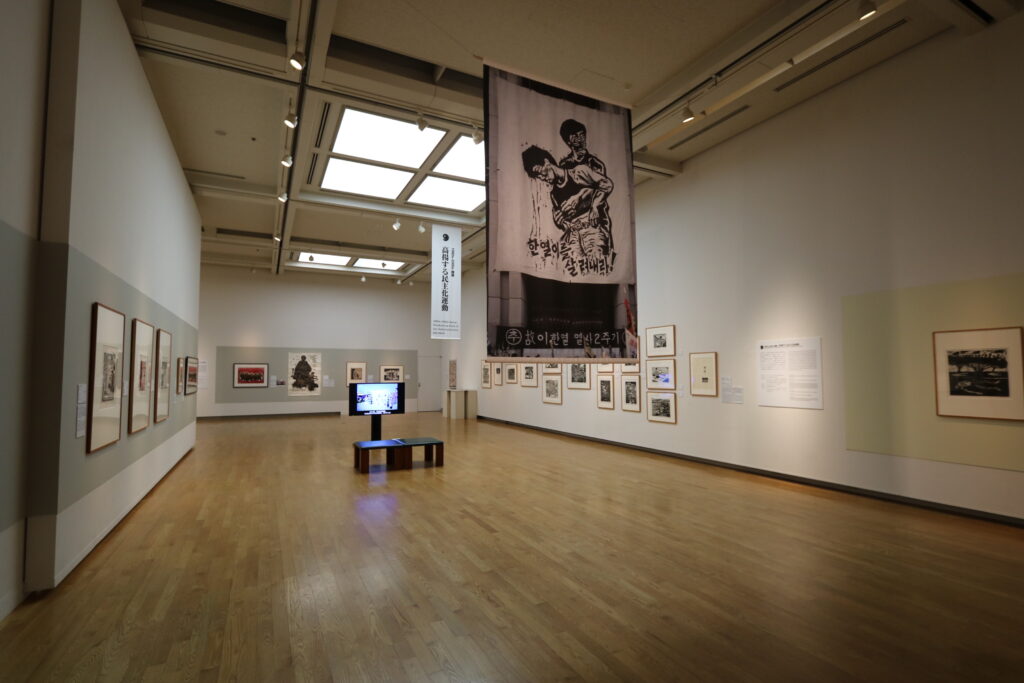
9. 1980s–2000s Korea: Woodcuts as icons of the democratization movement
The Gwangju Democratization Movement in May 1980 triggered nationwide protest against the dictatorship. In this movement, Minjung Misul (People’s Art) developed, giving woodcuts crucial roles in an enlarged picture for rallies and demonstrations, publication, outreach program, etc.
10. 2000s– Indonesia and Malaysia: DIY spirit for freedom
Collectives formed around the collapse of the Suharto regime in 1998 accused politician’s corruption and environmental crisis and supported farmers’ and fishermen’s struggles. With their DIY spirit, woodcuts as media revitalized, influencing artists in other parts of Asia.
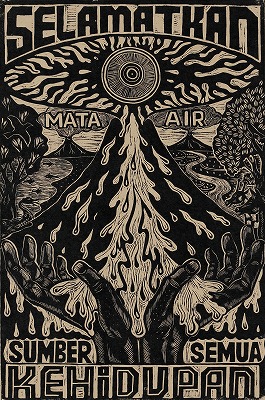
Taring Padi Save the Spring, 2009, Collection: Fukuoka Asian Art Museum
| Venue | Exhibition |
|---|---|
| Admission | To be determined |
| Organiser | Fukuoka Asian Art Museum, The Yomiuri Shimbun, The Japan Association of Art Museums |
| Contact | Fukuoka Asian Art Museum / 092-263-1100 |
| Co-organiser | Arts Maebashi |
| Supported by | Yoshino Gypsum Art Foundation, The Mitsubishi UFJ Trust Cultural Foundation |
| Remarks | Close: Wednesdays |