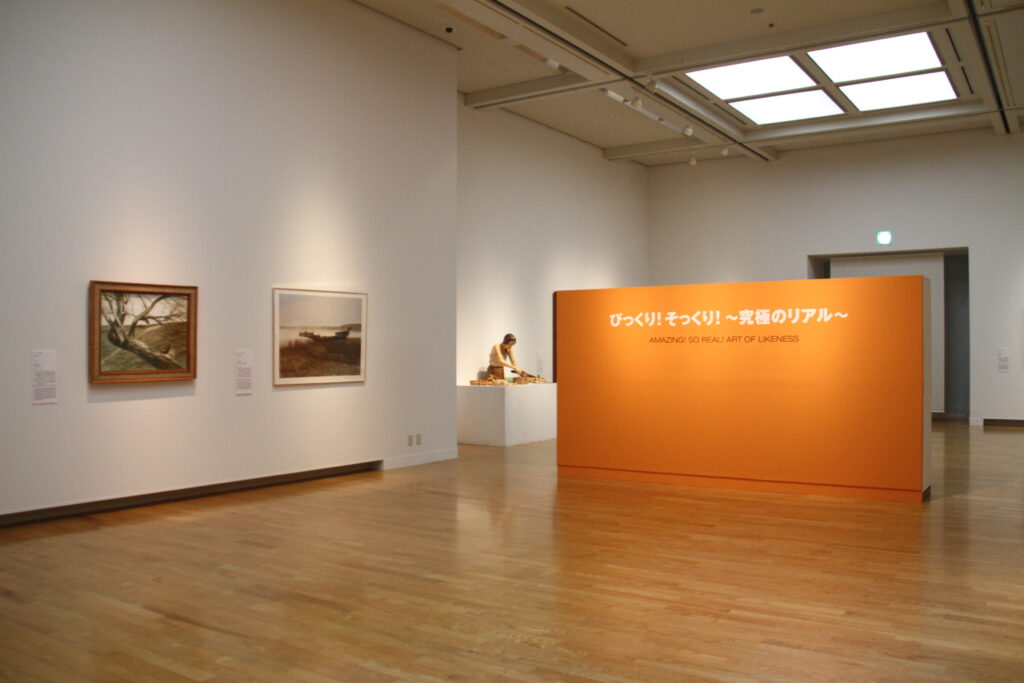
AMAZING!SO REAL !
ART OF LIKENESS
- Period
- Apr 21, 2016 〜 Aug 23, 2016
- Venue
Asia Gallery A
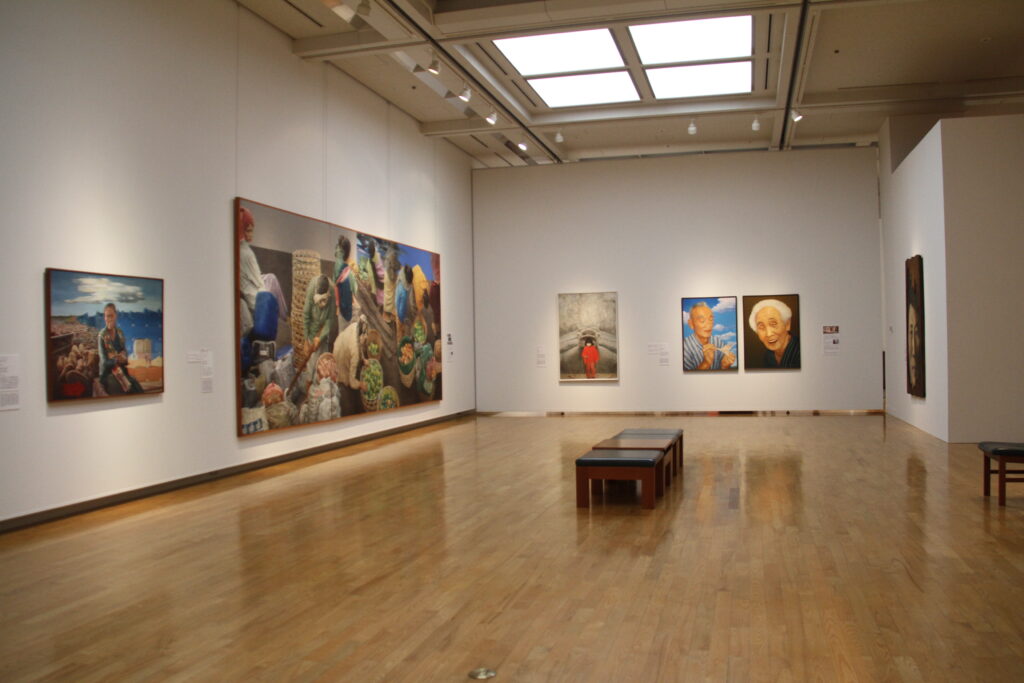
This exhibition is associated with the special exhibition “The Sparkling Garden of Chinese Realism” (16 April – 22 May, at Exhibition Gallery) and “Amazing! So Real! Art of Likeness” (22 April – 23 August, at Asia Gallery). Artworks shown here are selected from our museum collection: all of them are modern Chinese paintings with realistic expressions.
In China in 1970s and 80s, to accurately paint the village life of “Down to the countryside movement* ” during the Great Cultural Revolution as well as the people of farming villages in a booming economy became popular among painters, especially in Sichuan. Descended from that style and trend, the works exhibited here lyrically portray the rustic character of farming village people and their simple life.
* “Down to the countryside movement” was a policy conducted during the time of the Great Cultural Revolution (1968-1978),” to make intellectuals and communist party cadres experience the life of farmers and labor works. The policy aimed at the reform of thought and world-view through such experience and the people were expected to contribute for the establishment of a socialistic state.
Suda Yoshihiro
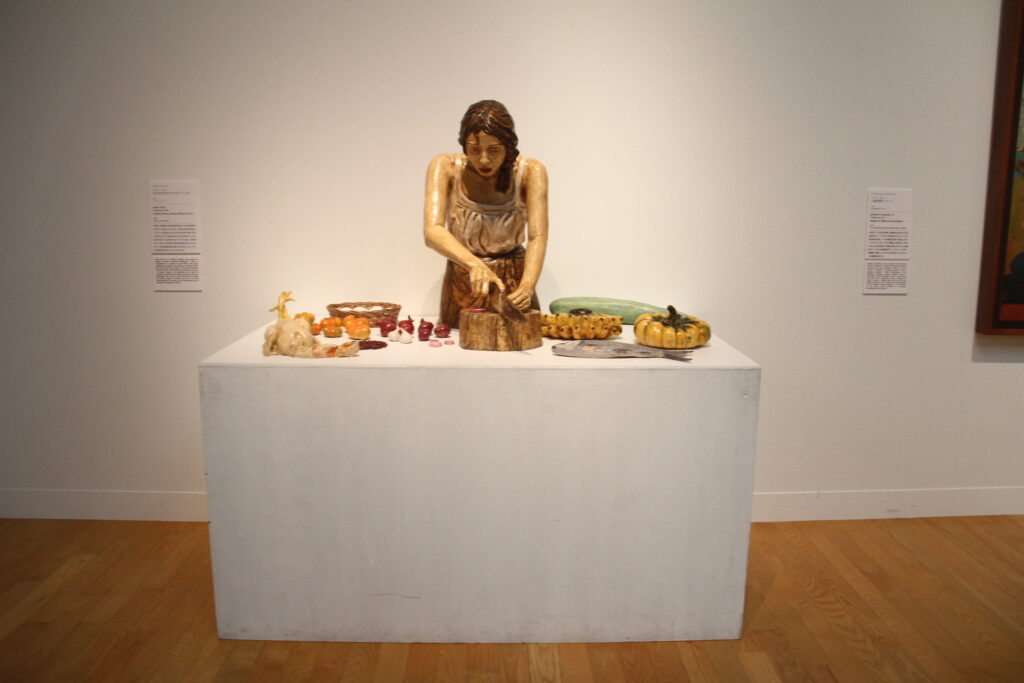
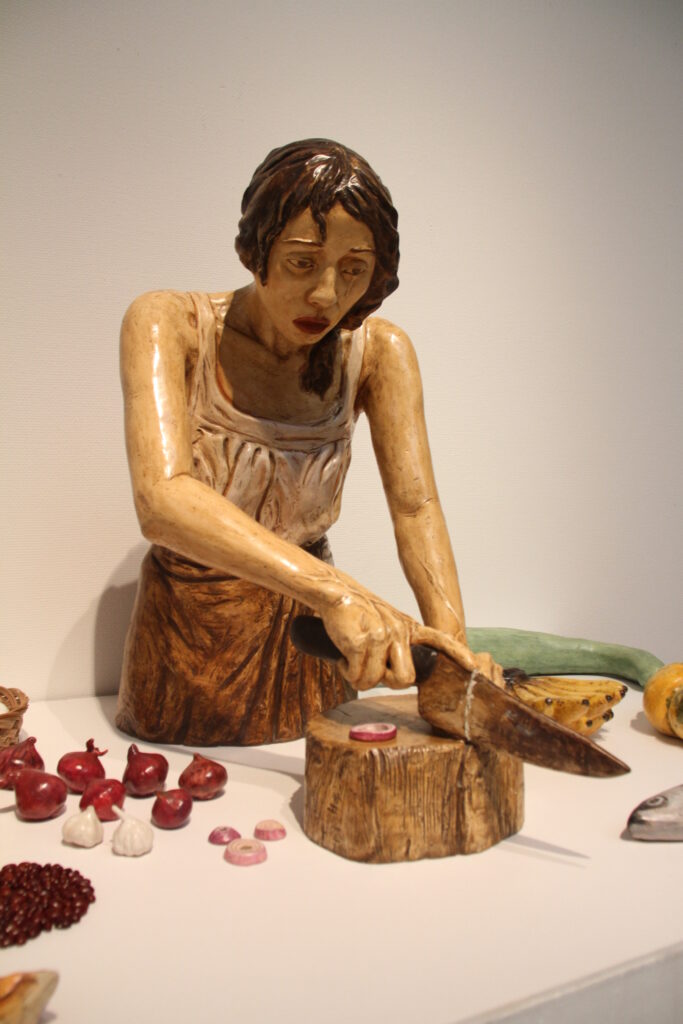
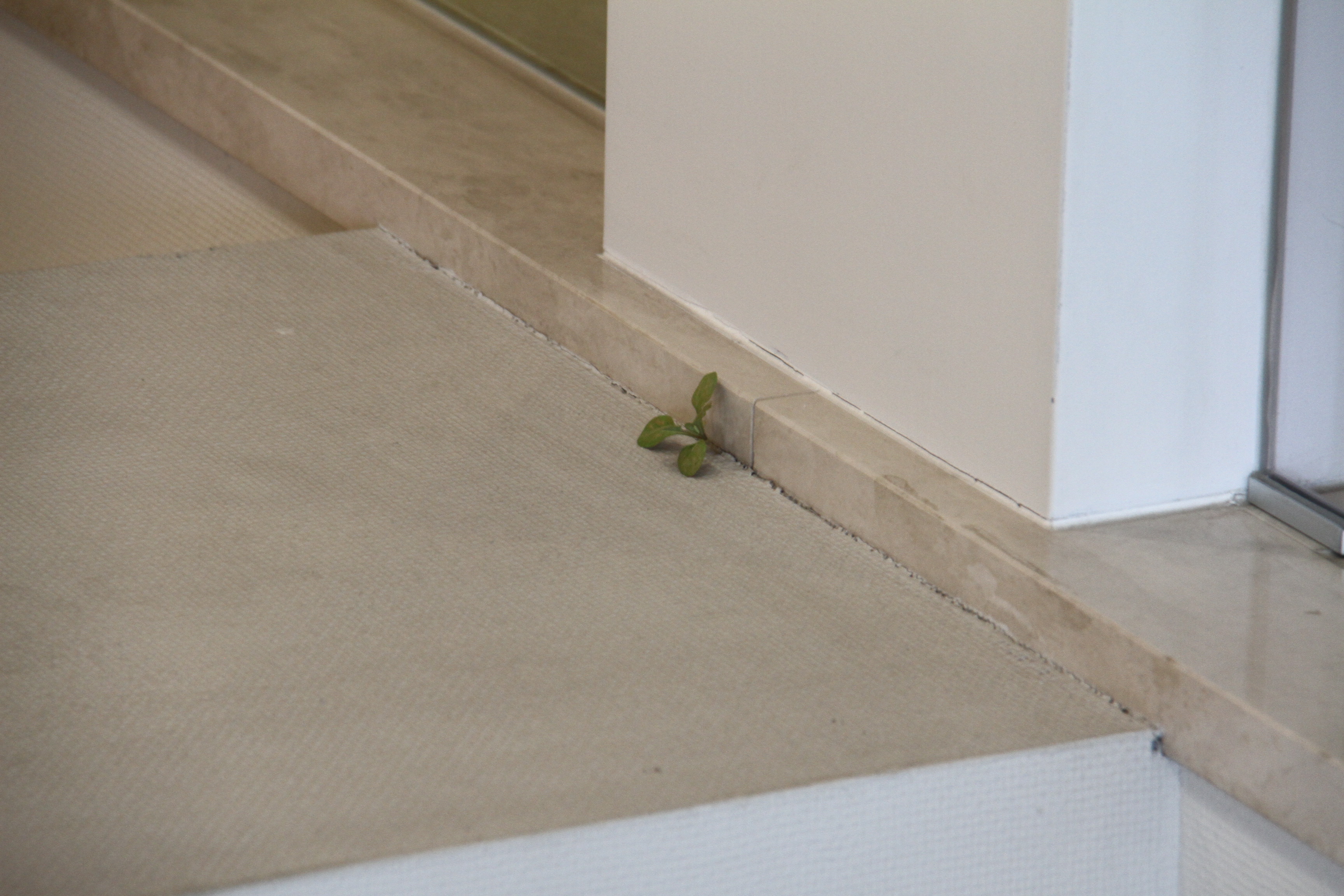
During his residency of the 2nd Fukuoka Asian Art Triennal in 2002, Suda Yoshihiro created two kinds of “Weed,” which could not sprout out in art museums. Having been designed to install in unexpected venues, such as a space between movable walls or on joist of a building, the both pieces made audiences search for the pieces and the searching process itself also plays part of appreciation of the works. In order to give audiences a better view of these exquisitely created pieces, however, one of “Weed” is displayed in the showcase for this exhibition. But another is being exhibited somewhere inside of this museum. Please try to find it. Here is a clue: it could be near the connecting corridor on the 8th floor.
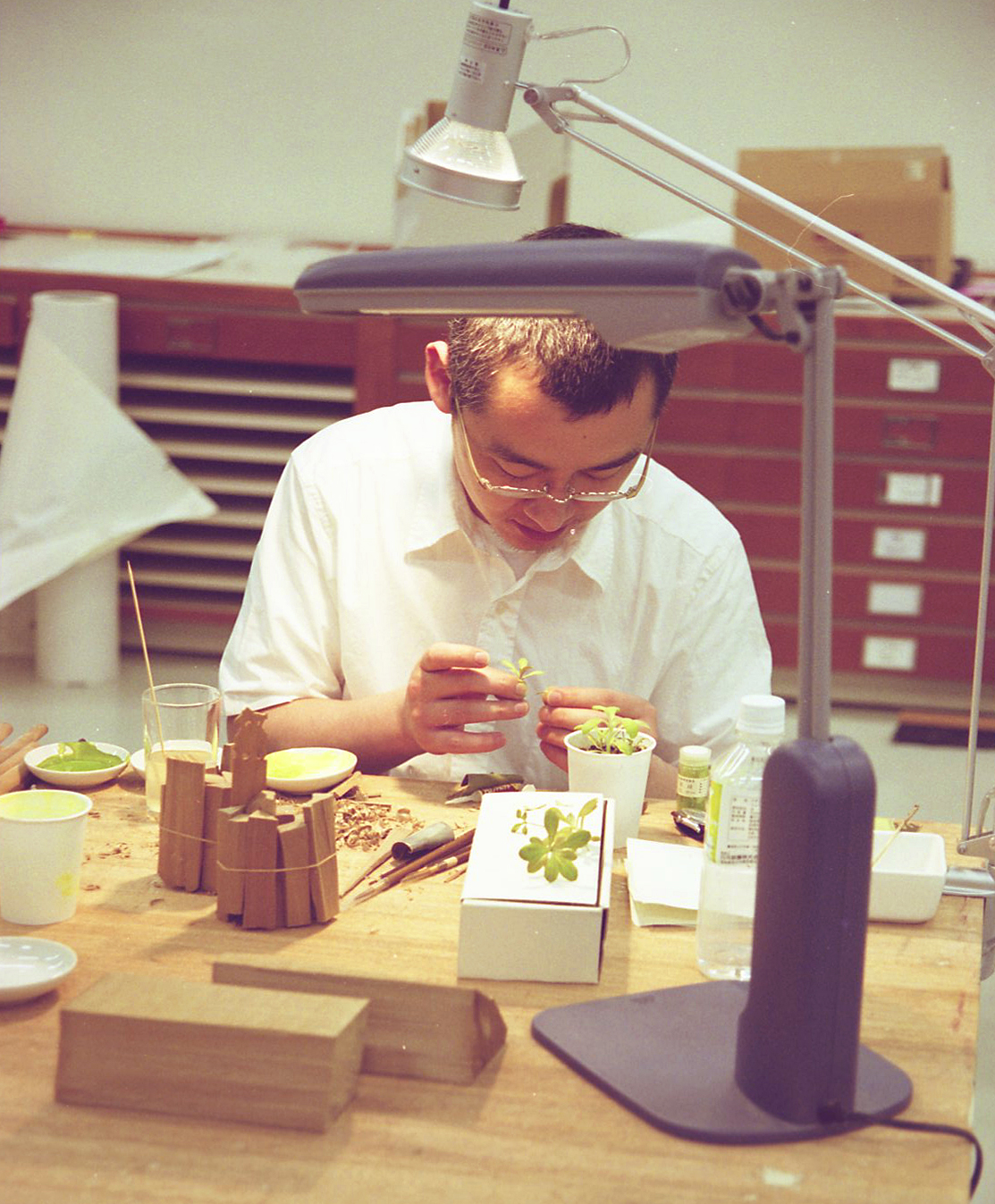
[Artist at Work]
Suda created two of his “Weed” during his stay from April through May, 2002 in
Fukuoka. Observing the weeds that he had actually picked up from the bank of Hakata
River, he finely carved his wooden weeds out and finished them with realistic colorings.
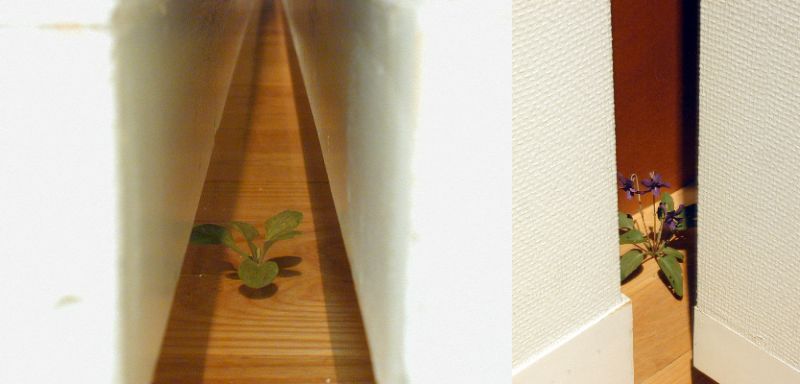
Two “Weed” exhibited at “the 2nd Fukuoka Asian Art Triennale 2002”
Wang Hongjian(王宏剣)
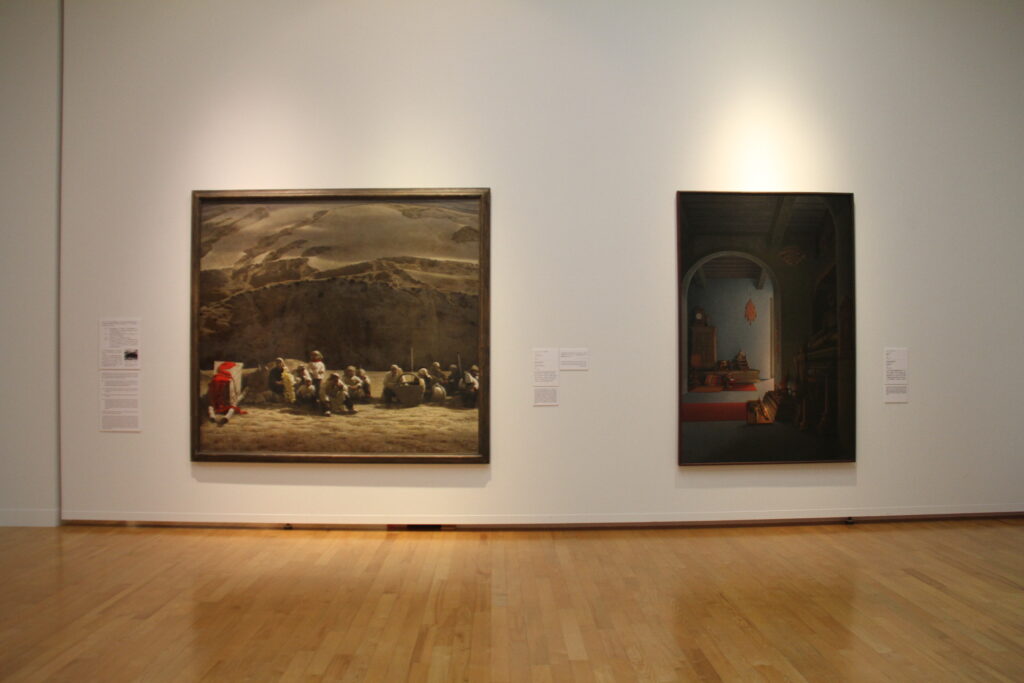
Wang Hongjian first conceived of the idea for this painting in 1987 when he attended the funeral of a relative in his hometown of Hangu Pass in Henan province. The artist spent the next eight years researching and developing the idea before he completed the work. Below is the artist’ s description of his process:
1987 From a black and white photograph taken at the funeral, I began to picture the background landscape and overall atmosphere of the work in my mind. I wanted to express the fragile and impermanent yet strong nature of our life in
the painting by contrasting it with the natural environment.
1990 I found the ideal location in Wangjiawan in Yulin City, northern Shaanxi Province. I captured the landscape in many sketches and black and white photographs.
1992 Based on the sketches and photographs, I completed the rough sketch of the composition.
1993 Before I began painting, I revisited my hometown of Hangu Pass to do additional research. The motifs used in the work are drawn from the sketches and the photographs I took on this trip. The landscape of the painting is a synthesis of the research, described above, and my own imagination. Each figure in the painting is modeled after one of my relatives. The red cloth on the coffin reflects a local custom, which can often be seen in the funerals of the elderly.
From Wang’ s statement above, we can see that the artist spent considerable time and effort completing this large scale painting.
The artist adds that the traditional red seal used in Chinese calligraphy influenced his treatment of the red cloth. He also notes that the color and tone of the landscape was influenced from the monochrome landscape paintings from the Baisong era (960–1127). The composition of the painting, with the grand mountains stretching back, draws the viewers’ eye beyond the figures in the front and into the depth of the canvas. It can be said that this technique is also based on the artist’ s knowledge of monochrome landscape painting from the Baisong era. The history of Chinese
calligraphy and painting lie beneath this seemingly realistic landscape and depiction of life in Ocher Plateau.
Chusin Setiadikara
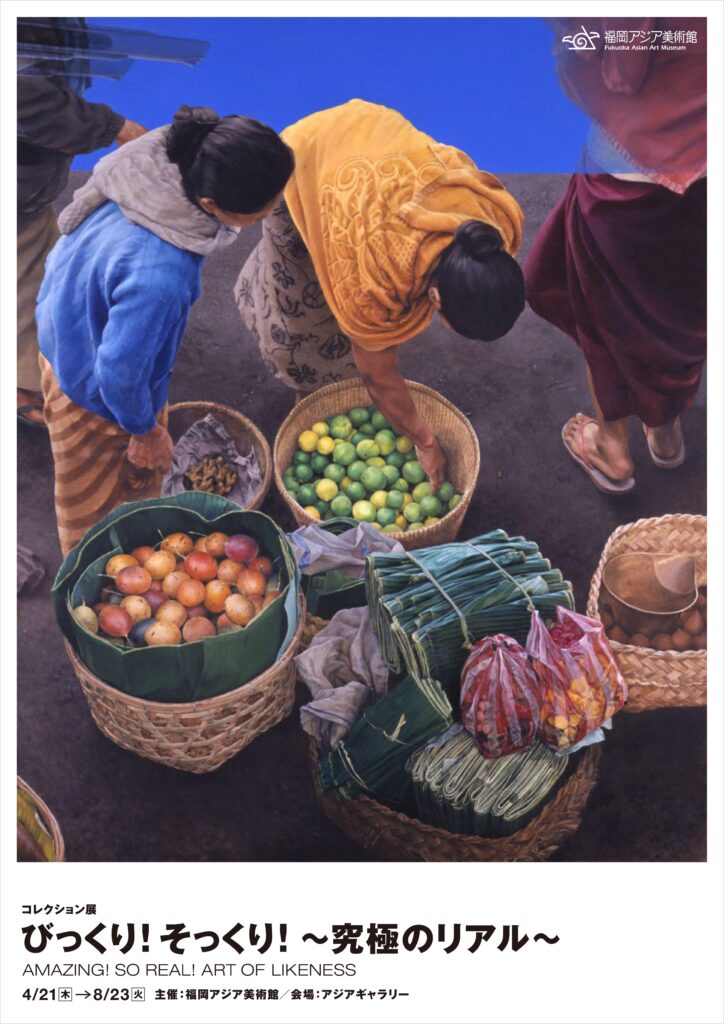
Since his move to Bali in 1987, Chusin has created paintings featuring Balinese scenery and customs. This piece, which depicts the old Kintamani Market about to be transformed into a modern supermarket, is one of such his artworks.
For making this piece, Chusin used photographs that he had taken by himself. Comparing with those photographs, the people and fruits in the piece are precisely depicted; meanwhile the locations of each subject are re-arranged by the artist. Furthermore, the Starship Enterprise from “Star
Trek” a American popular sci-fi series is painted on the background of the piece as if it indicates the future and modernization of Bali.
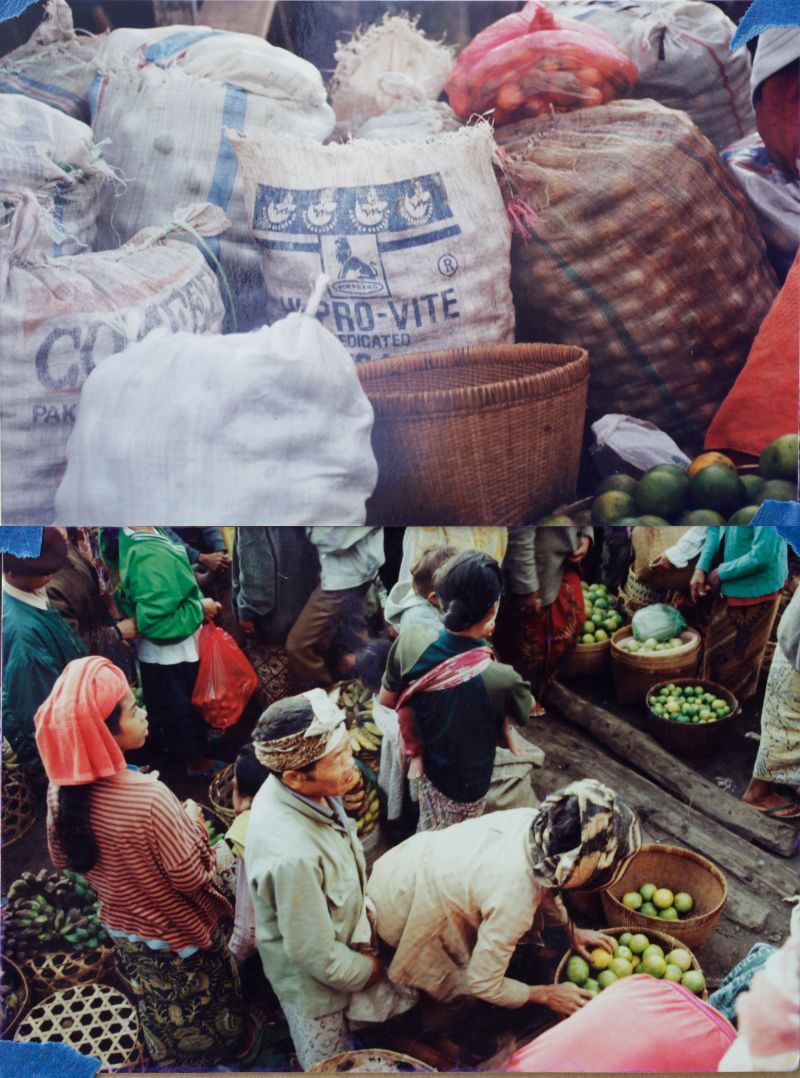
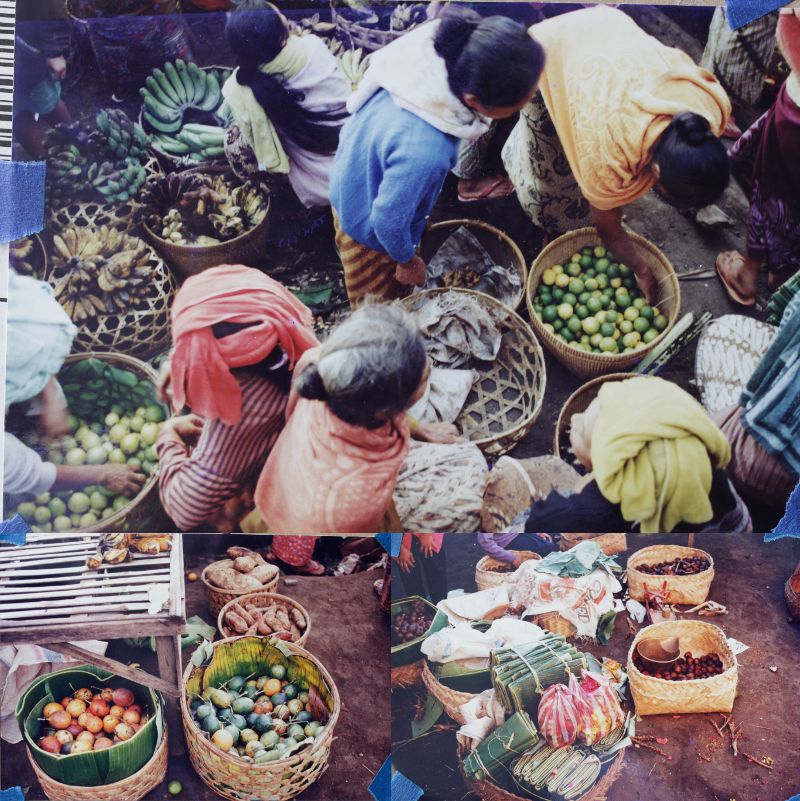
本作制作のために作家が撮影したキンタマーニ市場の写真
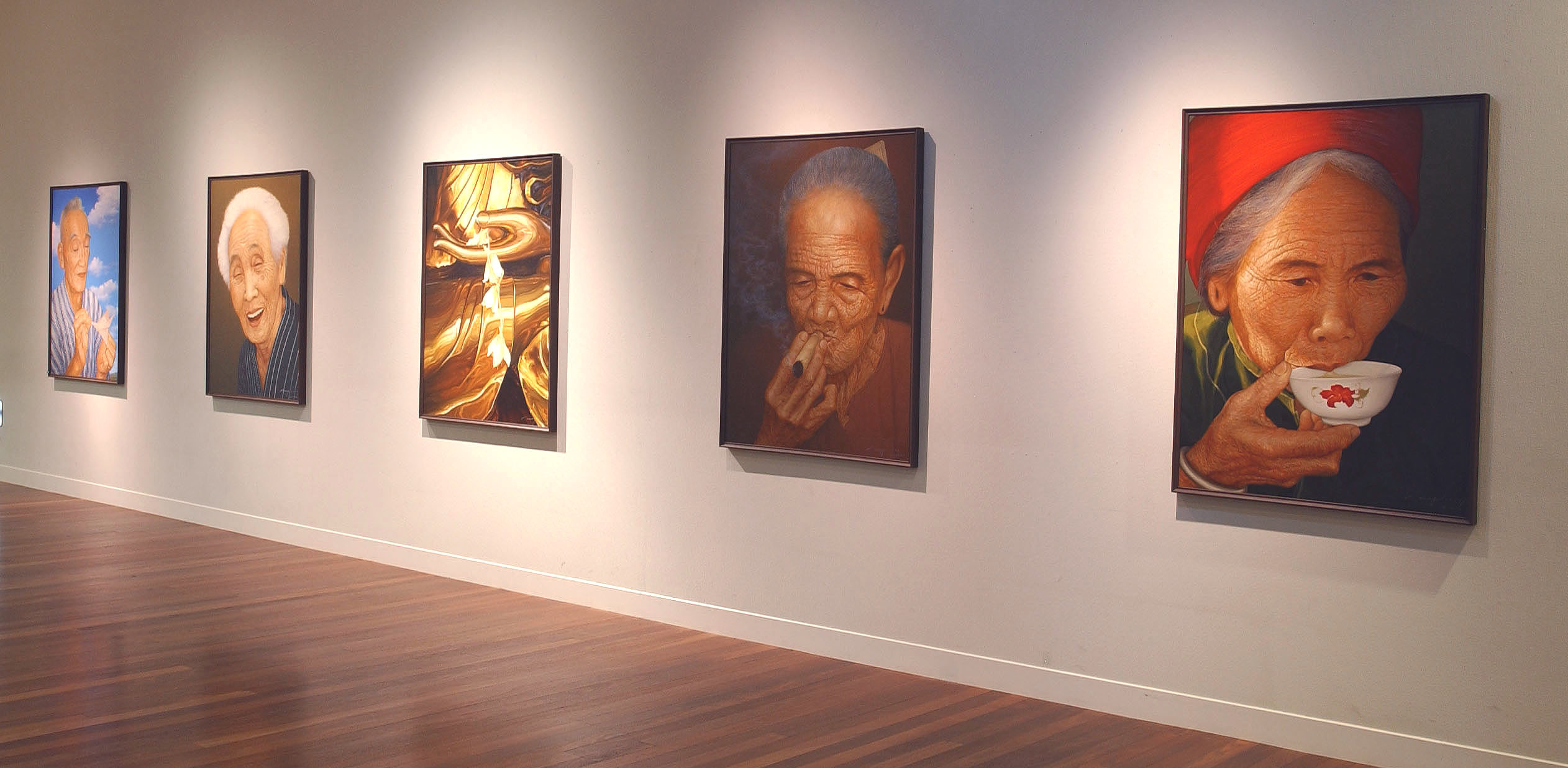
Artworks at the exhibition “Winds of Artists in Residence Program 2004 – Part1”
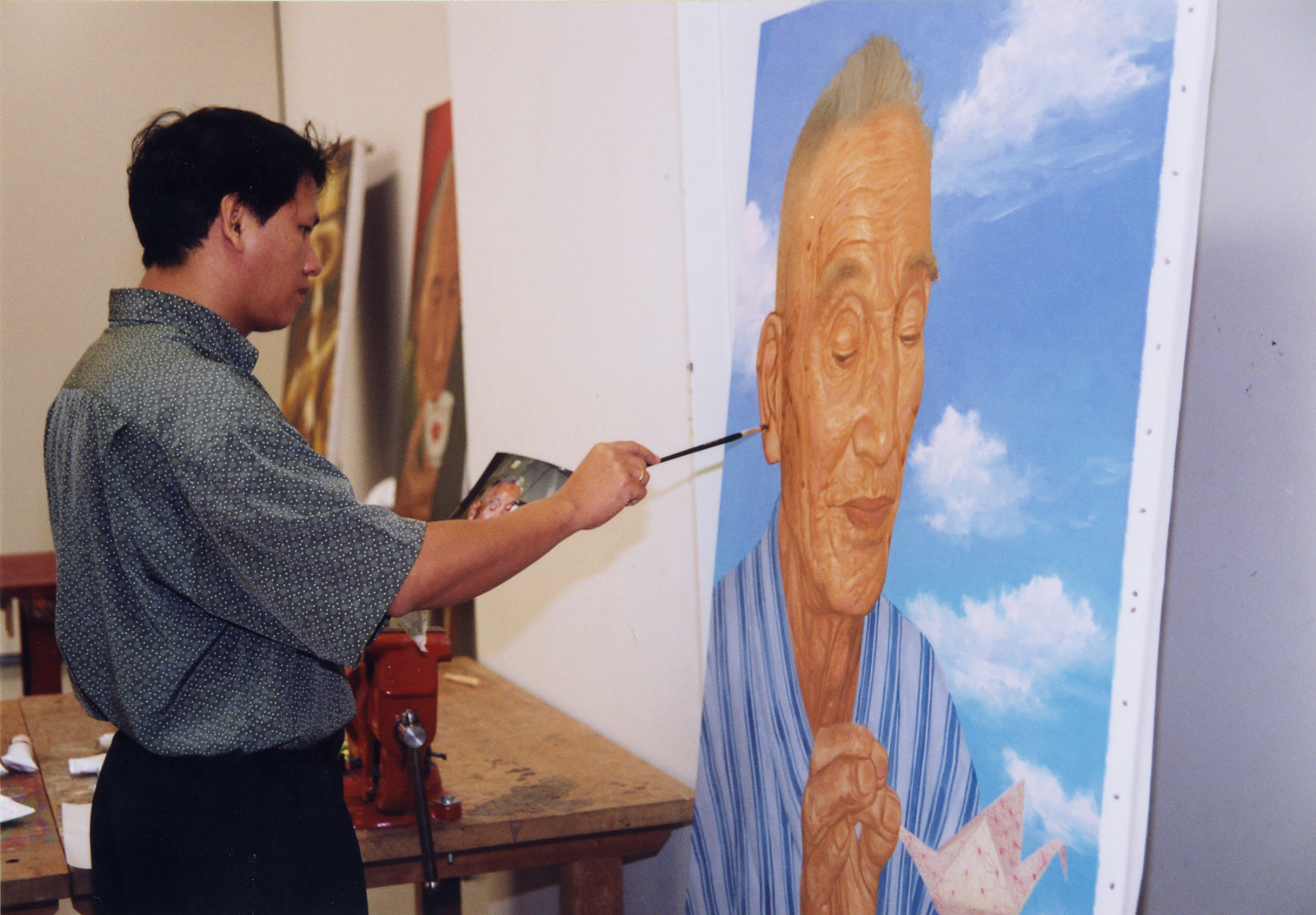
During his three months artists-in-residence program in Fukuoka in 2004, Myoe Thant Oung actively conducted workshops for local elementary school students, created paintings, and held an exhibition.
“Living under Brief” is a series of his paintings, which he created during his time in Fukuoka. Shown from the right to left in the photograph, the artist drew two portraits of hill tribe women in Myanmar, one painting of golden Buddha, and two portraits of the residents of the Hakata ward. Although the series originally comprised these five pieces, our museum acquired two portraits of the residents of the Hakata ward (left) into our
museum collection.
[Artist at work]
Without omitting any details, such as every wrinkle and age spot on face, Myoe Thant Oung carefully draws people with compassion while he is referring the photograph. His works display a sense of respect for the people who have lived over years.
| Venue | Asia Gallery A |
|---|---|
| Admission | Adult \200 /College & High School \150 |
| Organiser | Fukuoka Asian Art Museum |