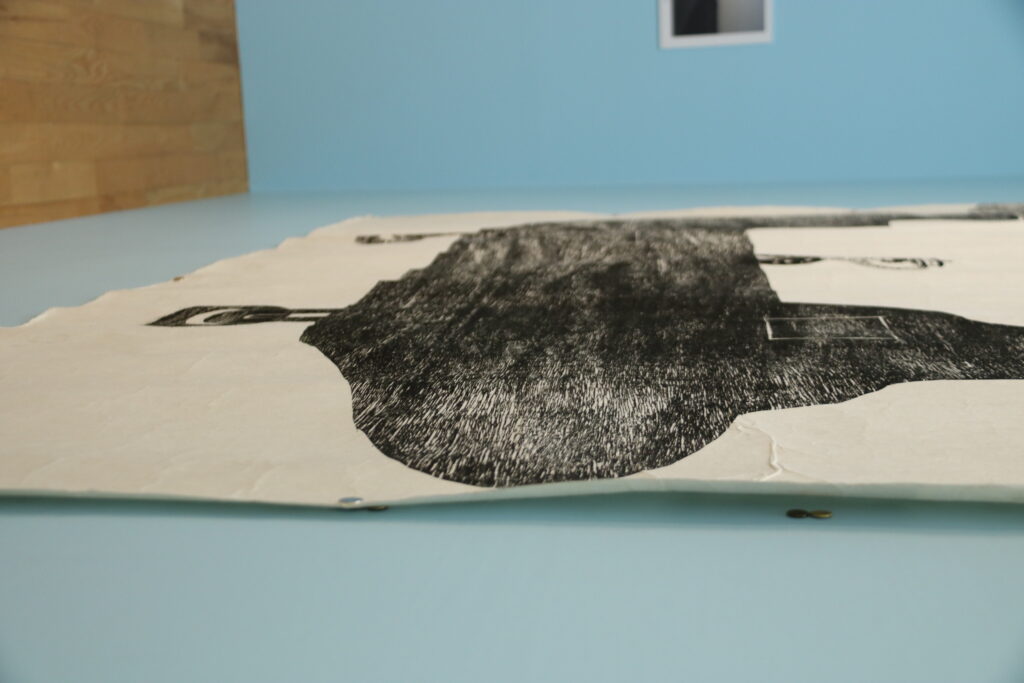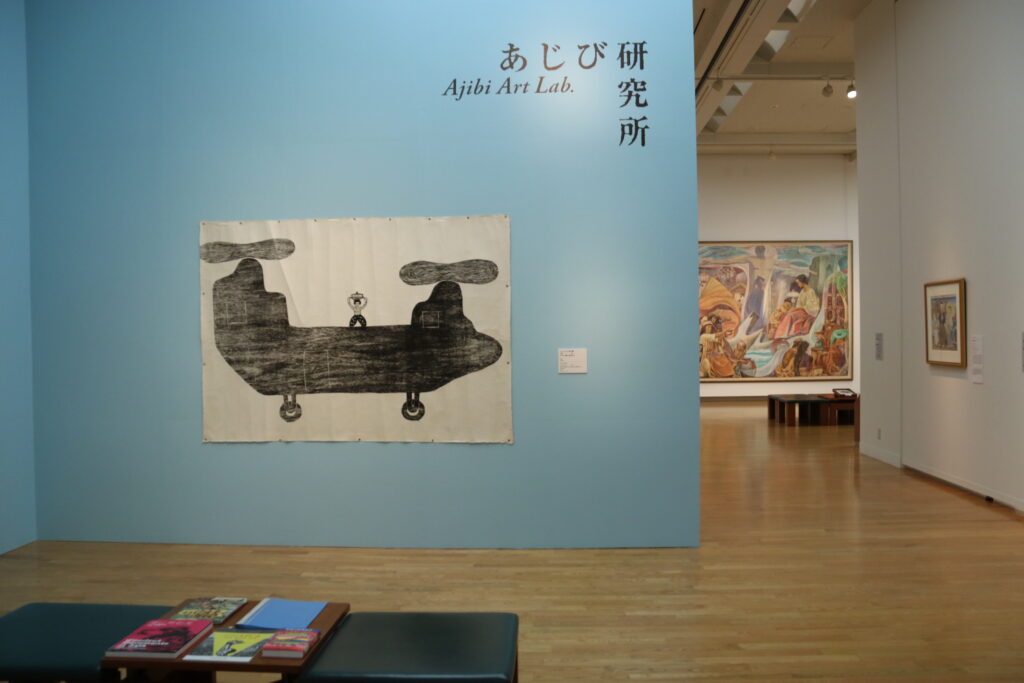
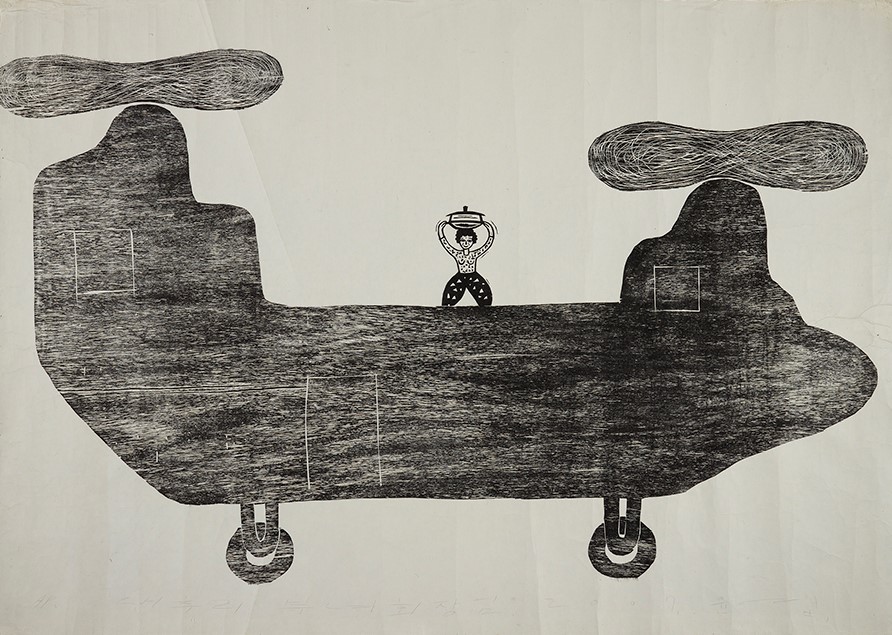
Lee Yunyop (Korea) "Ms President of Taechuri Women's Society" 2006
Ajibi Art Lab vol.1 Lee Yunyop [Korea] "Ms President of Taechuri Women's Society"
- Period
- Mar 28, 2019 〜 Jun 25, 2019
- Venue
Asia Gallery
Who is Lee Yunyop?
Lee Yunyop was born in Suwon in Gyeonggi Province, in 1968. After studying woodcut print at the Department of Western Painting, University of Suwon, he started creating woodcut prints in support of the people devoting their lives to the resistance against social issues. Since 2005, the artist lives in Taechuri village in Pyeongtaek, Gyeonggi Province, where the U.S. military base was relocated. He has produced numerous amounts of woodcut works relating to the life of the villagers and their protests. In 2010, Lee Yunyop founded “Dispatched Art” to create art on the site of the protest and still continues supporting the people and workers. The artist is also known as a successor of Korea Minjung (People’ s) Art Movement in the 1980s Korea.
His works have been shown in Japan through the Art toward the Society: Realism in Korean Art 1945-2005 exhibition (The Niigata Bangaijima Art Museum, Fukuoka Asian Art Museum and others) in 2007, Here are Human Beings exhibition (Sakima Art Museum) in 2011, and Blaze Carved in Darkness: Woodcut Movements in Asia 1930s-2010s exhibition (Fukuoka Asian Art Museum and Arts Maebashi) in 2018.
◆Textual References
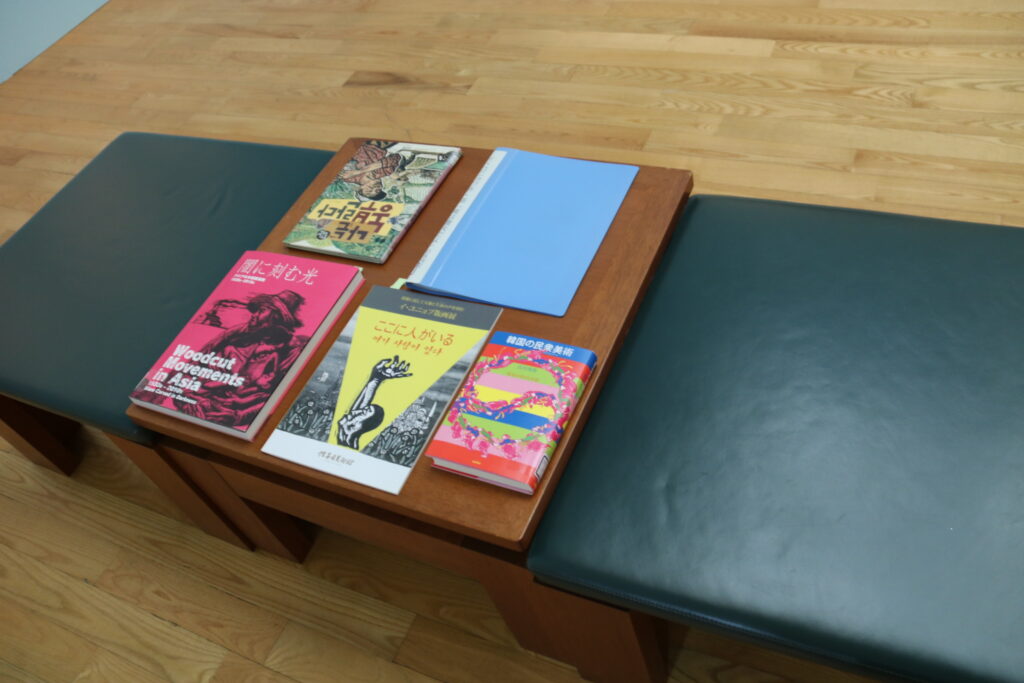
・稲葉真以企画・編集『基地に抗して大地と生命(いのち)の声を刻む イ・ユニョプ版画展 ここに人がいる』(展覧会図録)、沖縄︓佐喜眞美術館、2011 年
・高晟埈(新潟県立万代島美術館)編『民衆の鼓動 韓国美術のリアリズム1945–2005』(展覧会図録)、韓国国立現代美術館・新潟県立万代美術館・福岡アジア美術館・都城市立美術館・西宮市大谷記念美術館・府中市美術館・読売新聞社・美術館連絡協議会、2007年
・黒田雷児(福岡アジア美術館)編『闇に刻む光 アジアの木版画運動 1930s-2010s』(展覧会図録)、福岡アジア美術館・アーツ前橋・読売新聞社・美術館連絡協議会、2018年
・古川美佳著『韓国の民衆美術 抵抗の美学と思想』岩波書店、2018年
・이윤엽『한국현대미술선 25 이윤엽』서울:헥사곤、2015년
・용산참사와 함께하는 미술인들 저『끝나지 않는 전시 용산참사 추모 파견미술 헌정집』 서울:삶창(삶이보이는창)、2010년
With the People: Heat of the Korea People’ s Art Movement
In order to understand Lee Yunyop’ s work, it is necessary to introduce the Korea Minjung Art Movement, which deeply influenced his art. Korea experienced dictatorship from 1961, when Park Chung-hee obtained power through a coup, to the 1980s. In May 1980, the government issued the martial law to oppress the people who fought against the military government. The university students’ protest leaded to the Gwangju Uprising, and the momentum for the democratization movement spread throughout the nation. Minjung Art Movement is a movement which spread throughout Korea because of the Gwangju Uprising. The artists of Minjung Art denied the existing art scene by trying to build a network with normal people and conducting art practices which helped them participate in the social reform. The uniqueness of the movement lays in the multiplicity of the styles of expression. In addition to painting and sculpture, the artists expressed social issues through cartoon, photography, and woodcut print. They further invented a new style of art called “geolgae geurim (large-size banner)” that is hung in guerilla style at the protest site. Woodcuts also played an important role given that it can be easily and cheaply mass-produced. In fact, representative works of Minjung Art were produced in woodcut prints. The history of Minjung Art continued through a Seoul-based “Reality and Utterance” (founded in 1979), the Gwangju-based “Gwangju Free Artists Association” that pushed direct-participation in these first generation Minjung artists, the post-Minjung art movement emerged in the 1990s.This movement focuses on social issues, such as urbanization, labor issues, and the expansion of the American military bases in Korea. “Dispatch Art” founded by Lee Yunyop and other artists in 2010 played a leading role in the post-Minjung Art movement.
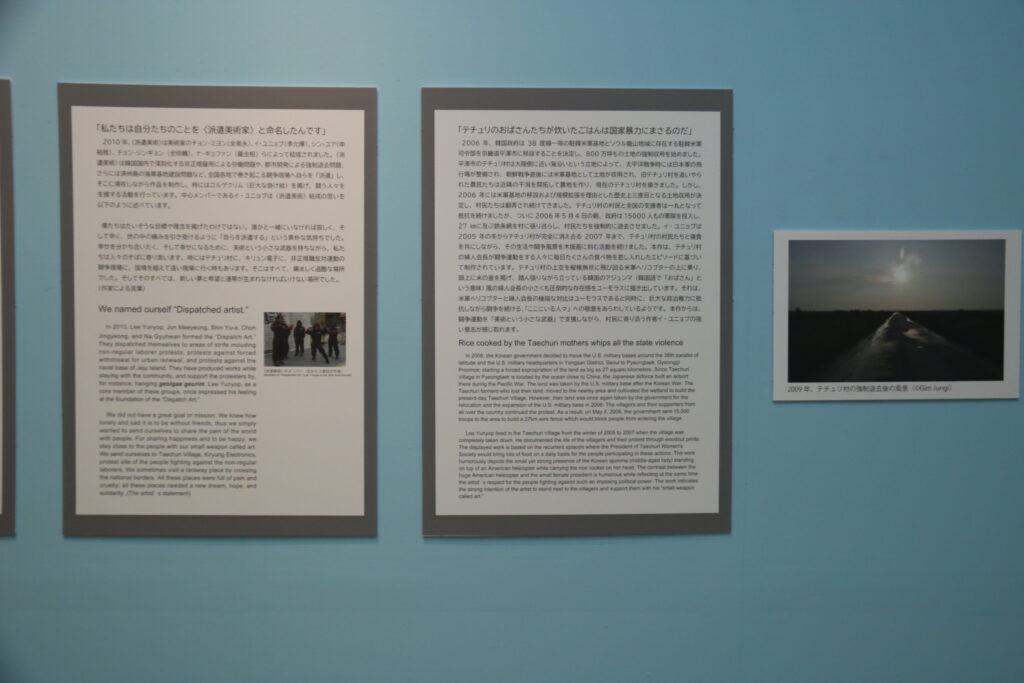
We named ourself “Dispatched artist.”
In 2010, Lee Yunyop, Jun Meeyeong, Shin Yu-a, Chon Jingyeong, and Na Gyuhwan formed the “Dispatch Art.” They dispatched themselves to areas of strife including non-regular laborer protests, protests against forced withdrawal for urban renewal, and protests against the naval base of Jeju Island. They have produced works while staying with the community, and support the protesters by, for instance, hanging geolgae geurim. Lee Yunyop, as a core member of these groups, once expressed his feeling at the foundation of the “Dispatch Art.”
We did not have a great goal or mission. We knew how lonely and sad it is to be without friends, thus we simply wanted to send ourselves to share the pain of the world with people. For sharing happiness and to be happy, we stay close to the people with our small weapon called art.
We send ourselves to Taechuri Village, Kiryung Electronics, protest site of the people fighting against the non-regular laborers. We sometimes visit a faraway place by crossing the national borders. All these places were full of pain and cruelty; all these places needed a new dream, hope, and solidarity. (The artist’ s statement)
Rice cooked by the Taechuri mothers whips all the state violence
In 2006, the Korean government decided to move the U.S. military bases around the 38th parallel of latitude and the U.S. military headquarters in Yongsan District, Seoul to Pyeongtaek, Gyeonggi Province; starting a forced expropriation of the land as big as 27 square kilometers. Since Taechuri Village in Pyeongtaek is located by the ocean close to China, the Japanese airforce built an airport there during the Pacific War. The land was taken by the U.S. military base after the Korean War. The Taechuri farmers who lost their land, moved to the nearby area and cultivated the wetland to build the present-day Taechuri Village. However, their land was once again taken by the government for the relocation and the expansion of the U.S. military base in 2006. The villagers and their supporters from all over the country continued the protest. As a result, on May 4, 2006, the government sent 15,000 troops to the area to build a 27km wire fence which would block people from entering the village.
| Venue | Asia Gallery |
|---|---|
| Admission | Adult 200 JPY / High School&College 150 JPY / Free for Junior High School and Under |
| Organiser | Fukuoka Asian Art Museum |
| Contact | Tel: 092-263-1100 |