
Muscle Game–Bodies in Asian Art
- Period
- Jun 27, 2019 〜 Sep 24, 2019
- Venue
Asia Gallery
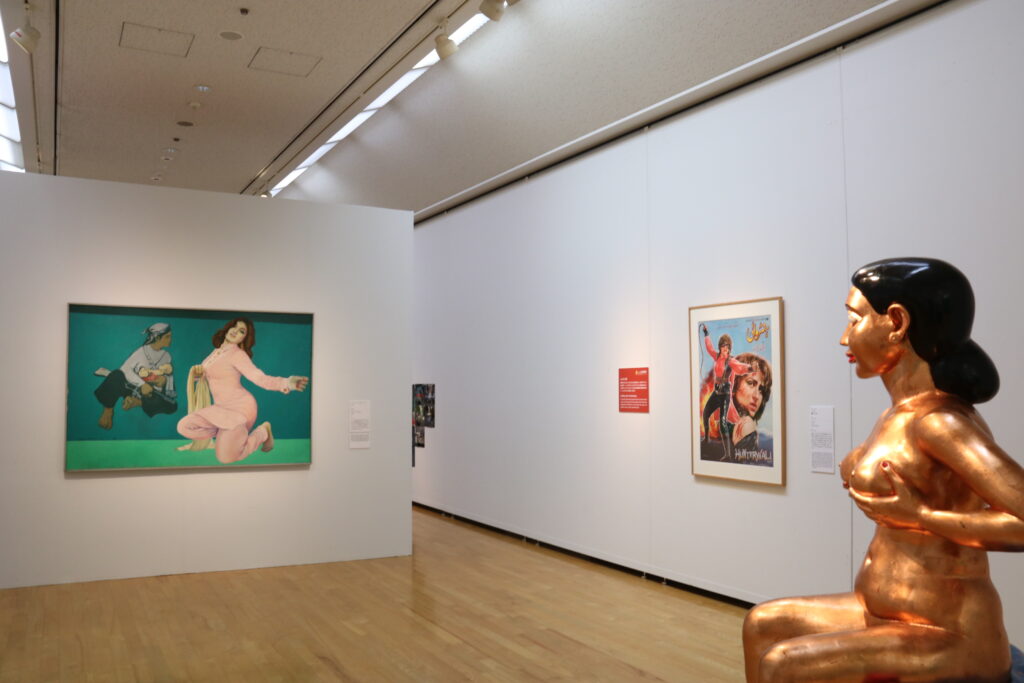
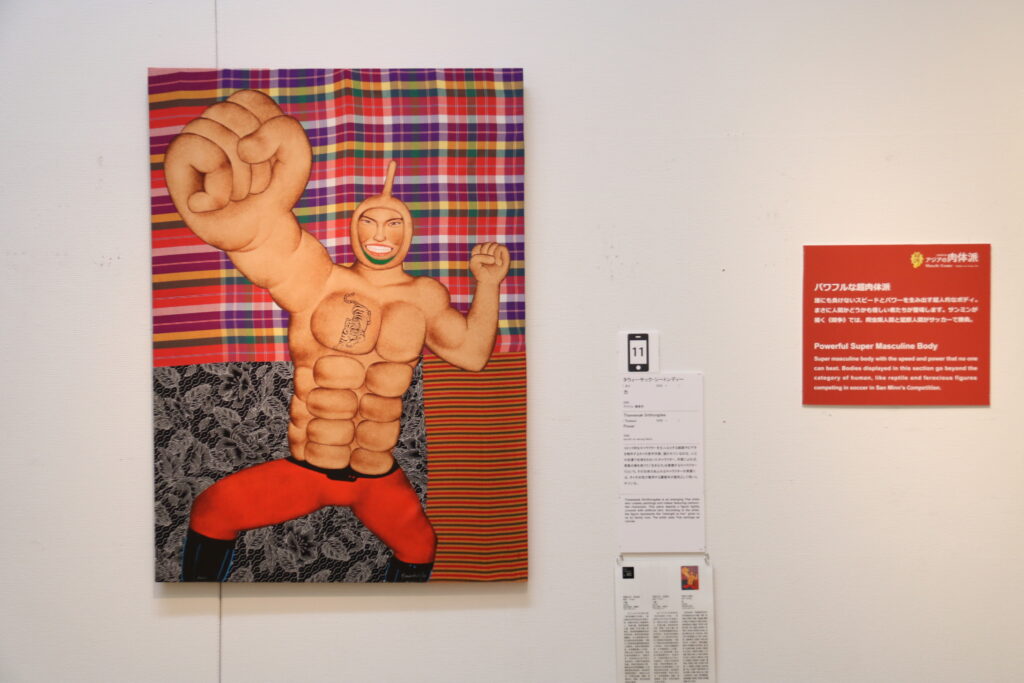
To celebrate the upcoming Rugby World Cup 2019, FAAM, Fukuoka Art Museum and Fukuoka City Museum each plan a unique exhibition featuring their collections. From the super masculine body in the work of Thawan Duchanee (Thailand) to the sophisticated sharp body, or a body with ample curves, representative bodies from the museum collections will meet together.
■Powerful Super Masculine Body
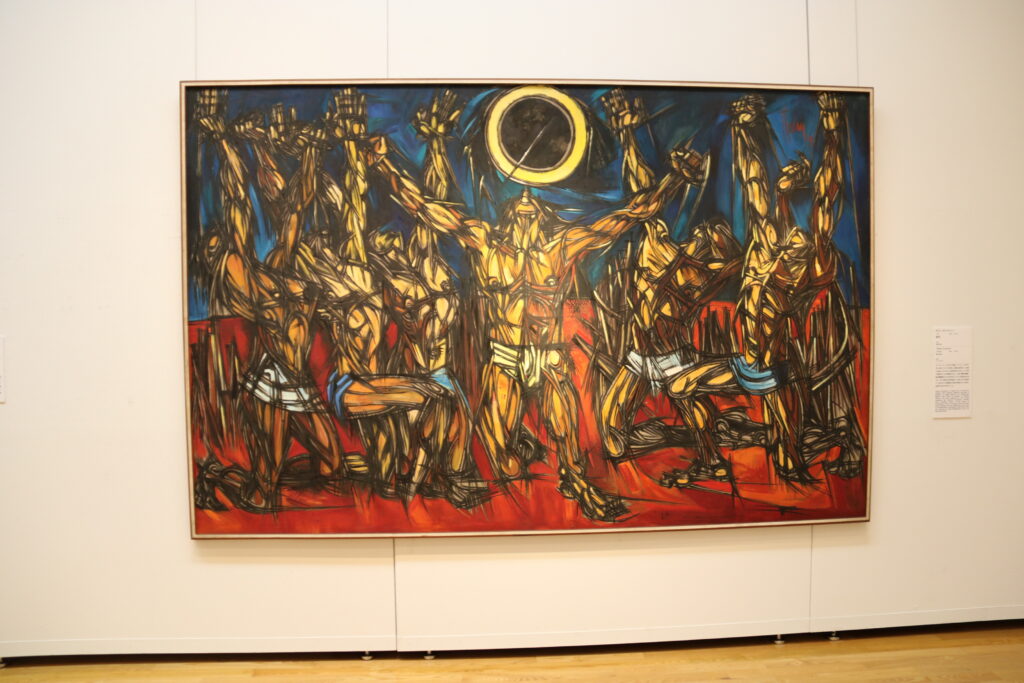
■Healthily Tanned through Physical Labor
■Avant-garde Artists in the Battle Mode
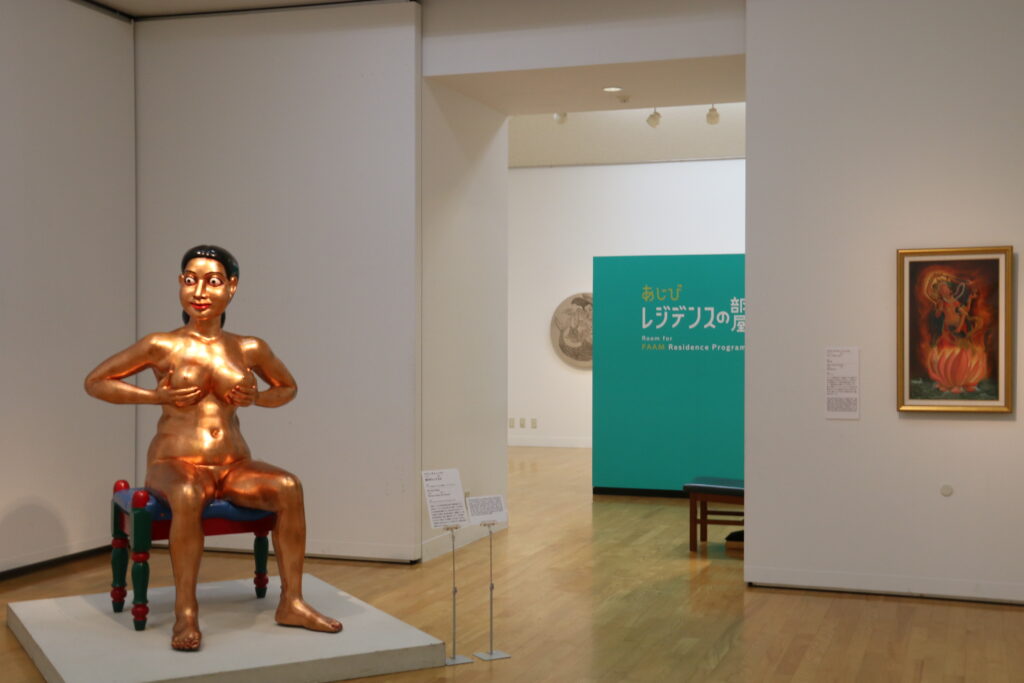
■A Body with a Cushioning
These are only a few examples of the body types you can find in this exhibition. Why not seek out the body that we have not mentioned and label it yourself?
■Powerful Super Masculine Body
Super masculine body with the speed and power that no one can beat. Bodies displayed in this section go beyond the category of human, like reptile and ferocious figures competing in soccer in San Minn’s Competition.
■Healthily Tanned through Physical Labor
Strong sunshine, rain, and wind over the skin – gyms and tanning salons cannot produce the highly toned body that comes from daily physical labor. Look at the fit bodies of the male farmers climbing up the terrace fields carrying their heavy loads.
■Avant-garde artists in the battle mode
These far from masculine artists still seek to challenge the foolhardy battle. He Yunchang wrestles 100 men just to suffer a crushing defeat with only 18 wins and 82 losses. Lee Ming-sheng is a Lee Ming-sheng is a little big man who sought to confront various regulations since the 1980s Martial Law period.
■A Body with a Cushioning
The popular South Asian physique seems to be muscled with a layer of cushioning. From the popular female actors from Bangladesh and Pakistan to the stylish male actors and politicians carry a cushion around their belly.
___________
Chinese Poster
After the foundation of the People’s Republic of China, various posters were produced by the government in order to deliver the political propaganda of the Communist Party to the masses. Some were co-produced in the art universities and some were made in the People’s commune*. These posters are precious resources for learning about the condition of art in China during the 1950s and 1970s.
* People’s commune is a rural administrative organization installed after the Great Leap Forward campaign in 1958. The commune was a collective unit in the rural village and had not only economic function, but also educational and military functions as well.
Film Posters in Bangladesh
Cinema was first introduced in Bangladesh in the 1930s during the British rule. At its peak in the 1990s the number of movie-theatres was around 750. Billboard painters started creating large-size movie advertisement from the 1950s, but this practice had disappeared by the 80s as printed posters with a collage of the actor’s portraits took over. The posters today are displayed throughout the city and create a unique landscape.
| Venue | Asia Gallery |
|---|---|
| Admission | Adult \200 /College & High School \150 |
| Organiser | Fukuoka Asian Art Museum |
| Contact | Fukuoka Asian Art Museum / 092-263-1100 |
| Co-organiser | Fukuoka Art Museum/Fukuoka City Museum/ |
| Remarks | Close: Wednesdays |