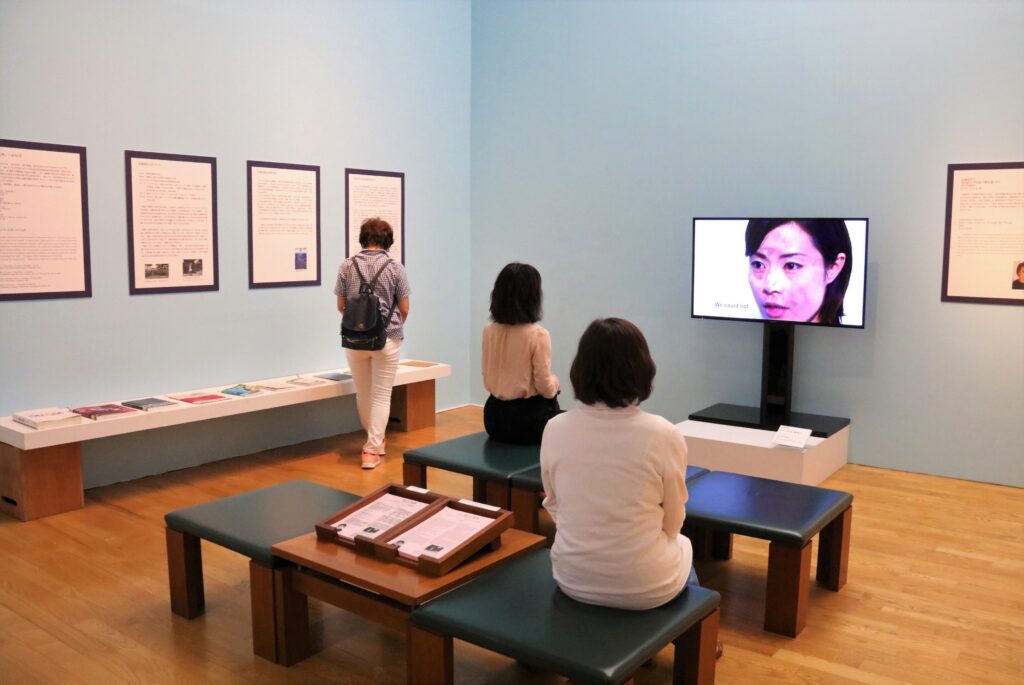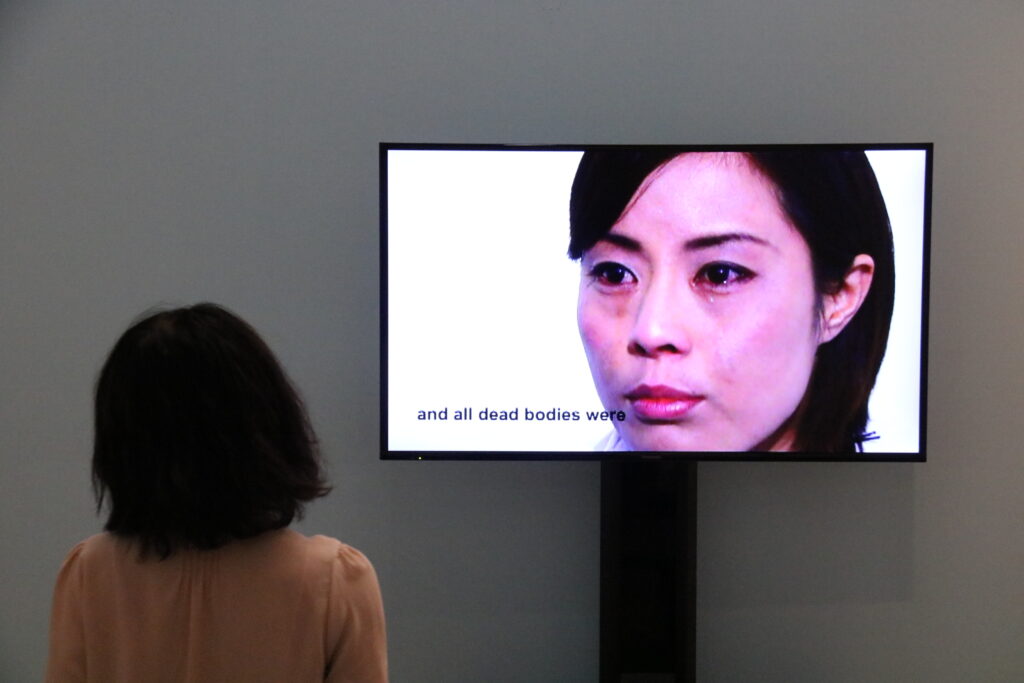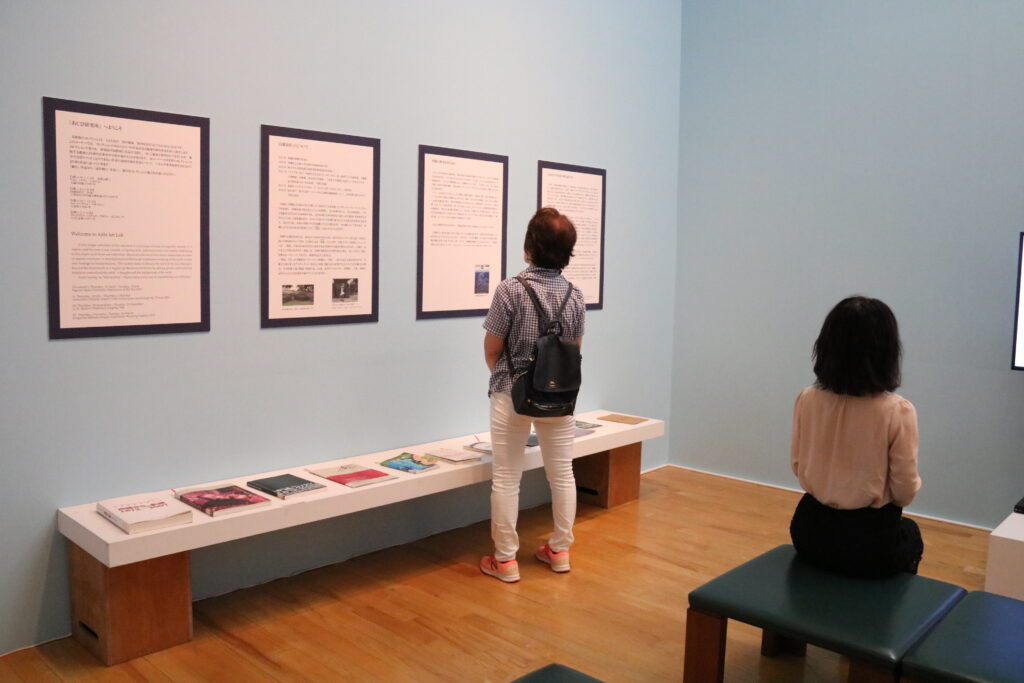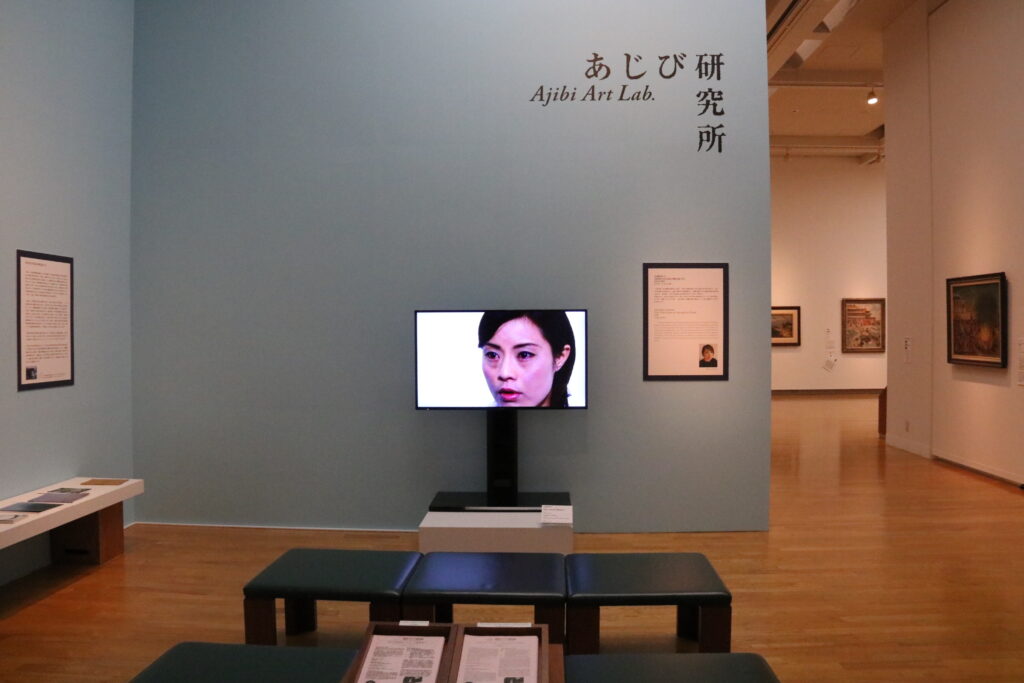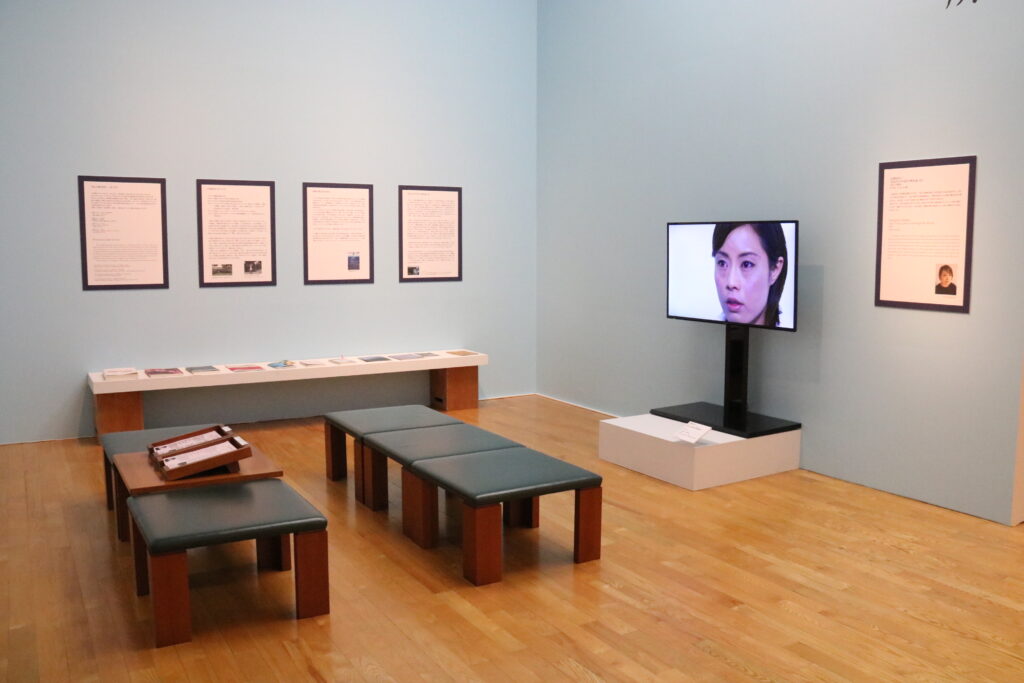
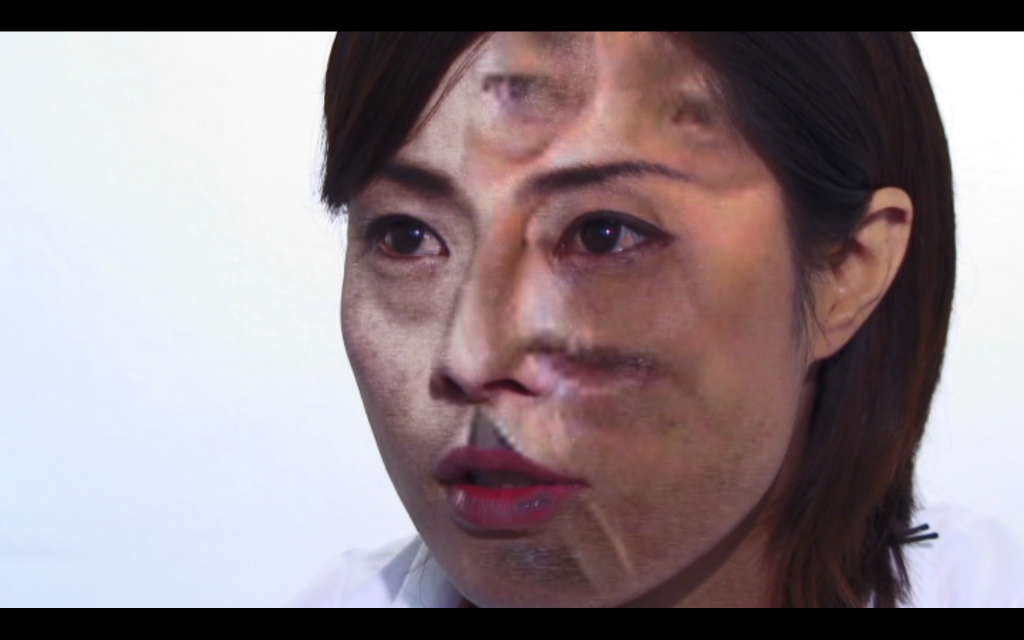
Yamashiro Chikako, Your voice came out through my throat, 2009
Ajibi Lab Series No.2: Yamashiro Chikako, Your voice came out through my throat,2009
- Period
- Jul 12, 2018 〜 Sep 18, 2018
- Venue
Asia Gallery
Welcome to Ajibi Art Lab
Every single collection of the museum is a precious witness of a specific country or a region, and the time it was created. In Spring 2018, Ajibi launched a new section dedicating to the single work from our collection. Museum collections have been researched at a time of special exhibition or international exhibition yet continuous studying of the work reveals new findings or interpretations. This section seeks to discuss the work in the level that goes beyond the framework of a regular permanent exhibition by adding panels and resources helpful to understand the artist’s thoughts and the background of the work.
From “seeing” to “interpreting” – Please enjoy a new way of experiencing our collection.
[Finished] I. Thursday, 19 April – Tuesday, 10 July
Nguyen Quan (Vietnam) Impression of the Sea 1993
II. Thursday, 12 July – Thursday, 2 October
Yamashiro Chikako (Japan) Your Voice Came out through My Throat 2009
III. Thursday, 20 September – Tuesday, 25 December
A. H. Mahver (Pakistan) Longing 1966
IV. Thursday, 2 January – Tuesday, 26 March
Gregorius Sidharta Soegijo (Indonesia) Weeping Goddess 1977
●Yamashiro Chikako
1976 Born in Naha, Okinawa
1999 Graduated from Okinawa Prefectural University of Arts (B.A. Oil Painting)
2002 Graduated from Okinawa Prefectural University of Arts, Graduate School of Formative Arts (M.A. Environmental Design)
2012 Exhibited Your Voice Came out through My Throat in the exhibition, Women In-Between: Asian Women Artists 1984-2012 (In addition to Fukuoka Asian Art Museum, the exhibition toured to Okinawa Prefectural Museum and Art Museum, Tochigi Prefectural Museum, Mie Prefectural Museum). The work became a collection of FAAM after the exhibition.
2017 Mud man (2016) received Grand Prize in “ASIAN ART AWARD 2018”
2018 Mud man (2016) received ZONTA Prize in the 64th International Short Film Festival Oberhausen
At Okinawa Prefectural University of Arts, Yamashiro founded a dance performance group, Women’s Gymnastics. The group performed throughout Okinawa and became popular. In the school, Yamashiro was doing oil painting but started questioning to receive art education that was brought into Japan from the West in the modern era. She then started exploring the means of expression that matches to Okinawa where she grew up. Around the same time, Yamashiro encountered a sad incident in her family, which affected her view of life and death and led her attention to Hakaniwa (a garden attached to a tomb in the Okinawa-style grave), which is a familiar sanctuary for Okinawa people.
In the traditional Okinawan cemetery, each tomb has a house-like stone tomb (concrete is becoming popular lately) with a garden in front of the tomb. This garden is called Hakana (tomb-garden in Ryukyuan language). At Shimi Festival in March in the Chinese calendar, family members gather to eat together in Hakata to greet their ancestors. Yamashiro sees this Hakana as a unique public sphere of Okinawa where this and another world meets and has created a series of video works that document her performing in Hakana.
Yamashiro’s performance at Hakana created a controversy with some locals but gave her a certain confidence to express her Okinawan identity using her own body. Yamashiro did her solo exhibition, Women Graveyard, at Maejima Art Center (Okinawa) after graduating from the school, and has continued creating the works centering video since then.
●Looking back the history of Okinawa
Ryukyu Kingdome was established in 1429. It stayed in a position of a tributary state under the Ming and Qing dynasty and became subordinate to the Satsuma domain after the invasion in 1609. Ryukyu was recognized as one of Japan’s han (domain) in 1872 under the Meiji government and became Okinawa Prefecture following Haihan-chiken (abolition of feudal domain system and the establishment of prefectures) in 1879. In the 20th century after the economic crisis following WWI, Okinawa people started to migrate to other parts of Japan as well as Pacific islands such as Saipan, and Hawaii.
In the end of the Pacific War, Okinawa became the battleground of the only ground combat in Japan, which ended in more than 120,000 civilian casualties. After the war ended, the scorched Okinawa was placed under the U.S. occupation until its return to Japan in 1972. In 1975, shortly after its return and following the success of 1970 Osaka World Expo, Okinawa Ocean Expo ’75 was held under the theme of “the sea we would like to see.” This expo created a stereotypical image of Okinawa as “blue ocean islands,” which has continued to be used today to appeal to the tourists. Contradictory images of Okinawa as “islands of the U.S. bases,” where 75% of the U.S. base in Japan is concentrated, and “islands of tourism” were created around this time.
With such history of Okinawa in her mind, Yamashiro, a post-return generation of Okinawa, says the following.
[T]here were already several kinds of hazards in Okinawa by the time I was born. Incidents and accidents one after the other… The older I got, the more I came to notice them. I used to wonder how on earth it had all come about and I came to the conclusion that it was impossible to understand any of the issues faced by Okinawa unless you understand the significance of the Battle of Okinawa in 1945. So I decided to find some people who had actually experienced the Battle of Okinawa and ask them about it directly. (Asanuma ed., 2016, 30)
※Reference
Asanuma, Keiko, ed. Circulating World – The Art of Chikako Yamashiro. Tokyo: Yumiko Chiba Associates. 2016
● Your Voice Came out through My Throat
Yamashiro used the reminiscence therapy method, a brain-activating rehabilitation to remember the past memories, that was used at a daycare service center in Okinawa. Yamashiro chose to interview not the “war experience storyteller (kataribe)” who voluntary speak about the Battle of Okinawa in public, but an ordinary elderly who kept their war experience deep inside their memory, and sought to understand their experience using the reminiscence therapy method.
In this video work, we see another person’s face overlapping with the Yamashiro’s. He is one of the interviewees Yamashiro met during the project. His family moved to Saipan during WWI to seek for a job, but all died in 1944, the last year of the Pacific War, by jumping off from Banzai Cliff. A nine-year-old boy was left alone as a sole survivor of the family. The video starts with him talking about his extremely painful memory.
In order for truly understanding the word of this elderly man, Yamashiro wrote down what he said, and tried to copy all his word and how he talked like where to bless. It was an attempt to use her throat (body) to deliver his memory. However, for Yamashiro with no actual experience of the Battle of Okinawa, it was difficult to completely devote herself to the tragedy he experienced, and thus the shooting continued for dozens of times. When shooting, the video of the man was played in front of Yamashiro, and she sought to synchronize her with him by focusing all her attention on him. At the same time, Yamashiro projects his face onto her face as if her face is a screen, to create a fictitious effect of body transformation through which two faces synchronize. In-between the scenes, symbolic images of Okinawa Prefectural Archive and its storage space are inserted, which seem to imply the future of memory-telling from the person with an actual memory of the war to the mere document with no actual sense of memory.
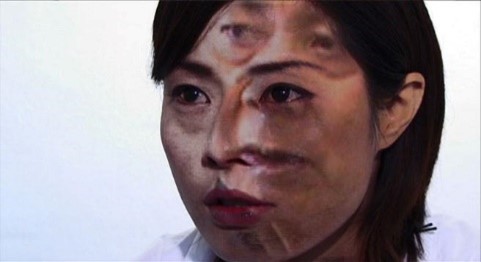
Your Voice Came out through My Throat. 2009
Collection of Fukuoka Asian Art Museum
The other’s pain even if it stays inside the person’s memories can be virtually experienced and lived again as one’s own pain, and thus it can be carried on or, at lease, has the chance to survive in future generations. (Asanuma ed., 2016, 70)
※Reference
Asanuma, Keiko, ed. Circulating World – The Art of Chikako Yamashiro. Tokyo: Yumiko Chiba Associates. 2016
Using Yamashiro’s body as a channel for the painful memories of an elderly man, Your Voice Came out through My Throat is a challenge to carry on the memories of the other by using one’s own body as a channel for the painful memories of an elderly man. In other words, it is a challenge to deliver the reality of the war that Yamashiro never experienced to today’s Okinawa and the world beyond Okinawa where the viewer with various cultural background lives using the sense of time and space unique to video. Yamashiro continued her inheritance series that deliver the voices and the memories of Okinawa, and her works have been highly acclaimed internationally.
| Venue | Asia Gallery |
|---|---|
| Admission | Adult \200 /College & High School \150 |
| Organiser | Fukuoka Asian Art Museum |
| Contact | Fukuoka Asian Art Museum / 092-263-1100 |
| Co-organiser | Fukuoka Art Museum/Fukuoka City Museum/ Cultural Promotion Department, Economy, Tourism & Culture Bureau, Fukuoka City |
| Remarks | Close: Wednesdays |