Fascinating Faces: Museum of Portraits
- Period
- Mar 22, 2013 〜 Jul 2, 2013
- Venue
Asia Gallery B
Welcome to “Museum of Portrait”!
Compiled from our museum collection, this exhibition brings together numerous portrait paintings and photographs from Asia, which we cannot help but be drawn to its compelling faces.
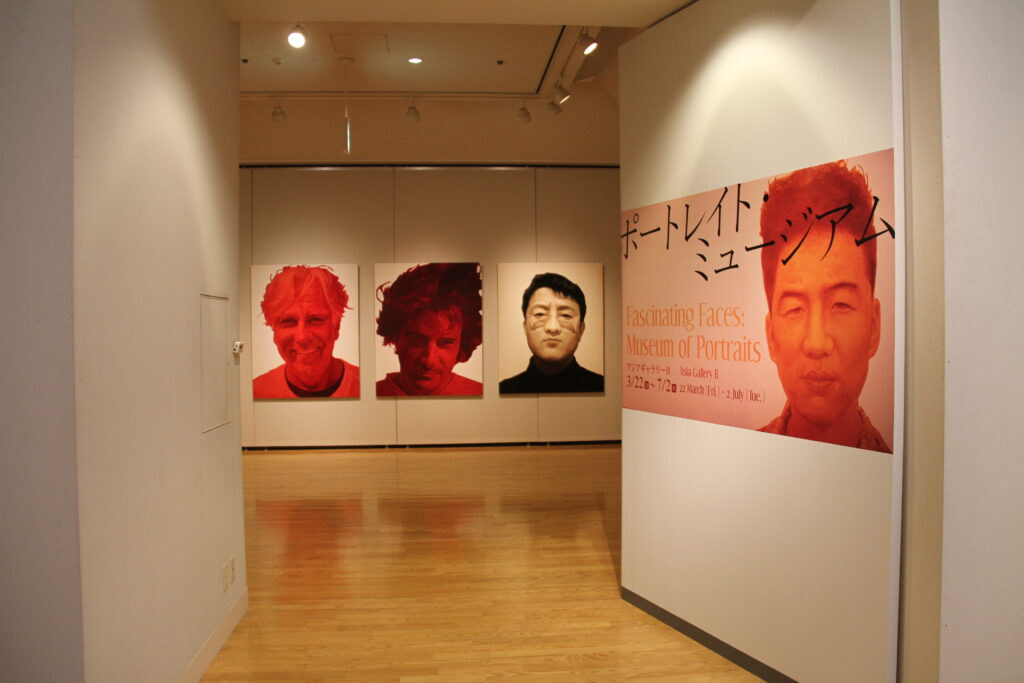
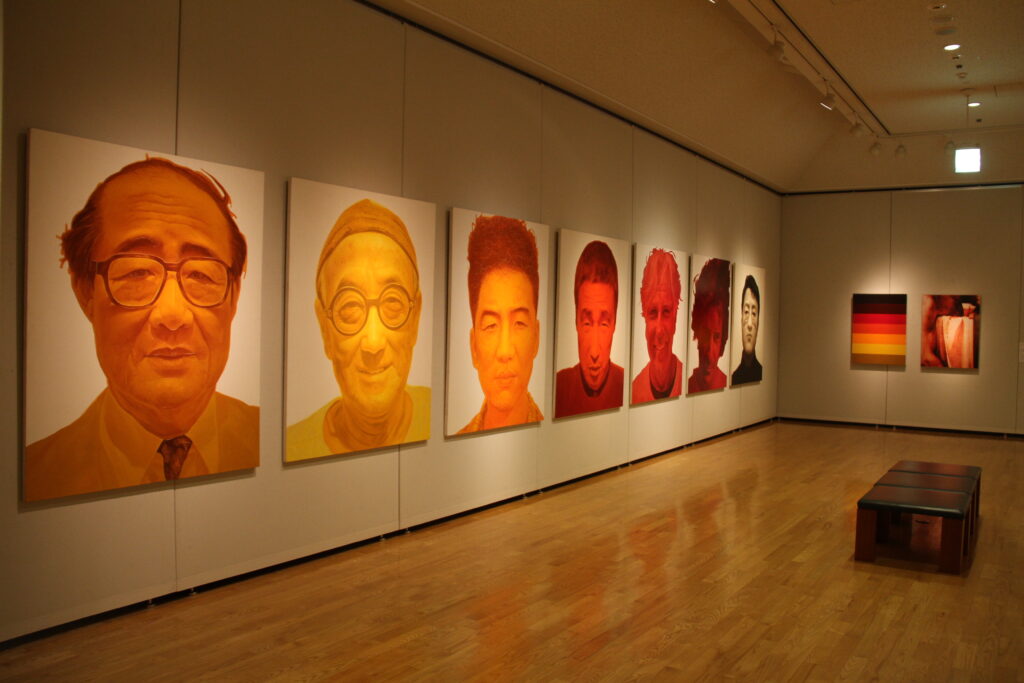
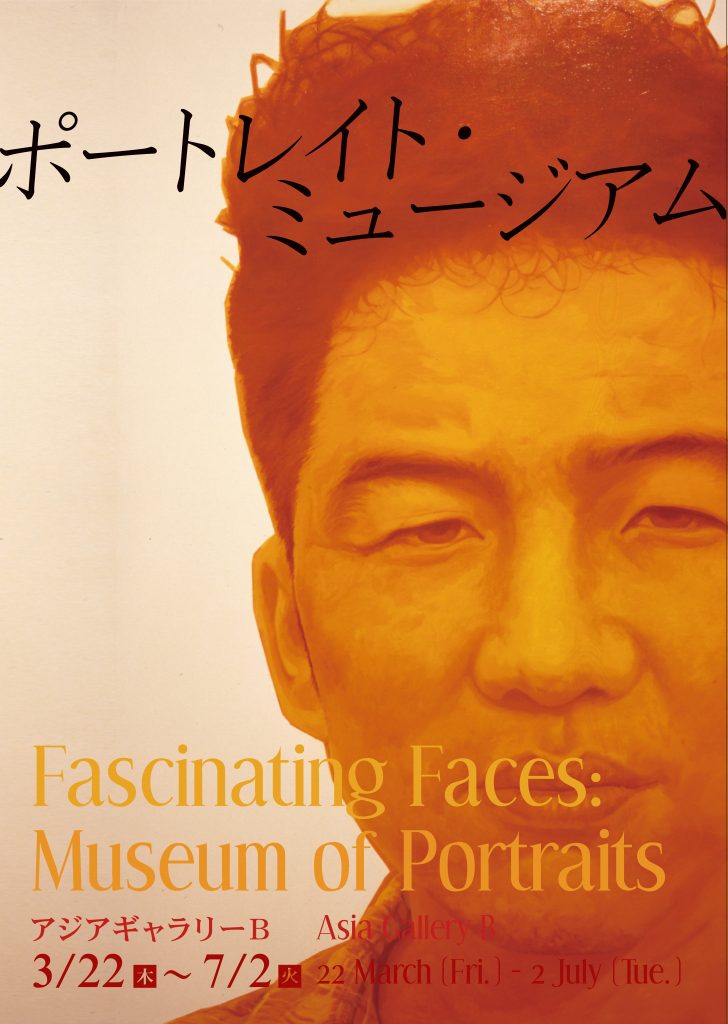
Chou Nak-boem’s “Portrait Museum,” which consists of a series of portraits, colorful as a rainbow, comes at the first set-out of this exhibition. Inspired by Jacques-Louis David’s “Death of Marat” painted in the late 18th Century, this work represents this portrait-stuffed exhibition. On your right is a cropped image replicated from “Death of Marat.” Curiously enough, neither the whole painting nor the face of dying Marat, which is the most important part of the work are presented in this piece. Instead the piece only shows a part of his body, which we cannot find who it is.
Along with seven portraits, exhibited is the seven-horizontally-colored abstract painting. Based on his observation, Kho Nak-boem chose the colors from the cropped part of “Death of Marat” for creating this piece. Each color corresponds to the seven portraits.
This Kho Nak-boem’s work shows his analytical approach to follow a procedure toward art making. Furthermore, the artist always takes his own methodology for the creation of a painting, regarding the selection of subject, colors and drawing methods. For creating his painting, the subject of portrait shall be chosen among his own friends and acquaintances, an appropriate color shall be chosen for each subject, and his portrait work is always drawn using a photograph.
In a word, portrait varies from ideas and methods of its creation to another. Categorizing such portrait works into four groups as below, this collection show provides you some analytical views on each work.
I. Looking Like a Photograph!? : A Correlation between Photography and Painting
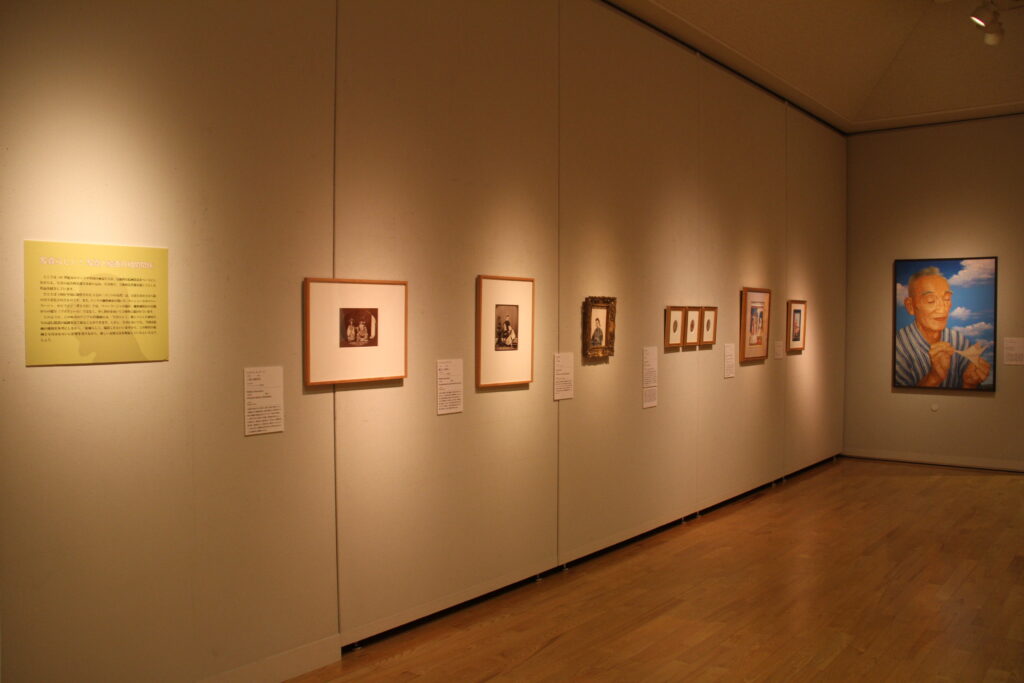
This part of the exhibition introduces pieces created by Indian and Chinese painters in the late 19th Century. While based on traditional pictorial techniques, they attempted to make a portrait more realistic and three dimensional by incorporating a vivid description of photography in their works.
Here are some examples. The three pieces of “Indian Woman,” created around 1880 were composed of actual black and white photographs, with color added. Furthermore, in the piece “Maharaja Serfoji II of Tanjore with a Minister,” the Maharaja is at a diagonal and his face has been depicted more three-dimensionally, instead of in profile, which is specific to miniature paintings.
As seen in these pieces, we can learn how painters in Asia at that time put much effort making a portrait look like more photographic. At the other extreme, it is said that initially photography of that time would be made “like a painting,” using examples from the composition of the painting. While being influenced by one another, both paintings and photography on the day was exploring a new expression.
II. Self-Portraits
What kind of work comes first to your mind when you think of “self-portrait”? It could possibly be pictorial works or sculptures, which illustrate the hidden inner of artists, overwhelmed with artistic melancholy. Many self-portraits shown here, however, were actually filmed and created as a document of art projects or performances. And thus, these works are not anything of that kind, which allows us peep into the inner world of artist.
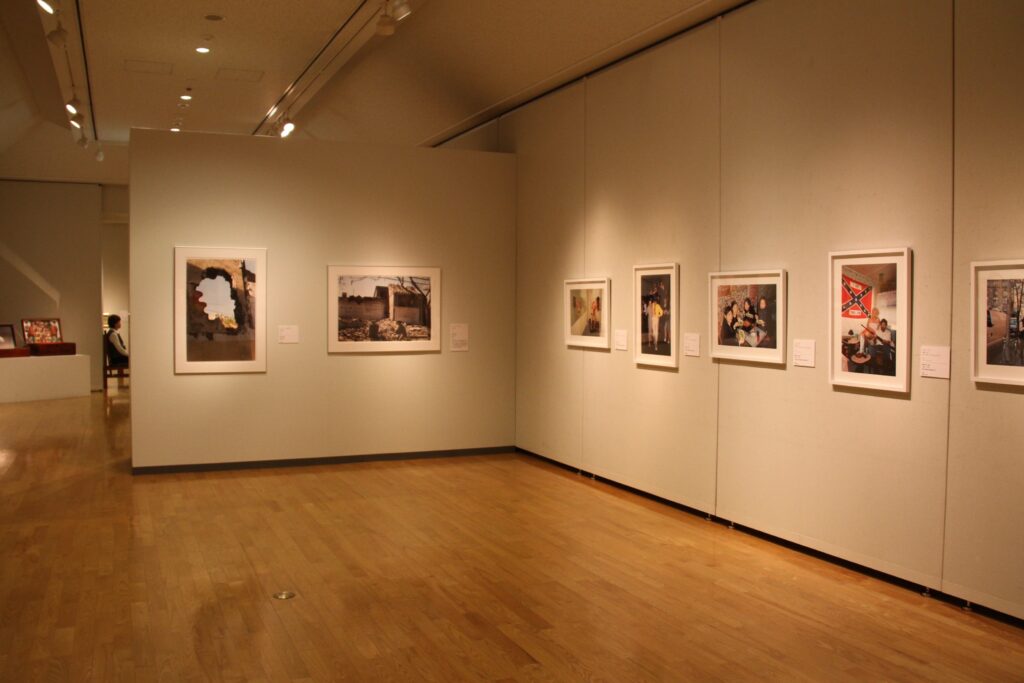
Nikki Lee’s work consists of various snapshot photographs, which she herself filmed her with diverse groups of people. Without special attention, no one can recognize there is always the same person, the artist, in each photograph. Heavily disguised, yet she does not do it only for her photo-shooting projects. According to the artist, she only allows herself to film when she feels certain that she has already become one of the particular group, physically and mentally, after having spent a good deal of time.
To this, the work of Tseng Kwong Chi, the series of his self-portrait taken at tourist sites over the world, never reveals anything about his own personality or color. Wearing sunglasses and Mao suits, the artist appear with an unreadable expression in each photograph. Having a lot in common with the works of Zhang Dali who created simplified profiles on thousands of walls, Tseng’s self-portraits present himself as an interchangeable figure with the others, while these portraits are meant to depict “he- himself.”
III. Memory of Faces
“And especially when I met the portraits on display at the museums. I was moved by a queer emotional response, a kind of illusion of a chance encounter by a time-machine that is beyond confines of time and space.”
The words of Kho Nak-boem, who created “Portrait Museum”, raise a question: why are people so greatly attracted to the “face”? This part of the exhibition brings together works, which focus on the people around artists.
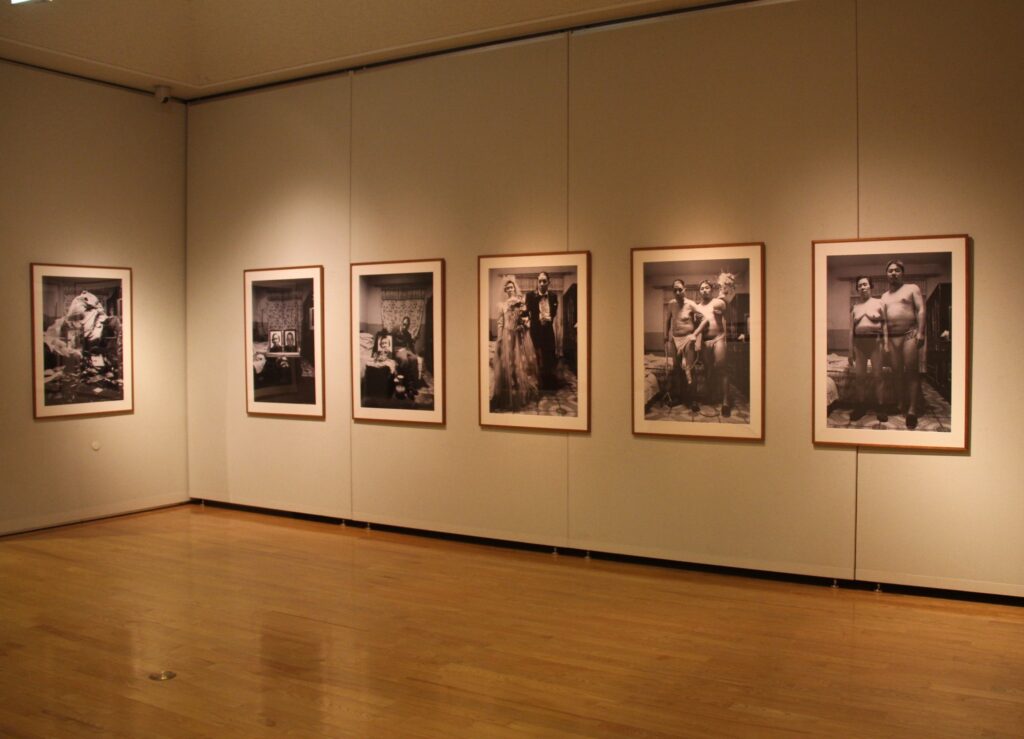
Zhuang Hui’s works are commemorative photos of hundreds of members of organizations and communities, which were shot in one setting. For shooting these seemingly ordinary photographs, the artist actually needed several negotiations with so many people in order to make them consent to his photo-projects. In the light of such fact, these works can be seen as graduation photos of his own art project.
Shooting photos of parents suffering from an illness or a close friend, Song Yongping’s “My Parents” and Xu Zhiwei’s “Painter Fang Lijun #2” might give us a completely different impression. However, both works could have been filmed by only artists, who were close to their photogenic subjects.
IV. Boundless Power of Face
Here are some works holding a certain kind of might, such as portraits of well-recognized politicians and religious paintings.
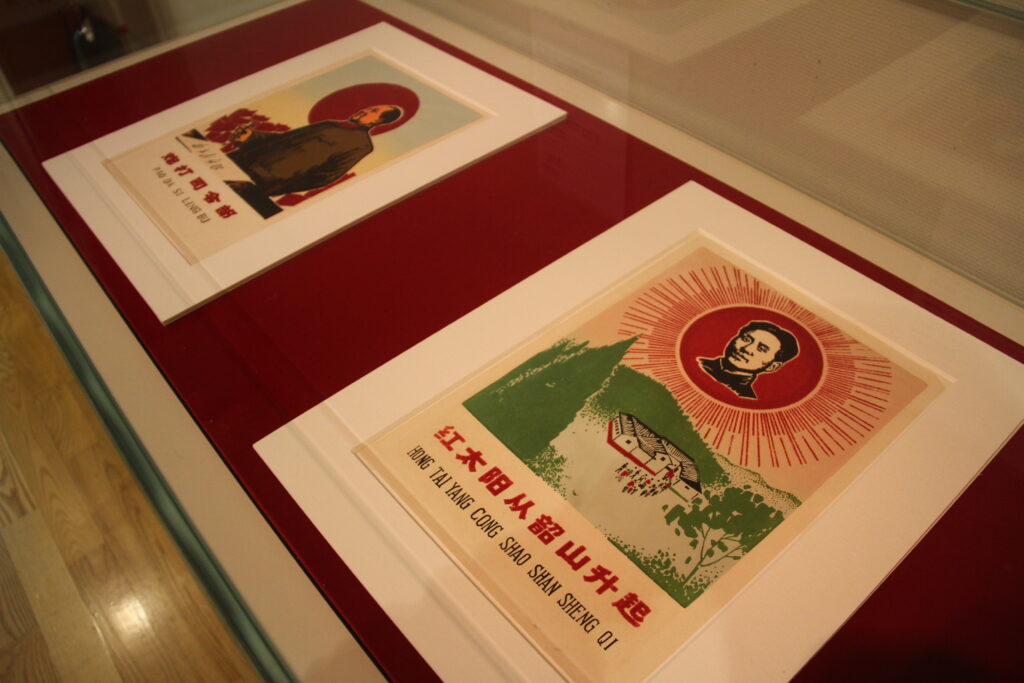
Since the establishment of the People’s Republic of China, a massive amount of propaganda posters has been issued. The portrait of Mao Zedong was very frequently adopted in these posters, especially in “Cultural Revolution Prints” produced during the Cultural Revolution from the 1960s to the 1970s. The piece “Cultural Revolution Print 6” is a fine example to show such portrait of Mao Zedong, which is depicted as the sun with a pleasant smile and the sea of sunflowers spreading out below him. During this period, Mao Zedong was likened to the dazzling sun and so the people were sunflowers facing the sun. This expression had a lasting impact on Chinese visual culture and the internal world of the people in China. Portraits of idolized politicians with authority like this piece can be found not only in China but also in the other socialist states, and even everywhere around the world. Furthermore, those portraits are strikingly similar in the formulated style and the posture of its subject.
Such formulation of portrait can be applied to some religious paintings as well. Let’s look at Nalini Jayasuriya’s “Christ” and “Mary,” and Jamini Roy’s “Three Marys” as an example. Following the traditional Christian Icon style, these pieces depict the portrait of Christ and Mary facing front.
| Venue | Asia Gallery B |
|---|---|
| Admission | Adult: ¥200(¥150) High School/College: ¥150(¥100) Junior High School and Under: Free |
| Organiser | Fukuoka Asian Art Museum |