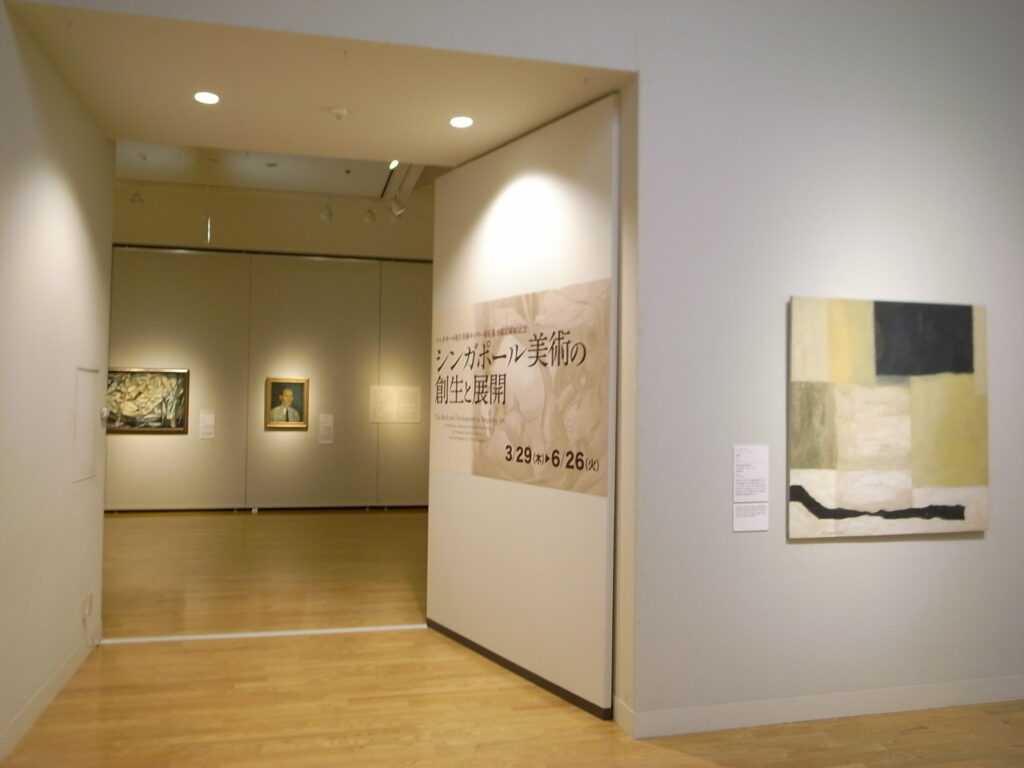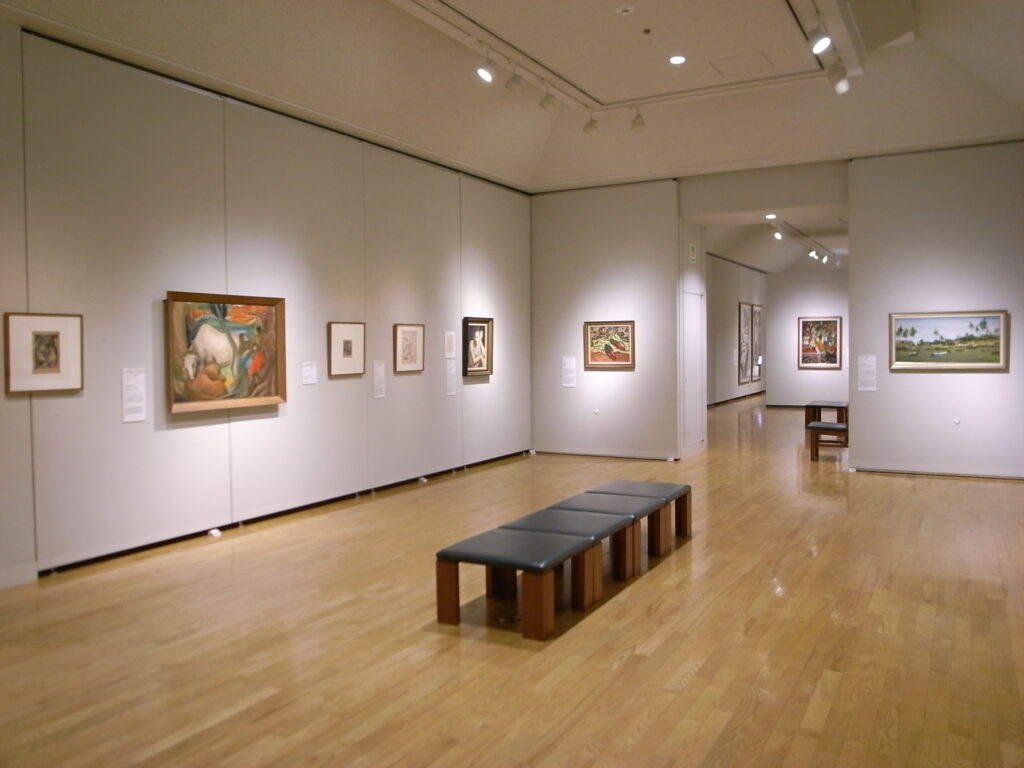
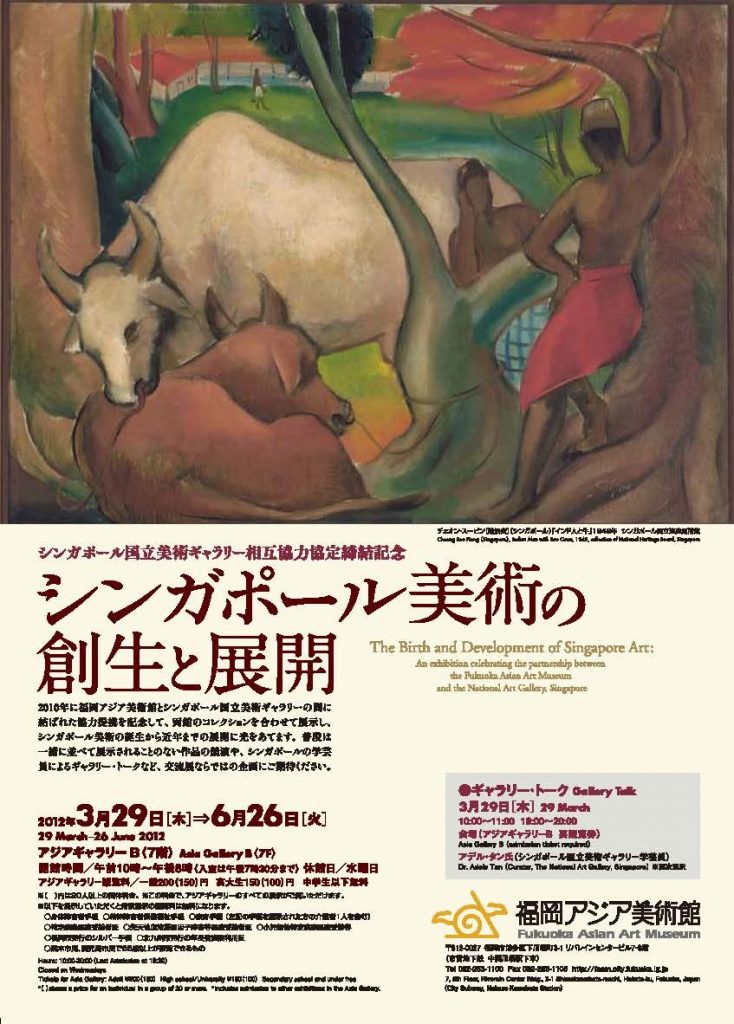
The Birth and Development of Singapore Art: An exhibition celebrating the partnership between the Fukuoka Asian Art Museum and the National Art Gallery, Singapore
- Period
- Mar 29, 2012 〜 Jun 26, 2012
- Venue
Asia Gallery B
Foreword
The National Art Gallery, Singapore (TNAGS), due to open in 2015, focuses on modern Southeast Asian art and will be the largest art museum in the region. TNAGS and Fukuoka Asian Art Museum (FAAM) formed the long-term bond of co-operation in 2010 for furthering exchange through the sharing of exhibition, curatorial and managerial expertise. Commemorating the agreement on the co-operation, this exhibition shows Singaporean art masterpieces from both museum collections, and sheds light on the history of modern and contemporary Singaporean art, from the time of pioneers to the present diversified expansions of Singaporean art.
Hereafter, TNAGS and FAAM will boost exchange through (1) Loan of Collection, (2) Co-organisation of exhibitions, (3) Academic research, and (4) Exchange training programme for curatorial/ managerial staff. We would like to express our heartfelt thanks to TNAGS for kindly lending their precious pieces and kind support across various aspects of the exhibition.
Pioneers of Singapore Art
In the area where is now Singapore and Malaysia, modern art has been formed and developed by mainly Chinese painters who learned Western modern art in China and Europe since the 1920s. In 1936, the Society of Chinese Artists was established centred on Tchang Ju Chi and organised sketching groups and exhibitions, urged exchange with artists in Penang, China, Hong Kong, and energetically developed activities in Singapore and beyond. In 1938, aiming to provide art education to the children of Chinese, the Nanyang Academy of Fine Arts was formed, and welcomed its first director, Lim Hak Tai from Amoy (Xiamen), China. It began its journey from then on as the Malay Peninsula’ s first dedicated art school.
The school was forced to cease its operations, however, during the Japanese occupation period (1942-1945) and Tchang Ju Chi, leading the Society of Chinese Artists lost his life in a purge by the Japanese army.
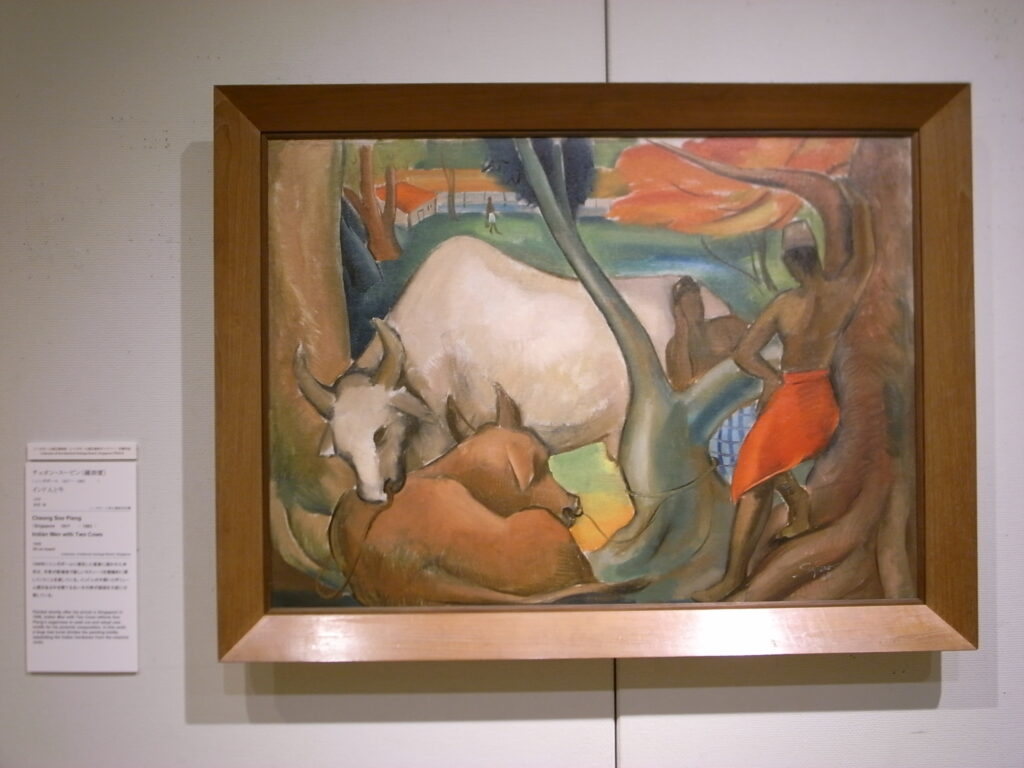
After the war, in 1946, the Society of Chinese Artists led by Liu Kang was revived and artists who had moved to Singapore after the war, such as Chen Wen Hsi and Cheong Soo Pieng, as well as graduates from the Nanyang Academy of Fine Arts began to take the lead in the art world. These artists looked to the natural features of the Malay Peninsula for their subject matter as well as forming links in their works to the customs of the island of Bali and other surrounding regions, contributing to the creative work of this region’ s unique modern art.
On the Way to Independence―Perspectives on Society
After Japan’s defeat in the war in 1945, the Malay Peninsula reverted back to British rule. Singapore in the 1950s, the period of post-war devastation and before independence, experienced continued political instability, and a difficult period for the Singaporean people. At this time, young artists graduated from the Nanyang Academy of Fine Arts,influenced by the wood-block print movement of Lu Xun, with independence from colonial rule as their goal, began to produce wood-block prints with social themes, taking the harsh lives of the Singaporean people as subject matter. The “Equator Group”, formed in 1956, was the base for these young artists’ activities. Their work was mainly released in magazines and newspapers to reach the attention of the general public, encouraged wood-block print groups to be formed among Chinese school students, and spread throughout the Chinese community. However, with the arrival of independence, the group was ironically perceived by the new government as a threat to social order and driven into decline.
New Experiments in Form―Abstraction and Sculptural Work
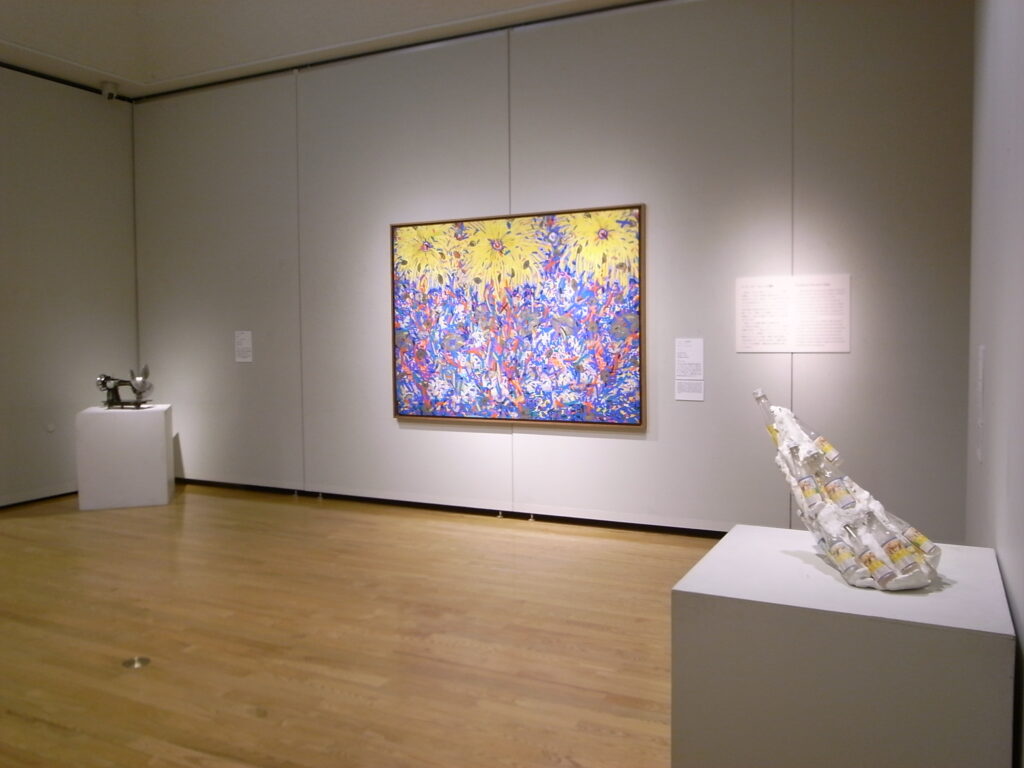
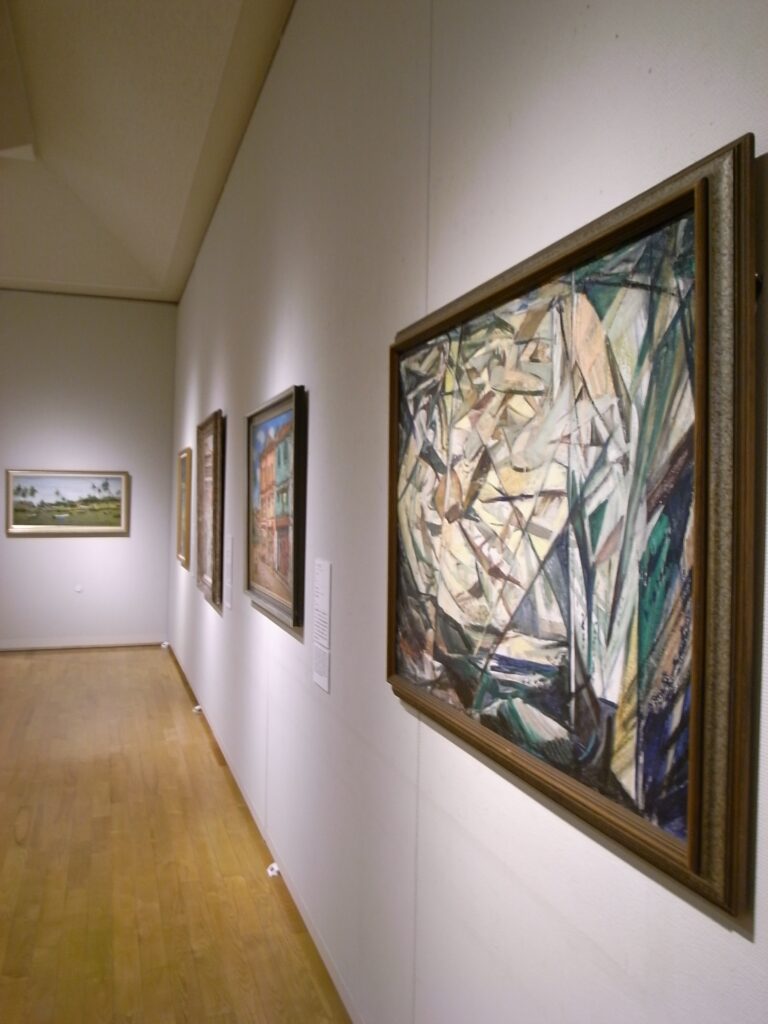
Until 1982 the Nanyang Academy of Fine Arts was not recognised as an educational establishment that could award university level qualifications. Because of this, from the 1960s and 70s, many students aiming to become artists travelled to Europe or America to study. Having studied in Britain, Anthony Poon and Teo Eng Seng are representative artists from this generation. Anthony Poon pays attention to the visual effects created by use of colour, and by capturing in his work the rhythm of the industrialising city, pushed abstract expression to a new level. On the other hand, Teo Eng Seng ceased painting in oils from 1979 and instead become involved in producing three-dimensional work
from paper and discarded materials and objects, and paved the way for other art forms to follow, such as installation.
The Birth of “The Artist Village”
In 1988, Tang Da Wu returned from studying in Britain and created a new wave in the art scene of Singapore. Until then mainstream art in Singapore had remained mostly experimental in material and form, but Tan brought new methods in performance art with a social message, realizing his idea that anybody can produce artistic expressions with their own body, he has made a big impact on Singapore art.
(In recognition of this achievement he received the 1999 Fukuoka Asian Culture Prize from Fukuoka City.)
In 1988, stimulated by Tan’ s activities, highly motivated young artists gathered around him and formed “The Artists Village (TAV)”. Amanda Heng and Lim Poh Teck, introduced in this section, were members of this community. Perhaps in order to by-pass the strong censorship of performance in public places by the government, the artists have produced work together, opened exhibitions, staged new performances, and dared to realize new expressions.
Multiple Narratives―Singapore Art in Recent Years
Entering into the 2000s the Singaporean government gave a new level of importance to its policy on culture and opened
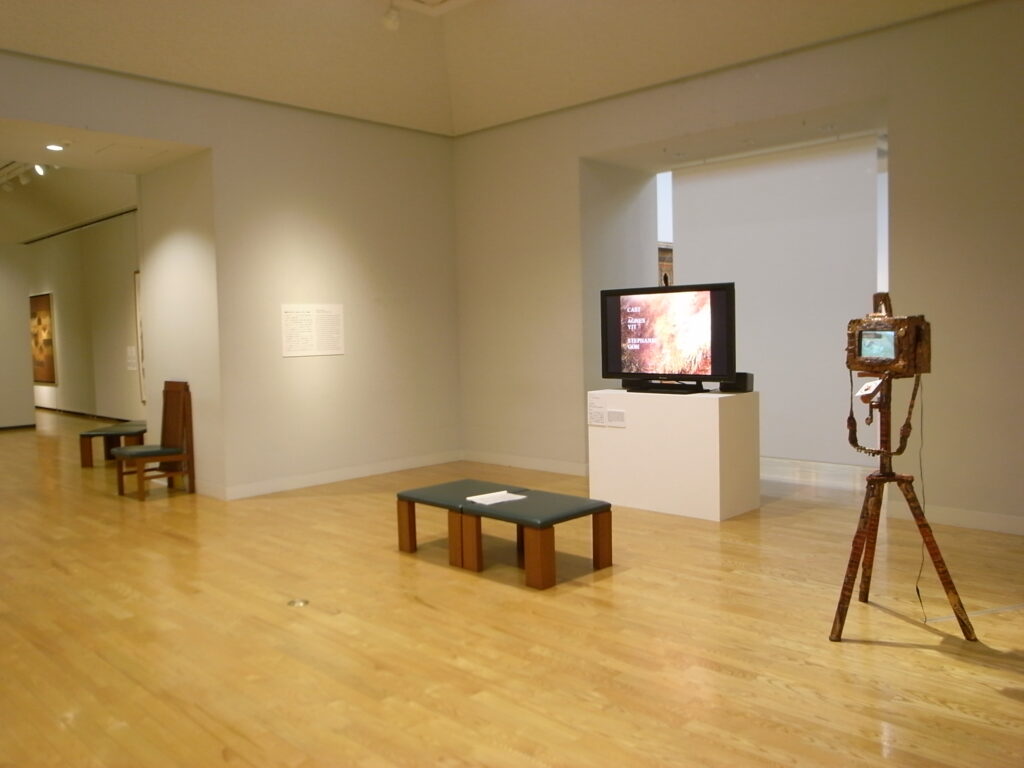
international exhibitions (the Singapore Bienniale, from 2006), fitted out galleries and museums, encouraging international art galleries to open in Singapore, offered subsidies to artists, and has in various ways supported the art scene. Artists’ activities have also diversified remarkably as never before, by participating in exhibitions and artist in residence programs in and outside of Singapore and managing their own art spaces. Three video works introduced here, released since 2005, were created in the environment of this period.
Gaining attention in international exhibitions, Ho Tzu Nyen’s theatrical pieces recreate Singaporean origination myths, demanding of us what is ‘history’ . Participating in artist in residence programs across the globe, Joo Choon Lin’ s real footage of street scenes in Melbourne and Singapore, rendered in live-action animation, showing great humour and impish playfulness, reveals to us a fresh world of imagination.
Gallery Talk
Date: Thursday, March 29, 2012
Time: 10:00-11:00
Venue: Asia Gallery B (Entrance ticket is required for participation).
Speaker: Adele Tan (Curator, The National Art Gallery, Singapore)
| Venue | Asia Gallery B |
|---|---|
| Admission | Adult: ¥200(¥150) High School/College: ¥150(¥100) Junior High School and Under: Free |
| Organiser | Fukuoka Asian Art Museum |