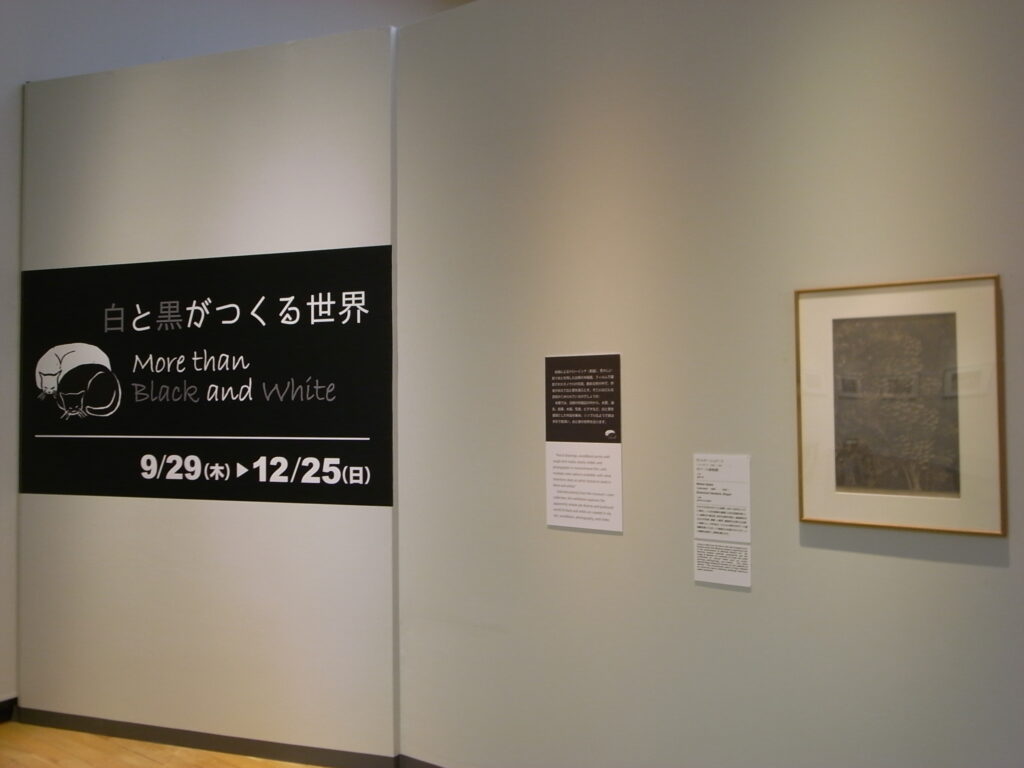
More than Black and White
- Period
- Sep 29, 2011 〜 Dec 25, 2011
- Venue
Asia Gallery A
Pencil drawings, woodblock prints with rough etch marks clearly visible, and photographs in monochrome film; with multiple color options available, with what intentions does an artist choose to work in black and white?
Selected entirely from the museum’s own collection, this exhibition explores the apparently simple yet diverse and profound world of black and white art created in ink, oils, woodblock, photography, and video.
1.Ink
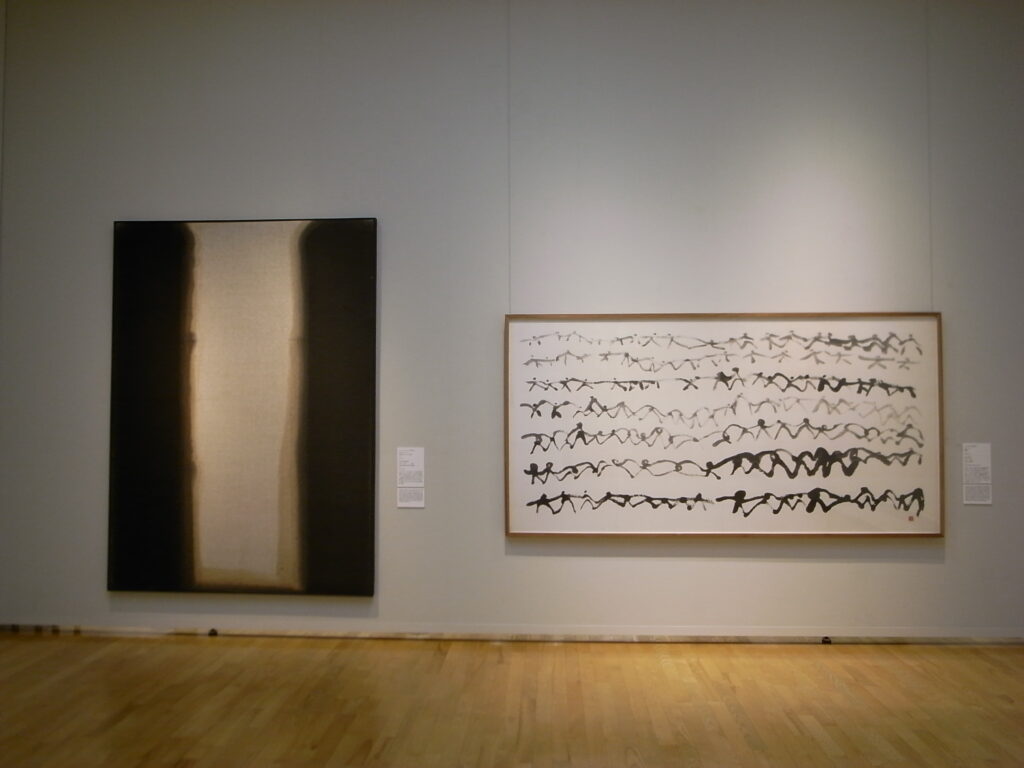
Using ink for painting and calligraphy is the oldest and most familiar form of black and white art in East Asia. With shades of ink containing limitless variations, and techniques such as “kasure” (dry scratchy effect) and “nijimi” (bleeding effect), ink painting is an eloquent and richly expressive medium that at times can have much more of an impact than work in color. Based on such tradition, Suh Seok from Korea, aspires to the renovation of ink painting and has
been consistently producing works of abstract expression using ink medium.
2.Oil
Here two artists have produced works in oil paint that are deeply suggestive of ink painting.
The Korean artist Yun Hyongkeun drips paint onto the canvas and uses the stains created to
produce work that gives us a distant reminder of the runny or drizzly style used so skilfully by
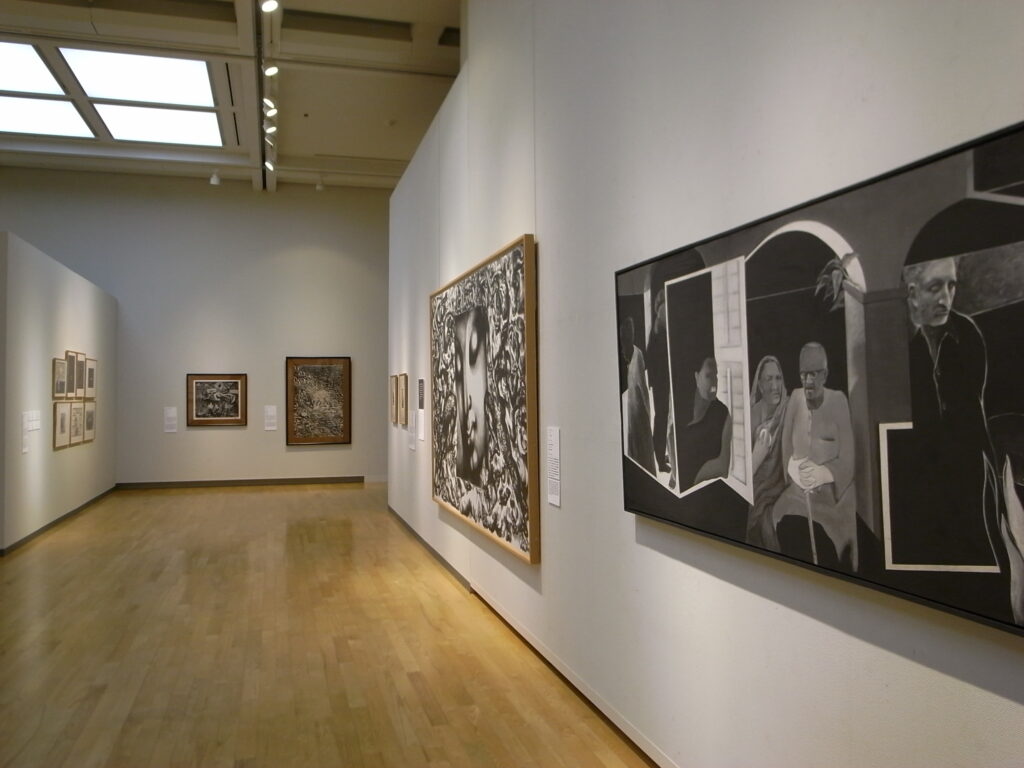
traditional ink painters. The Thai artist Thawan Duchanee has developed an original style based
on a Buddhist outlook producing many pieces in black and white over large surfaces. His powerful piece presents a world of contrasting forces, the sacred and the earthly vulgar, life and death, tranquillity and confusion, light and shadow locked in a close struggle with each other for supremacy.
3.Pencil
The moment we want to write or draw something we reach for a pencil, the most readily available tool. However, depending on the artist the very same pencil can be used to create a huge variety of expressions. The work by Indonesia’ s Walter Spies (exhibit at the entrance) builds up a poetic balance of light and shade in finely detailed pencil drawings. The Singaporean artist Tang Da Wu makes excellent use of the liveliness that can be expressed with pencil lines with a rather rough touch to create works on societal themes. Park Seobo, from Korea, produces a work utilizing the trace of arbitrary actions, like graffiti left in the margins of a notebook,
by light random scribbles of pencil across the entire canvas as creating a rhythmic effect.
4.Woodcut
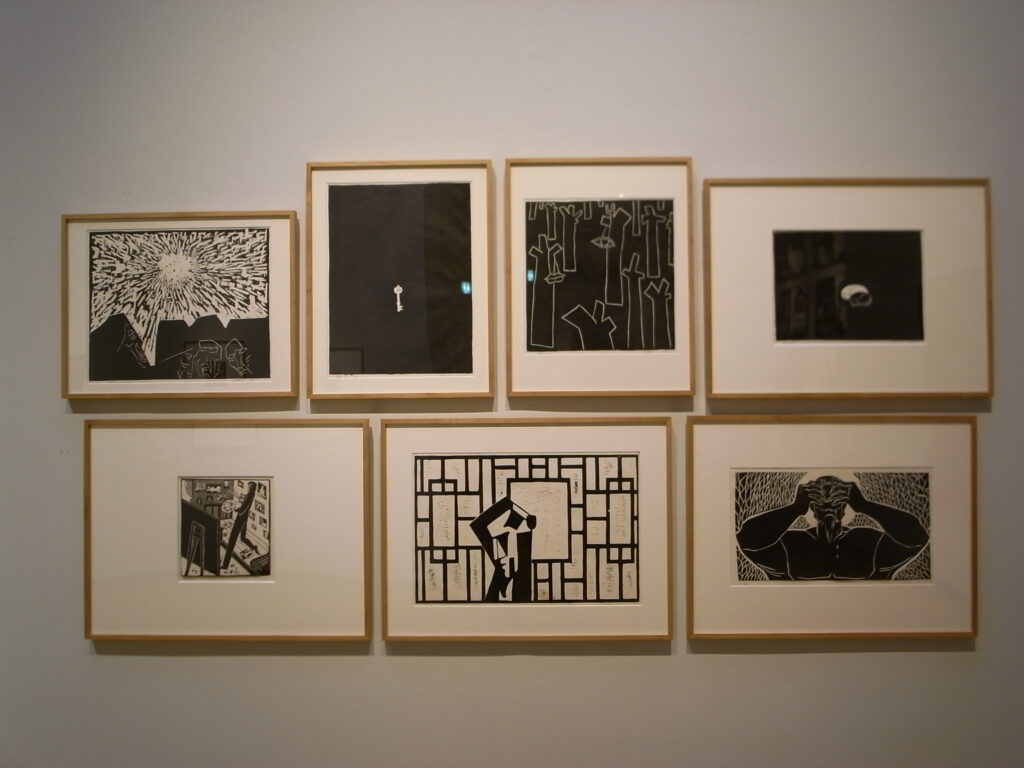
The reality of meaningless war and its victims, the loneliness of young people unable to connect and relate to society, the day to day life of those at the base of society; these are the differing themes of three artists from Japan, China and Singapore working with woodcut print. Though the directions they have taken differ, by using the same tool, the wood carving knife, and applying it with clear purpose, all their work shows a strong will to create a message.
5.Photography
Created through the harmonious balance of black and white, the unique sense of distance,
presence and light between camera and subject are characteristics of monochrome photography.
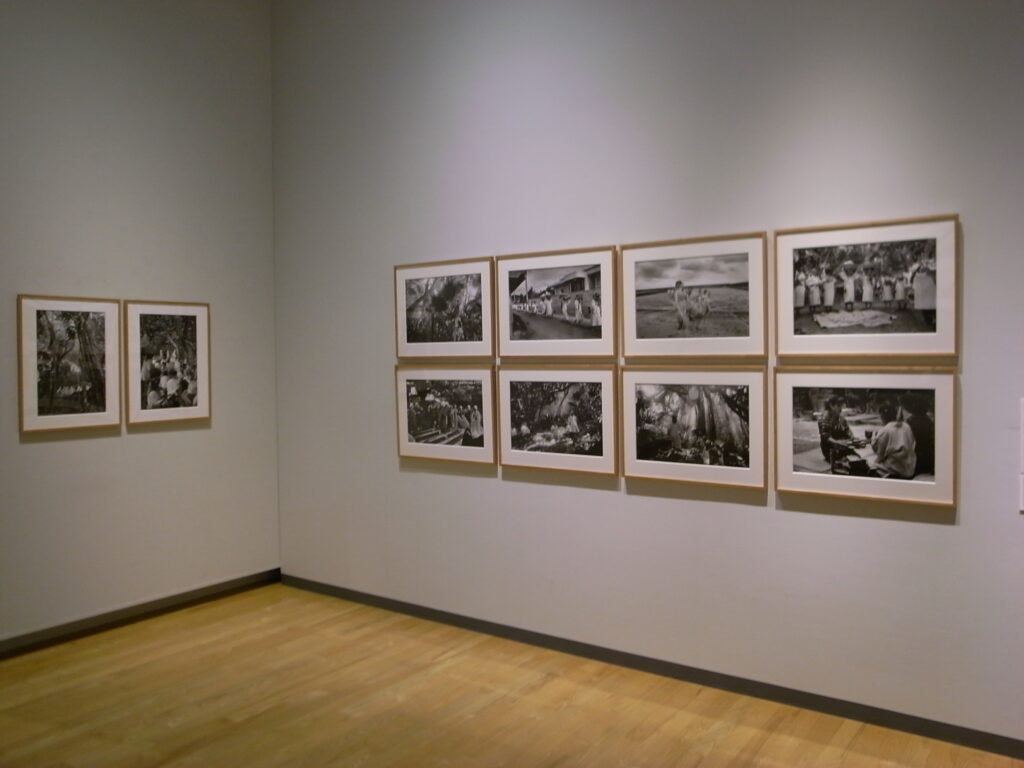
Particularly because Gao Bo’ s photographs are in monochrome, the eyes of his Tibetan subjects contain a noticeable light. This Chinese artist brings an energetic feel to his work that surpasses that of previous photographs of Tibetan people. The photographs by Higa Toyomitsu that record Okinawan religious ceremonies capture a soft light pouring over the women performing their ritual resulting in a beautifully sublime space full of life.
| Venue | Asia Gallery A |
|---|---|
| Admission | Adult: ¥200(¥150) High School/College: ¥150(¥100) Junior High School and Under: Free |
| Organiser | Fukuoka Asian Art Museum |