
Into the Grassland – Light and Darkness of Mongolia
- Period
- Mar 31, 2011 〜 Jun 28, 2011
- Venue
Asia Gallery A
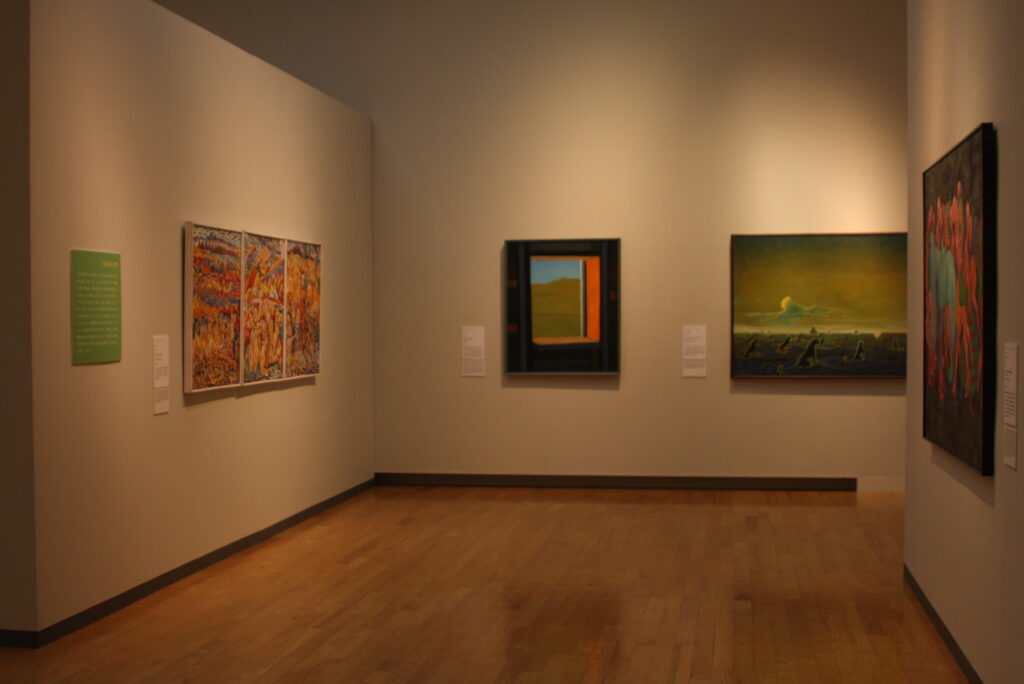
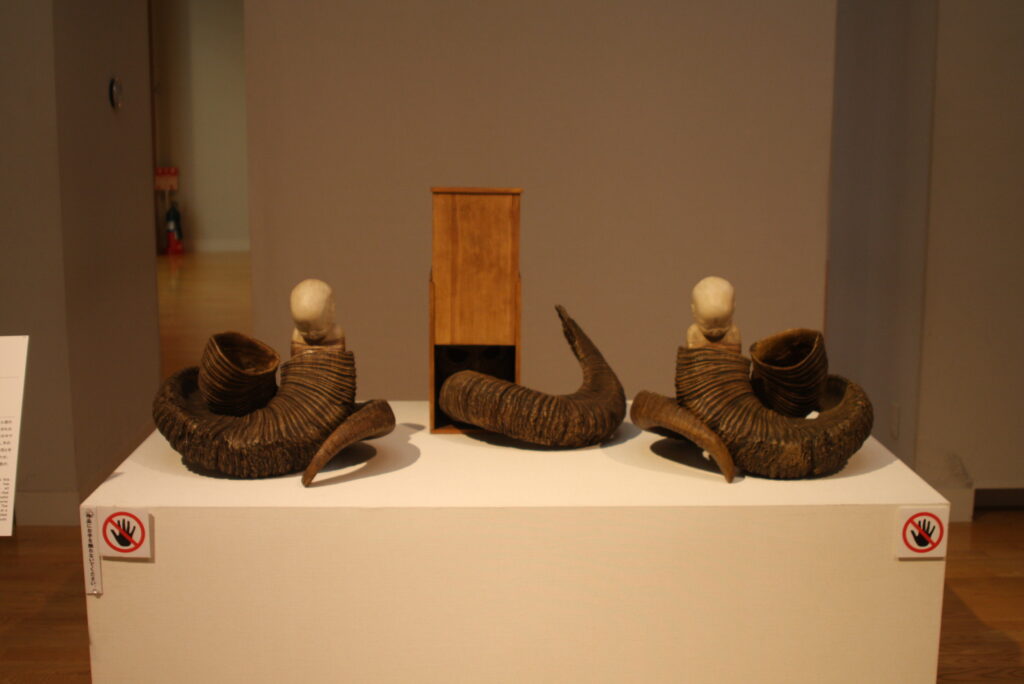
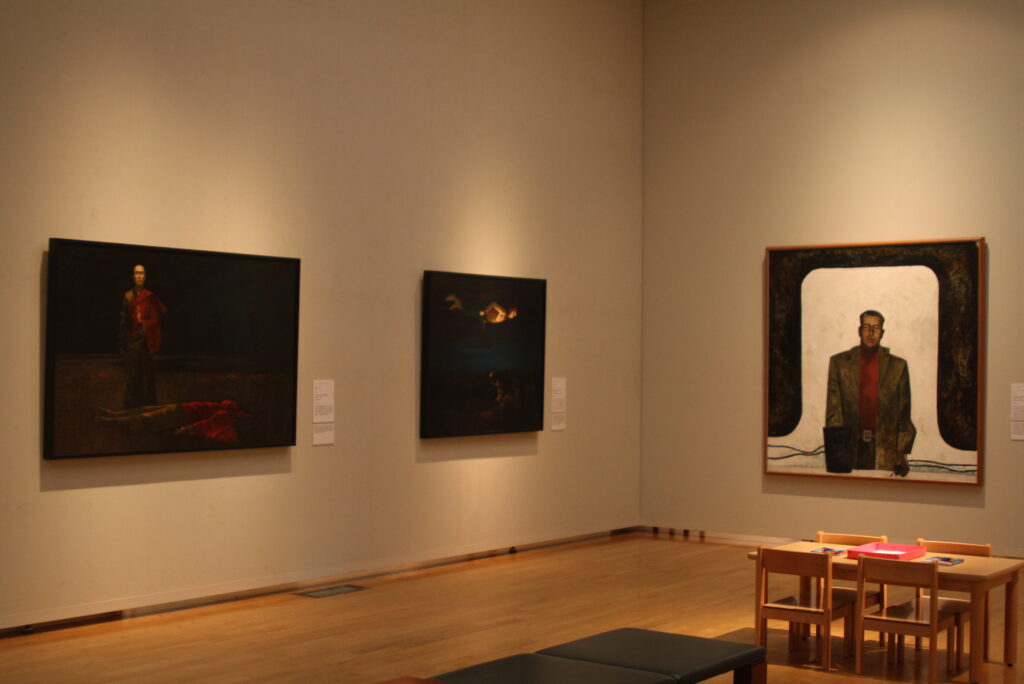
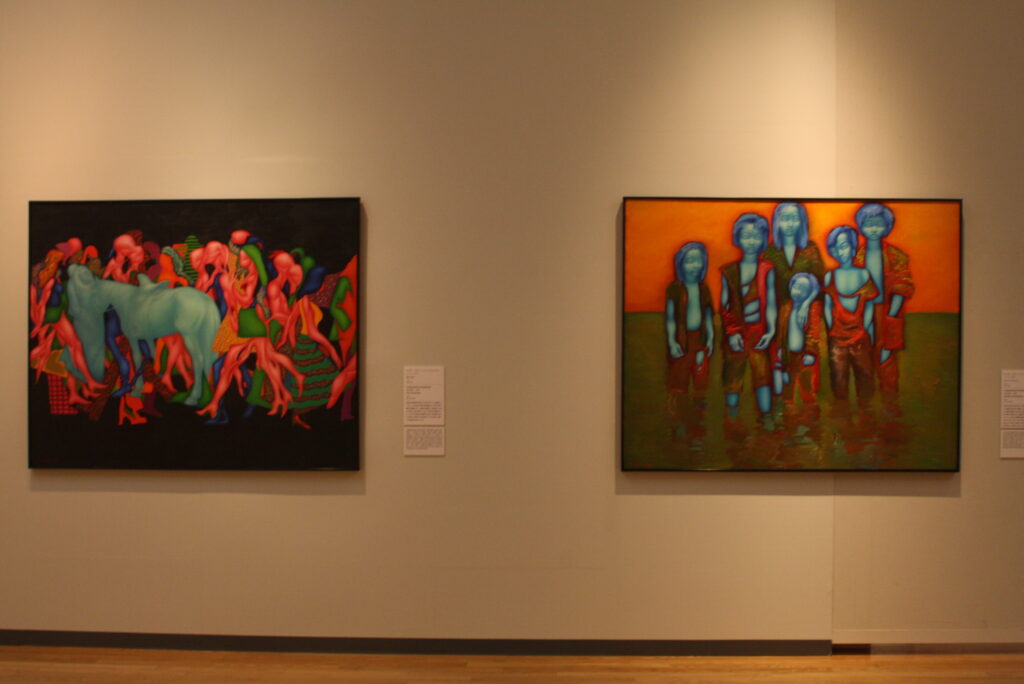
Rich grassland, blue sky and desert spread out as if without end. In this vast landscape, Mongolian people have led a nomadic life for centuries. In many Mongolian artists’ work, majestic nature, the mystical power of nature and animals living with people are represented. Meanwhile in the time when the country aimed for modernization as socialistic state, bright paintings showing the ideals of socialism were produced while artworks showing the complicated history of Mongolia – the dark side of the socialist period and issues caused by urbanization – were produced after the 1990s. This exhibition features work made from the 1960s to the present, which show light and darkness of the Mongolian grasslands. We hope that you enjoy the unique magnificence of the Mongolian landscape.
1,Light and Darkness of Socialism
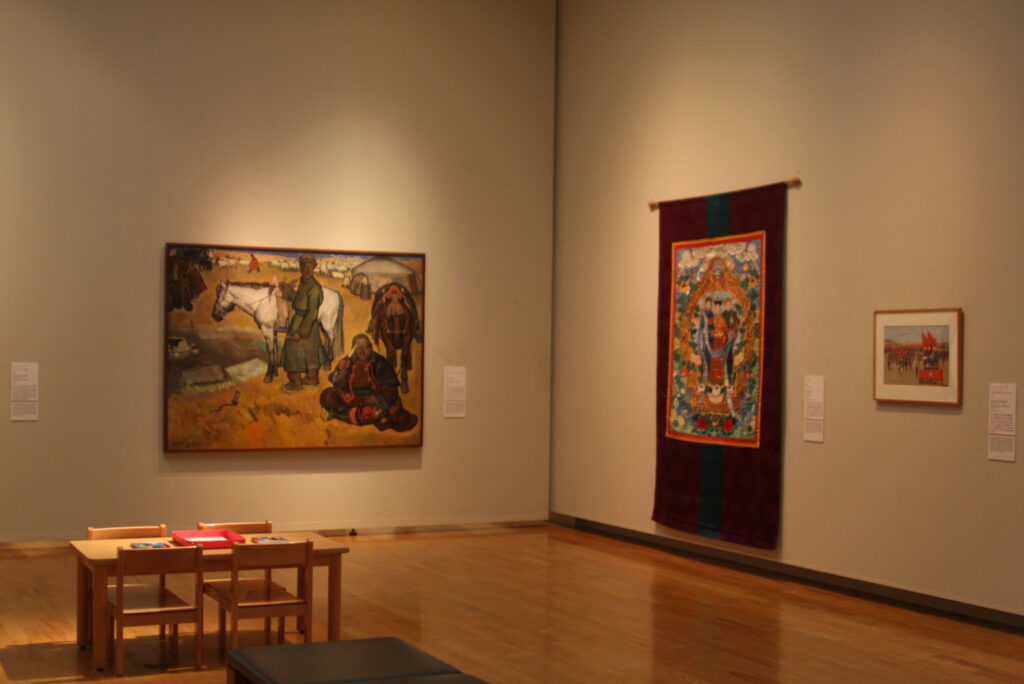
In 1924, Mongolia became independent as “the People’s Republic of Mongolia” and the second socialist country in the world after the Soviet Union. Until this time, Buddhist art influenced by Tibetan Buddhism was the mainstream artistic expression. After art teachers in the Soviet Union were sent to Mongolia, western art was also taught in Mongolia and many oil paintings were produced. From the 1960s, Mongolian-style painting and technique of appliqué that were used mainly for Buddhist art were revived and socialistic subjects and Mongolian traditions were expressed. During this period, while artists could produce artworks with the support of the state and provided with materials and working spaces, socialist subjects were preferred and they could not show subjects conflicting with national policies or abstract expressions.
From the late 1980s, along with the Soviet Union’s open-door policy, the democratic movement occurred in Mongolia and the country was reborn as the Republic of Mongolia in 1992. After this, artists became able to represent any subjects – heroes like Genghis Khan, who were regarded as taboo because of relations with the Soviet Union, and Buddhist subjects that were suppressed during the socialist era.
2,Sublime Nature
From the socialist era to the present, the most popular subject in Mongolian art is “nature”. The magnificent landscapes of grassland, blue sky and desert are attractive subjects for the artists. Domestic animals such as horses, sheep and camels which are essential to the daily life of the people are often depicted. Mongolian people feel spiritual power in the natural environment and offer it prayers. The religious feelings of Mongolian people can especially be seen in the works of Tserennadmidin Tsegmed. Furthermore, not only work celebrating nature, but also work that complains and protests about the destruction of nature by urbanization is being produced. Since the 1990s, artists who use abstract expression with subject matter from nature have also appeared.
| Venue | Asia Gallery A |
|---|---|
| Admission | Adult: ¥200(¥150) High School/College: ¥150(¥100) Junior High School and Under: Free |
| Organiser | Fukuoka Asian Art Museum |