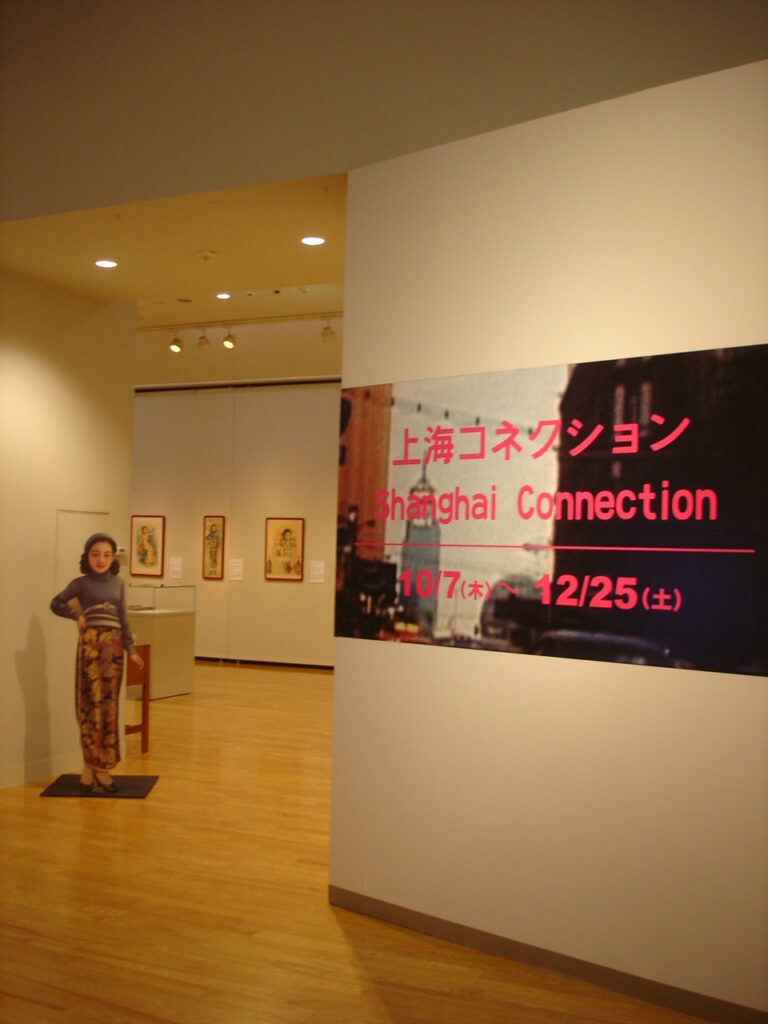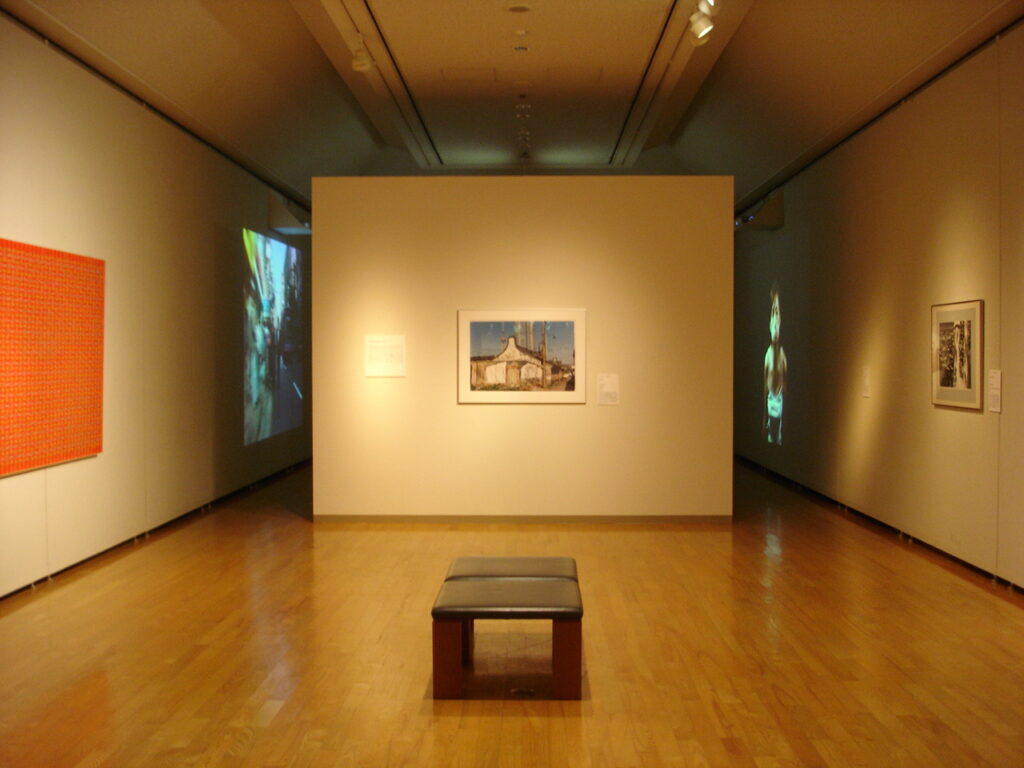

Shanghai Connection
- Period
- Oct 7, 2010 〜 Dec 25, 2010
- Venue
Asia Gallery B
Foreword
Shanghai has been attracting people around the world from the time it was called the “Devil’s City” to the present. It was the first city in China that thoroughly received the influence of the Western modernization. Today, Shanghai has become a megalopolis with the largest population in China. In every era, the energy and dreams of people who come to this city have fostered this city. Seemingly reflecting such historical importance, we can find many works in the collection of the Fukuoka Asian Art Museum which have relations with Shanghai. This exhibition explores the secret behind the charm of Shanghai that is one of the closest cities in China to Fukuoka.
Shanghai—The Birth of Cosmopolitan City
The Treaty of Nanking in 1842 after the Opium War opened a new chapter of Shanghai history as international city. Shanghai has rapidly developed –regular shipping routes with Europe and America were established, roads were improved, bridges were created, gas lamps were lighted, various institutions such as a school, hospital, theater, park, club, and racetrack were built. This section looks back the early images of the international city, Shanghai through paintings depicting landscapes in Bund that is a symbolic place where those who visited Shanghai from abroad saw first and photographs that were popular among foreigners.
“Shanghai Modern” in Posters
In Shanghai after the collapse of the Qing dynasty in 1911 and the establishment of China’s Republic, the largest international city in the East was appeared. Modern culture like modern architectures, films and jazz flourished in Shanghai, mainly in British and French settlements with the western-style buildings and the Shanghai Bund in which massive foreign trading houses, banks and hotels were lined.
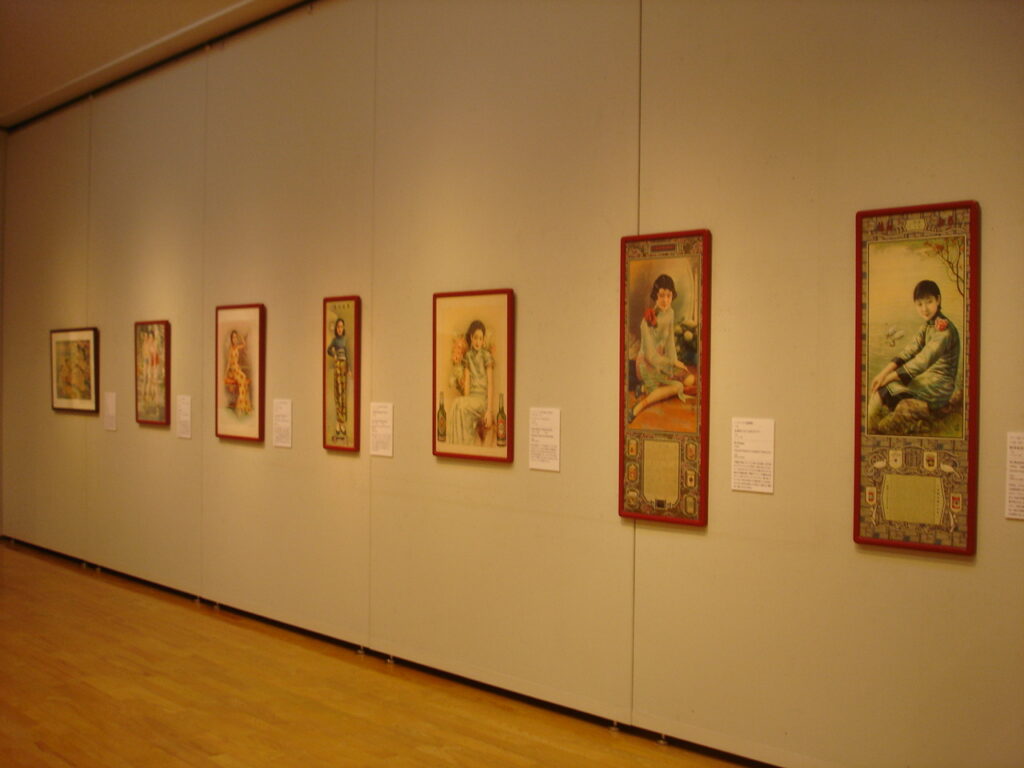
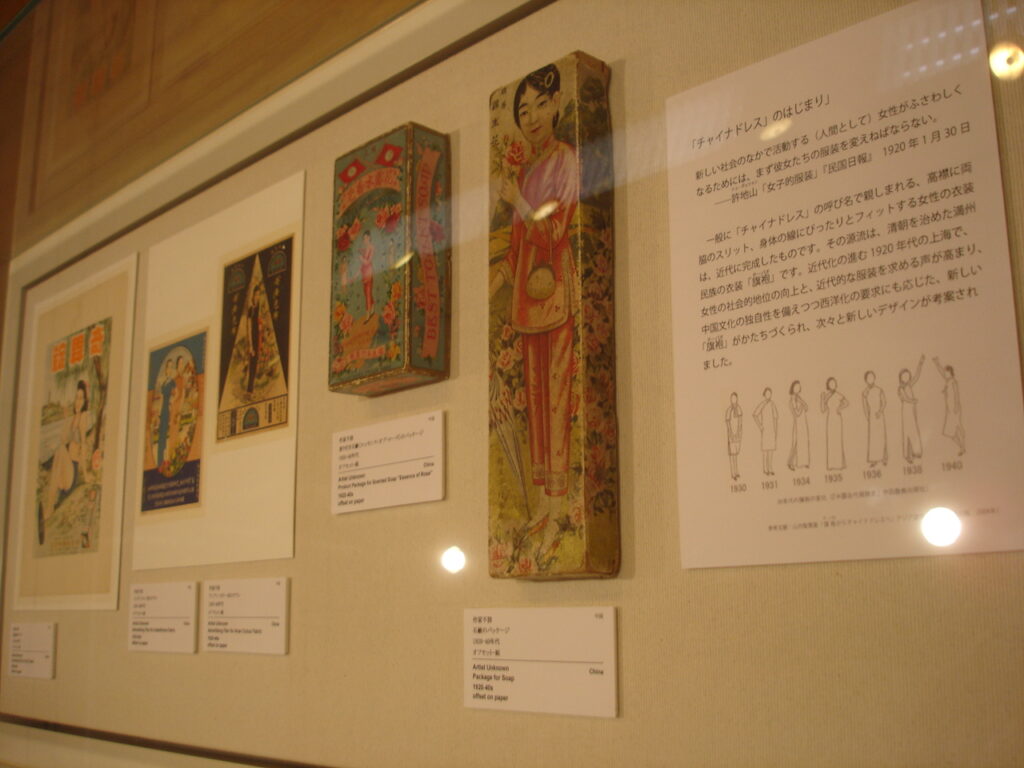
In Shanghai from the 1920s to the 1930s, posters advertizing imported products like tobaccos and cosmetics, or insurance and trading companies became popular among the people in the urban city. The printed designs were widely diverse, but the most popular designs among the people were modern girls dressed in the latest fashion as well as humorous Chinese stories and myths in which well-proportioned beautiful female appears. This type of poster was often attached calendars so that it was displayed in each house throughout the year, which is called “Yuefenpai” meaning “calendar poster”. These posters that were created in Shanghai have spread to other cities in China and heralded capitalism and consumerism later on. This section shows the posters from the 1920s to 1930s along with those produced after the establishment of People’s Republic of China in 1948.
Chinese descent painters who studied in Shanghai
In Modern art in Malay Peninsula (current Malaysia and Singapore), Chinese descent painters, in particular those who graduated from art schools in Shanghai played an important role. Liu Kang who taught at Shanghai College of Fine Arts after studying in Paris and Tchang Ju Chi who studied in Paris after graduating from Shanghai College of Fine Arts founded the Singapore Society of Chinese Artists in 1936 and led the art world in Malay Peninsula. Moreover, Chen Wen His and Cheong Soo Pieng who moved from China to Singapore after the Pacific War and made an important contribution in Modern art were also graduates or teachers of art schools in Shanghai. This section shows the works of Chinese descent painters who related to Shanghai and worked in Malaysia and Singapore.
Contemporary Artists related to Shanghai
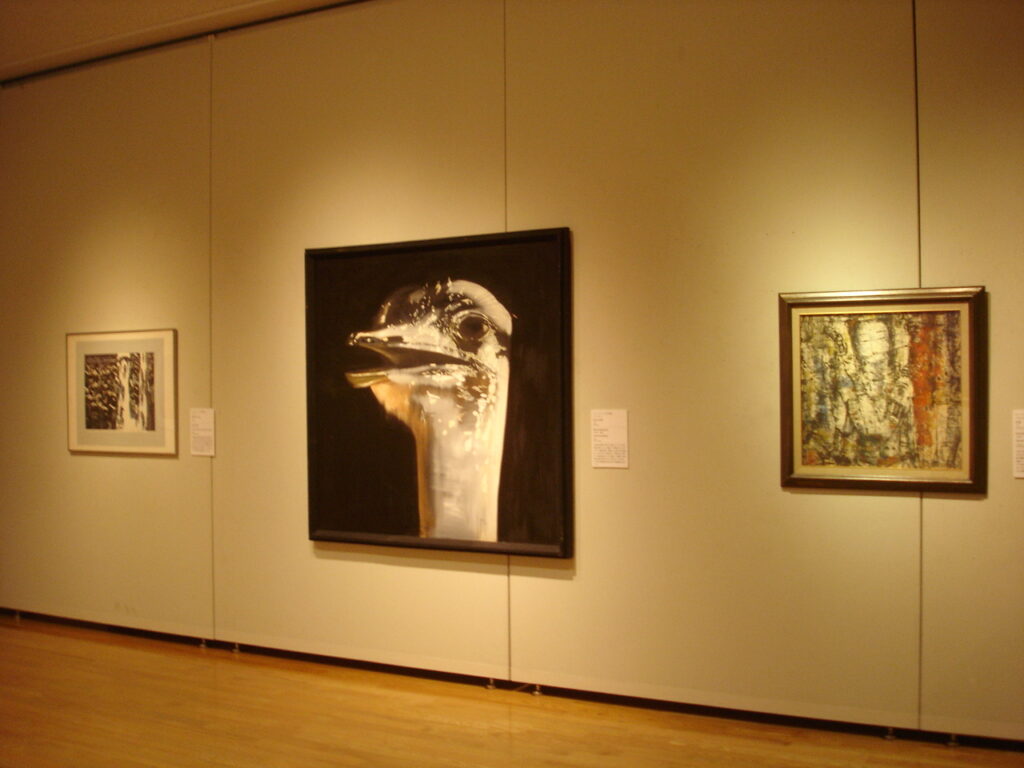
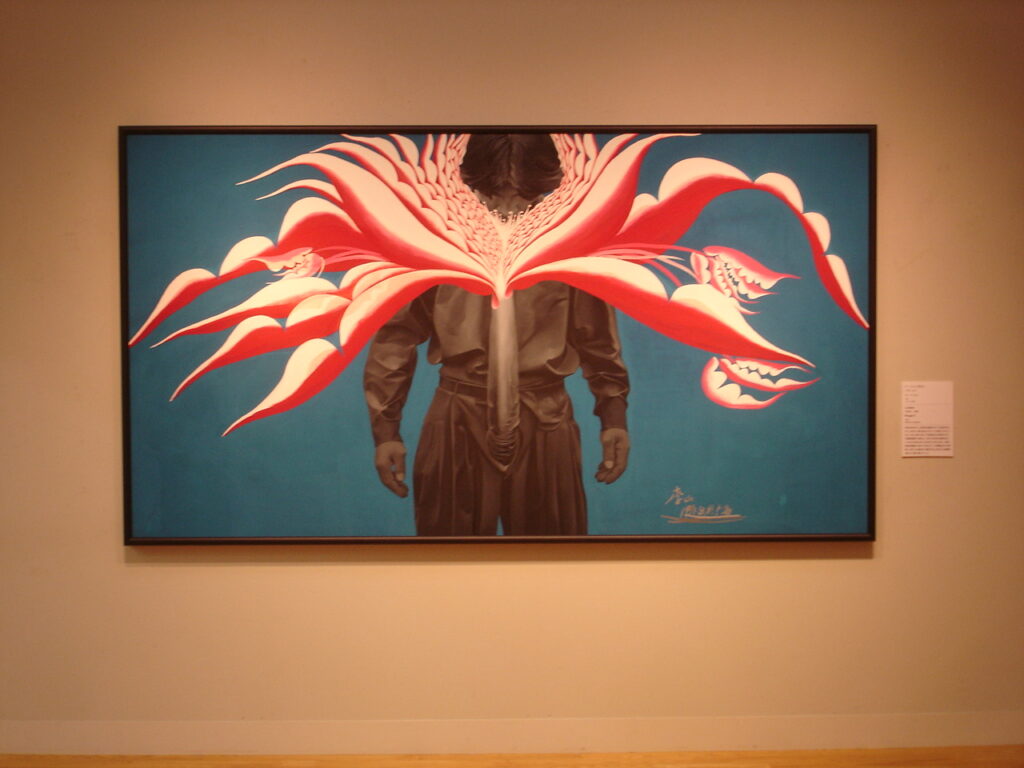
In People’s Republic of China founded in 1949, art-making based on socialist realism was pursued and its policy was thoroughly furthered during the Cultural Revolution between the 1960s and the 1970s. Once the policy of reform and opening doors began in 1979, however, overseas art movements and thoughts that haven’t been introduced for a long time came to enter even in China and then artists looked for new expressions. In Shanghai, artists who newly focused on abstract expressions emerged. Kong Baiji who is currently based on US played its leading role from the 70s to the early 80s and the second generation artists like Ding Yi and Chen Qiang consistently have worked on abstract expression. On the other hand, artists belonging to the Chinese Artists Association like Huang Pimo and Wang Xiangming show various developments in their works.
Hurtling City ・ Images of Shanghai
Today’s artists reflect their critical, cool and humor gaze in the works, by responding to rapid changes of the society. Furthermore, while living in Shanghai, young artists like Yang Fudong who pursues the world like quiet daydream which is far from the noise of the city appear. How does Shanghai City seen through each artists’ gazes meet your eyes?
| Venue | Asia Gallery B |
|---|---|
| Admission | Adult: ¥200(¥150) High School/College: ¥150(¥100) Junior High School and Under: Free |
| Organiser | Fukuoka Asian Art Museum |