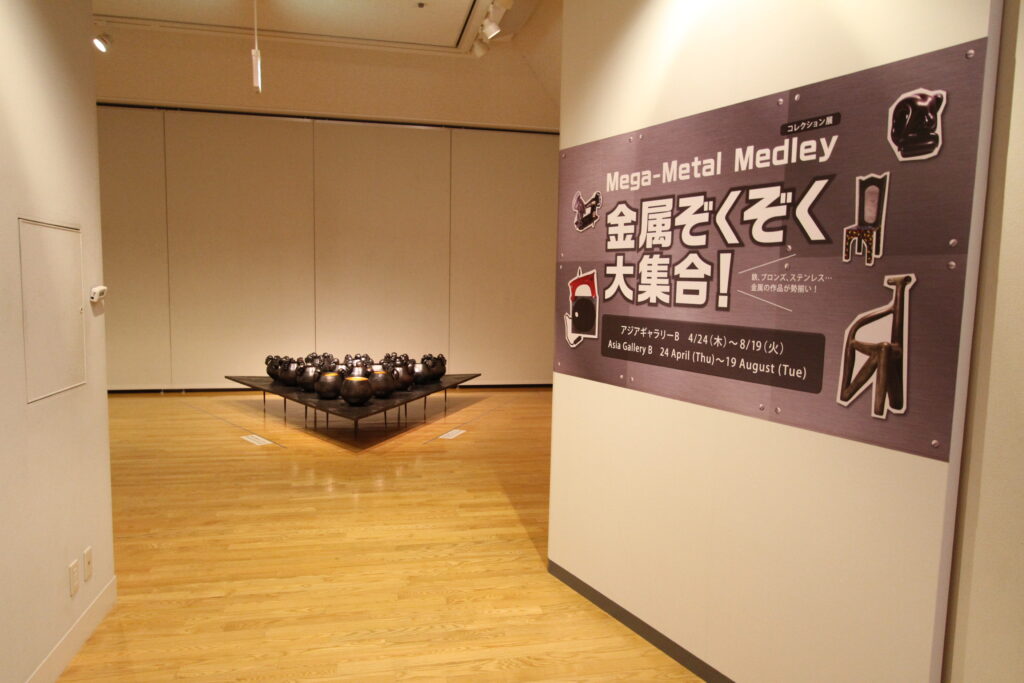
Mega-Metal Medley
- Period
- Apr 24, 2014 〜 Aug 19, 2024
- Venue
Asia Gallery B
From natural resources to chemical materials, human-beings have discovered and processed various raw materials throughout their history. Metals, one of these, have not only enabled significant revolutions in the way we live, they also assume diverse expressive forms in art. This exhibition explores the application of metals, in forms as iron, bronze, and also gathers artworks made of ready-made metal products, such as number plates, steel drums, etc. Themes of “sculpture,” “modern life” and “violence” further draw out the hidden significance of a material we sometime take for granted.
Metals as Sculptural Materials: Bronze and Iron
Bronze is the metal that has been most widely used as a material for sculpture. Bronze is an alloy made from mixing copper with other metals such as tin. It is said that bronze was developed by the Sumer Civilization about 3000 BCE. The characteristics of bronze mean that compared to wood and plaster it is more resistant to weathering and is less prone to rusting than iron. As a result of this, bronze sculptures are particularly suited to outdoor display.
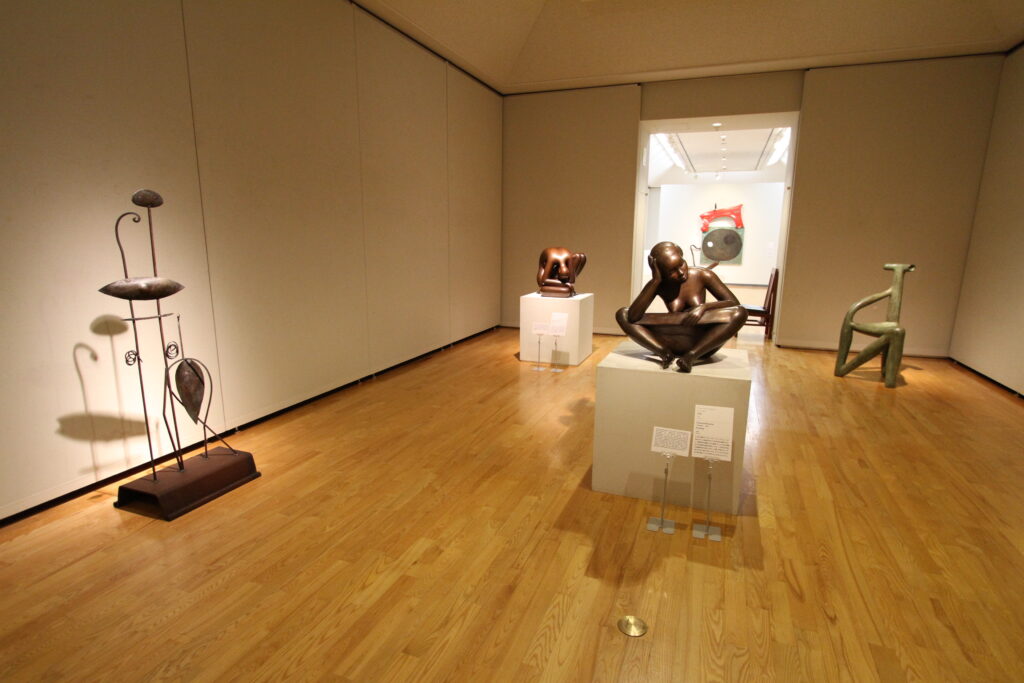
The merits of bronze are not just limited to those listed above. In contrast to wood or stone sculptures, bronze sculptures start out as a clay model. The process of casting uses a mold made with this model or a model remade in plaster and the molten bronze is then poured into the mold. If this mold is reused, copies of the sculpture can be produced. Actually, there are 5 copies which were made by the artist Chalood Nimsamer of his piece “Thinking.”
On the other hand we have iron, a metal that has also been used since ancient times. Compared with bronze, it oxidizes more easily but is an extremely hard material. When mixed carbon etc. it becomes steel, an even harder metal. The upper parts of Montien Boonma’s piece “Alms” and Tran Hoang Co’s “Two Standing Figures” are both supported by thin long iron legs, and this can be seen as a clever use of the characteristics of iron by the artists.
Contemporary Lifestyle: Surrounded by Metal
In contemporary art, various things found in our daily life as well as in nature can be presented in their original state as artworks. Such works are called “found objects.” The name suggests that this is merely a technique for drawing our attention to the material qualities of “things” but viewing the colorful mix of forms is not just meant to be an enjoyable experience; through the curious assemblage of objects new meanings can be found and new stories can be told.
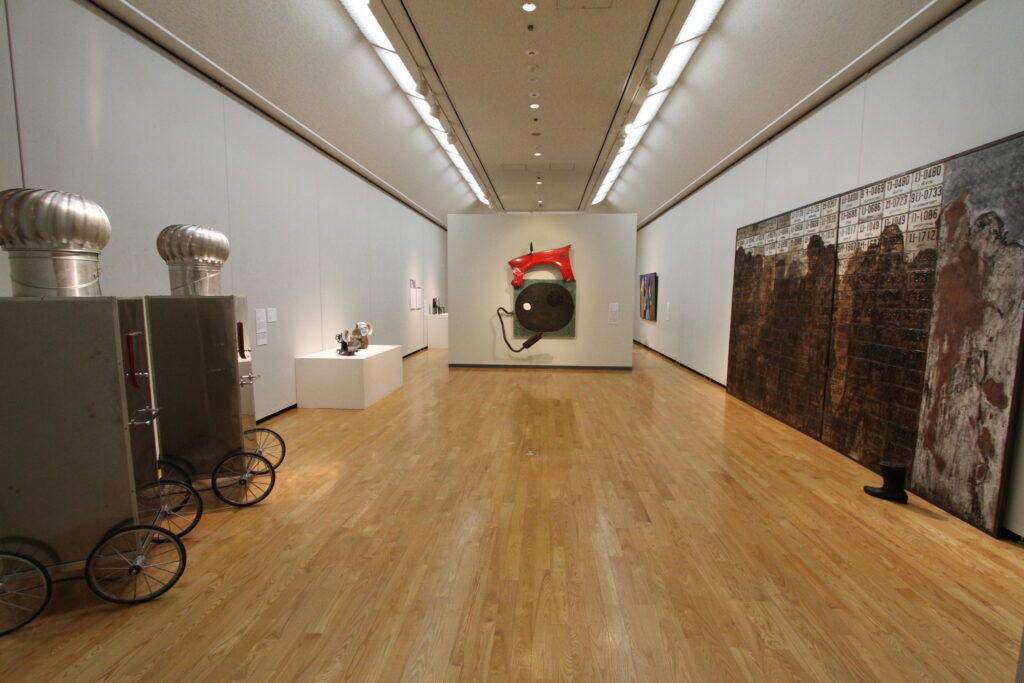
In this section, pieces made with parts of metal products such as cars or sewing machines are exhibited. As introduced at the previous section, iron is hard and inexpensive so that it was considered to be “a key element” for industry. It has been vital for industry since the industrial revolution and is still indispensable in today’s society. In vehicles such as cars and trains, in domestic appliances such as ventilation fans and sewing machines, and in the building of today’s urbanizing society; it could be said that we are truly surrounded by ironware. Supachai Satsara’s “On the Road Again” and Kade Javanalikikorn’s “Brown Air, Brown Trees, Brown Ocean and a Dirty Automobile” are made from parts of cars, which continue to increase in number. Since the 1990s, there has been rapid economic development in Asian countries but these pieces pointedly question what we have sacrificed for this progress.
In contrast, the shape of Noor Azizan Rahman Paiman’s “Wailing Wheel” and Lim Poh Teck’s “Conversion” are different but both are made using ventilation fans. “Wailing Wheel” combines a fan with a street vendor’s wagon and “Conversation” is a combination of a sewing machine and a ventilation fan; they are nostalgic works which also evoke the people’s memories and fantasies.
The Hidden Violence of Metal?!
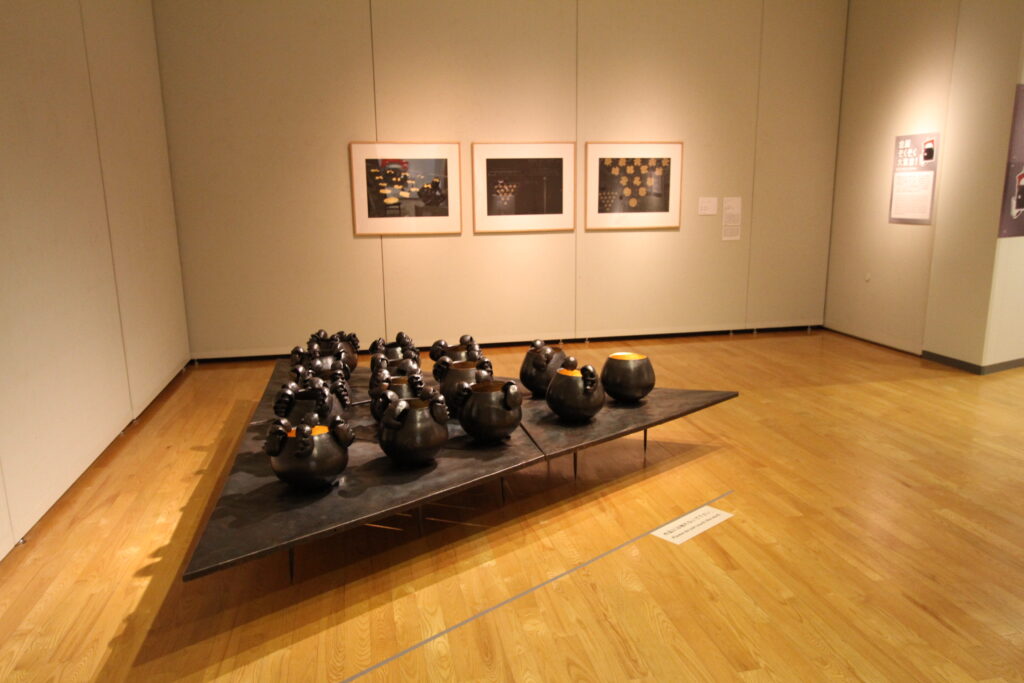
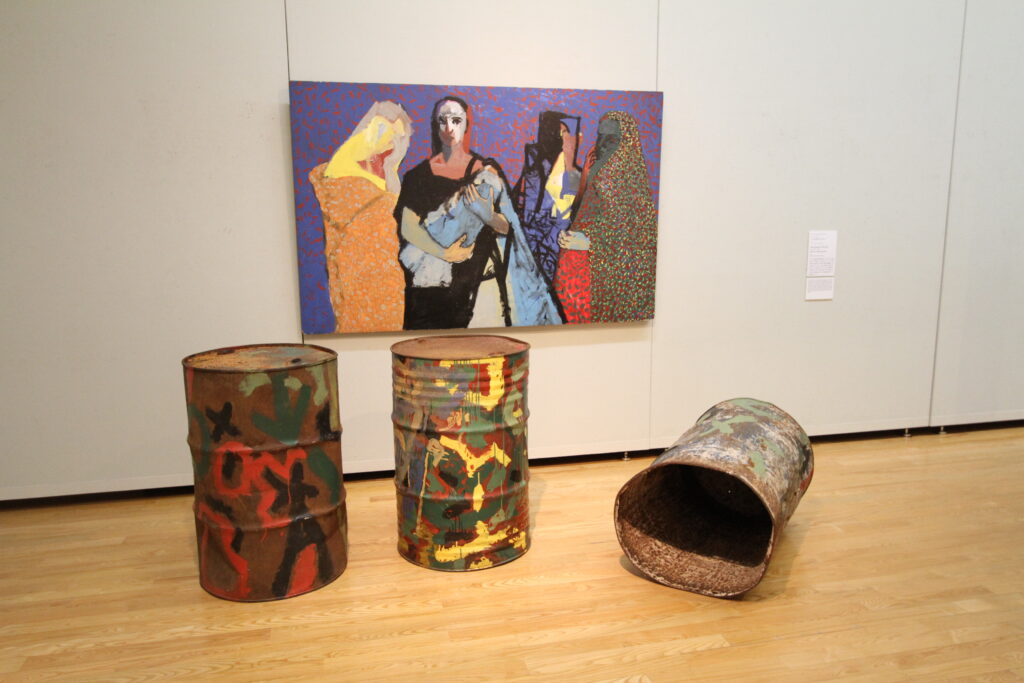
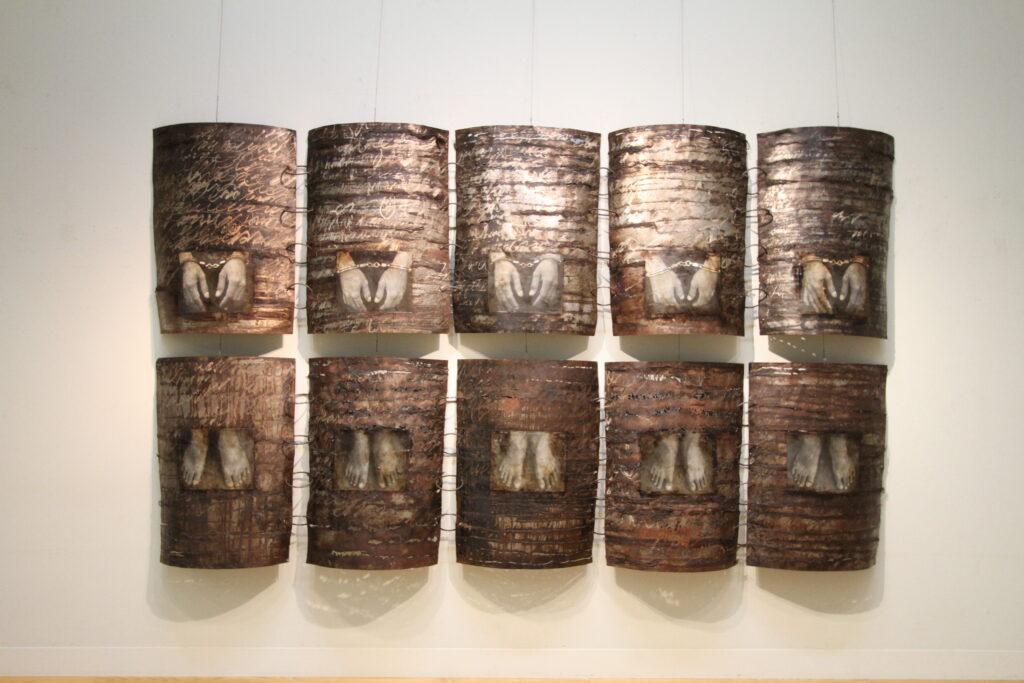
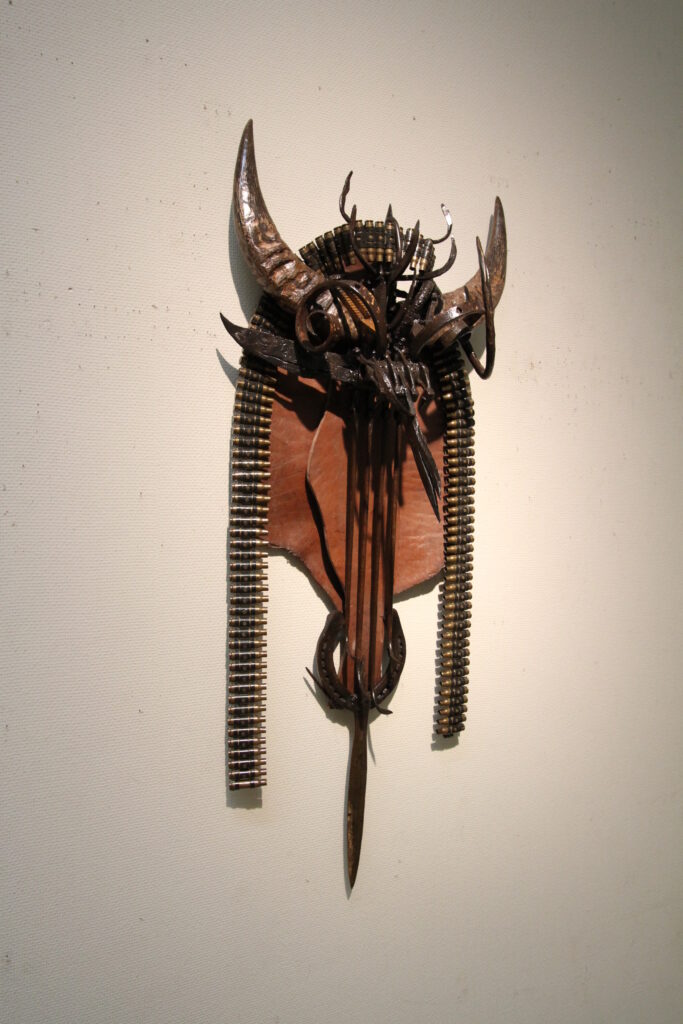
In this section artworks which are associated with themes of power and violence are introduced. Raja Shahriman Raja Aziddin’s artwork brings to light the intimate relationship between violence and power. In “Ruler of Universe” the artist combines an elaborate throne and swords and in the piece “Chosen Step” bullets are used to make the decoration for a headdress. Also, in Masooma Syed’s “The Necklace,” countless needles are used to make an accessory. In Anura Krishantha Baragama Arachchi’s “Chair” nails are hammered into a chair, expressing an inability to achieve peace of mind. Chandraguptha Thenuwara’s “Women in Barrelistic Era” is a piece which consists of three oil drums placed before a picture of women. According to the artist, when he was a child tar was heated in these drums. When he saw roads being surfaced with tarmac, he felt as if the distance between his and the next village was reduced. The drums, at that time, symbolized convenience and intercommunication to the artist. In 1983, however, a civil war broke out in Sri Lanka, and for 23 years violent conflict continued. The piece displayed here is from the time of the civil war, when such oil drums were used as defensive barricades against attacks by anti-government movements and the drums were lined up on approaches to the city of Colombo. Drums, which were once simply containers, became symbols of war, violence and fear and they also completely changed the landscape of Colombo city. Since the dawn of history, humans have been using various metals to develop weapons to wage war, fighting for supremacy over others. However the violent characteristic contained within the idea of “metal” is rather one that is hidden within the real character of its user: the human.
| Venue | Asia Gallery B |
|---|---|
| Admission | Adult: ¥200(¥150) High School/College: ¥150(¥100) Junior High School and Under: Free |
| Organiser | Fukuoka Asian Art Museum |