
IMAGINE - Visions of a World Without War
- Period
- Jun 11, 2015 〜 Sep 1, 2015
- Venue
Asia Gallery
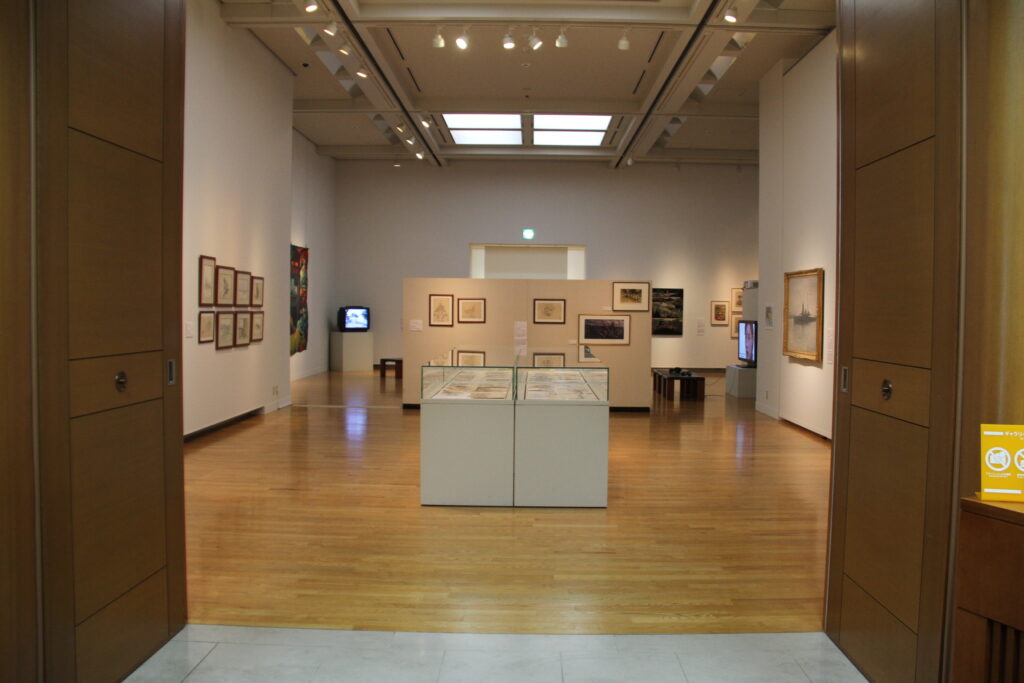
This year marks 70 years since the end of the Pacific War in Japan and on this occasion we are holding an exhibition to look back on wars fought in Asia through artworks and reconsider the relations between war and art from a fresh perspective.
Starting from the military interventions by Japan that sparked off wars in Asia, this exhibition shows works that deal with various wars of independence and ethnic, religious and political conflict during the 20th Century, including the issue of recurrent terrorist attacks across Asia. These works are also responses to war by artists. From the contemporary viewpoint perhaps we may find some of the artworks to be overly didactic or ideological. However, each artist has earnestly tackled serious issues of war and tried to express themselves as best they could within restrictions on freedom of expression and under social pressure. Their works display not only the graphic depiction of battles but also the reality of daily life during wartime, new disputes after the war, criticism against war and anti-war sentiments.
We hope this exhibition will be a small but important step toward the future, giving you an opportunity to re-think peace and imagine a world without war, as John Lennon sang in the song “Imagine.”
1, Japanese War
From the late 19th Century through the early 20th Century, Japan pursued territorial expansion, capturing land in the Korean Peninsula, Liaodong Peninsula, and consequently the whole of China, as well Taiwan and areas of Southeast Asia. A number of wars were fought and claimed numerous victims in this only a fifty-year period: the First Sino-Japanese War (1894-95) over the control of the Korean Peninsula, the Russo-Japanese War (1904-05) over interests in the Korean Peninsula and Northeast China and the Second Sino-Japanese War (1937-45), which started as a Japanese invasion of China, and later escalated into the Pacific War (1941-45) fought across Asia. Alongside these wars, it should be remembered that Japan ran its colonial administration in the occupied terri tories, such as in the Korean Peninsula and Taiwan, the control over Manchuria, and the occupation of SoutheastAsian countries.
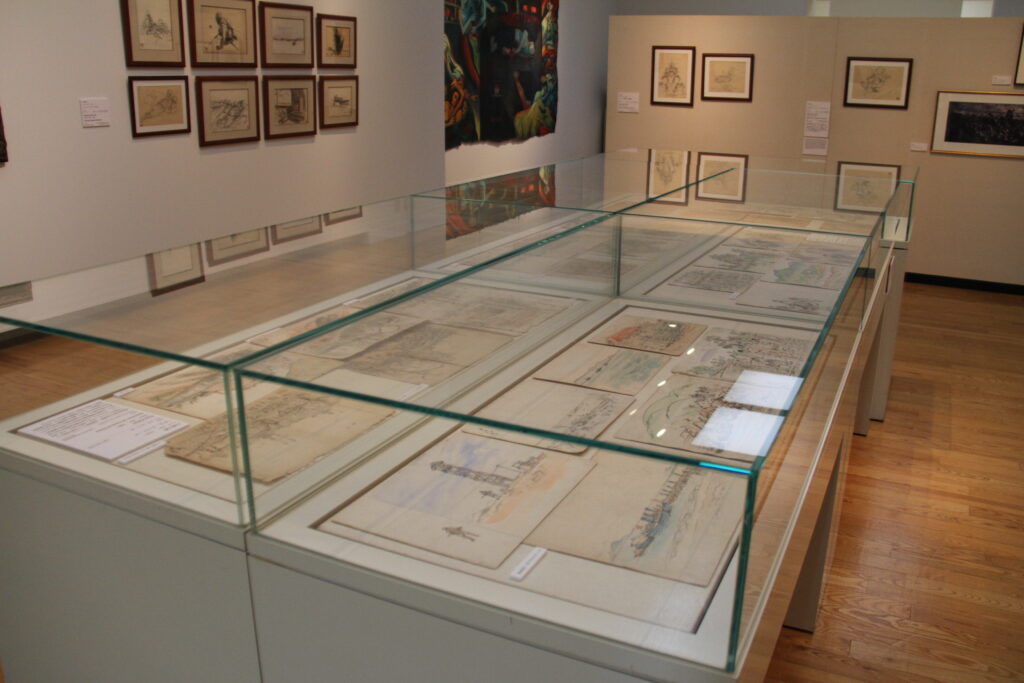
Featuring the artists Kojo Kokan and Nakamura Ken’ichi, who have a deep connection to Fukuoka and who served on active duty as war painters in various parts of Asia, the first part of the exhibition deals with the wars triggered by Japan. Contrasting with the Japanese artists’ perspective, the work of Fernando Amorsolo from the Philippines, where was the battle field of war shows the Filipino view toward the war. What we can discover between the visions of war presented by artists in different situations and different sides? Furthermore, this section also shows “Japanese War” through artworks created by Wong Hoy Cheong from Malaysia and Yamashiro Chikako from Okinawa. These artists’ pieces are an effort to record our past and link this past to the future while longing for peace and facing the dark side of humanity.
2, Wars in Asia: Nations and People Divided in the Cold War Era
The Pacific War ended on 15 August 1945. However, it also marked the beginning of new wars.
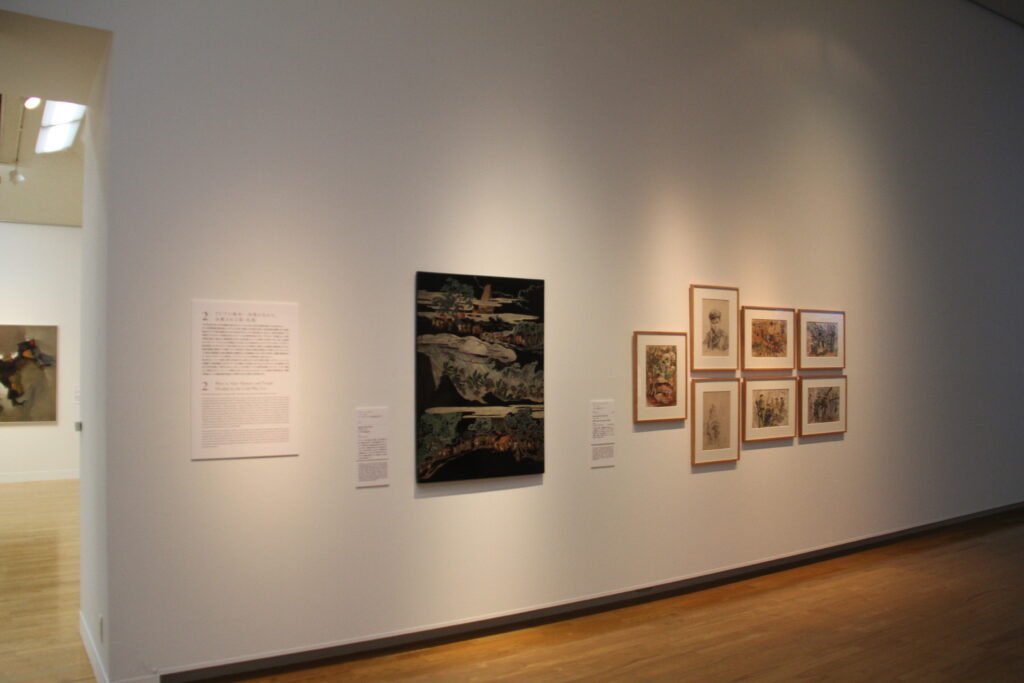
In the early post-war period, Asian countries, many of whom were colonies of Western great powers fought intensely against the colonial powers for independence. The result of their struggles formed the present Asian national and regional boundaries. Those wars were followed by several other wars that were caused by the internal struggles of new nations or ignited by ethnic, religious, idealistic conflicts. For example, the Korean War (1950-53, under the truce accord) and the Vietnam War (c.1960-75) arose from the division of the countries along ideological lines and made its people fight each other. The partition of India in 1947 was triggered by religious antagonism and the subsequent Bangladesh Liberation War (1971) stemmed from ethnic feuds with Pakistan. Having torn the nation and its people, the ravages of these wars not only produced war casualties but also triggered a chain reaction of new problems, such as separated families and refugees, and the discrimination against these victims in their migration destination. Due to the Cold-War structure (1945-89), a contest between capitalist countries and the communist bloc, these wars often became complicated. The Vietnam War was especially considered as a proxy war between the U.S. and the USSR.
In the second part of the exhibition, artworks on the subject of the Vietnam War are featured. Nguyen Nhu Huan’s lacquer painting depicts combat service supports and Vietnamese war propaganda posters were created by painters while they were working with the army. All these pieces were created to aim for victory as well as peace after the war. Along with these works, Truong Tan, who experienced the Vietnam War in his childhood and Dinh Q. Le, who moved to the U.S. as a refugee are also featured. After coming of age and inspired by the Vietnam War, both artists created artworks to express the absurdity of war, in an attempt to go beyond the simplified notion of winners and losers.
3, New Flashing Points, Endless Con icts
Even after the end of World War II in 1945 and the end of the Cold War in 1989, conflicts from religious, ethnic, political and ideological feuds still continue. Moreover, the difficult problems of military base issues and nuclear weapons have yet to be solved. The fact is that a true postwar state with no conflicts and grievances has not yet arrived.
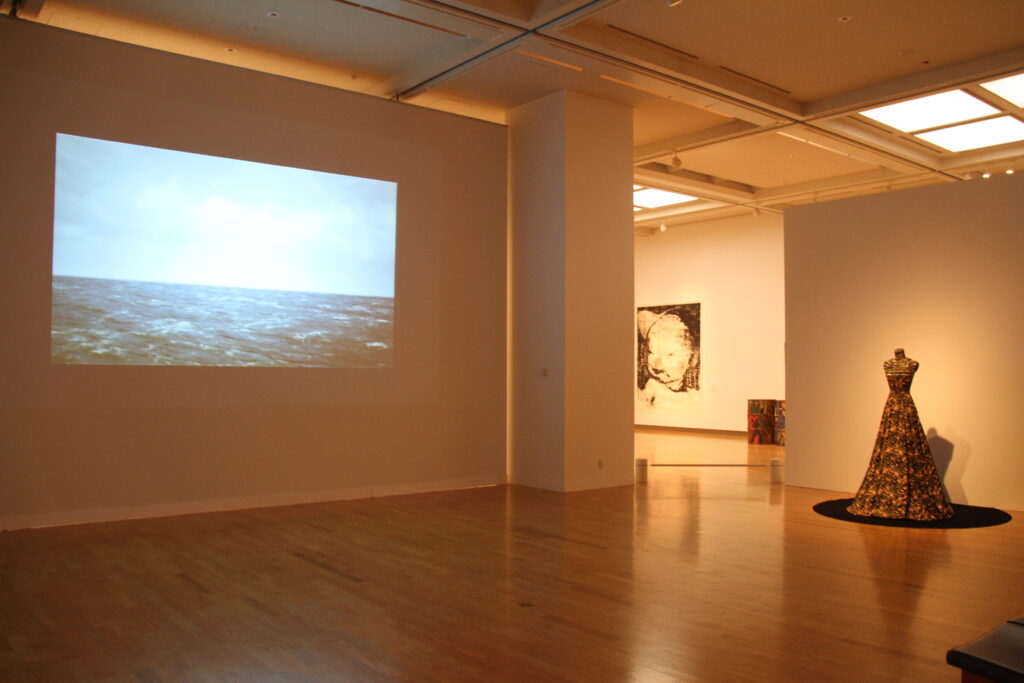
Focusing on pieces from the twenty-five year-long Sri Lankan Civil War (1983-2009), artworks which criticize the nuclear arms race between Pakistan and India, and others that convey the turbulence in Afghanistan after September 11 attacks, this part of the exhibition tells about war through the eyes of contemporary Asian artists.
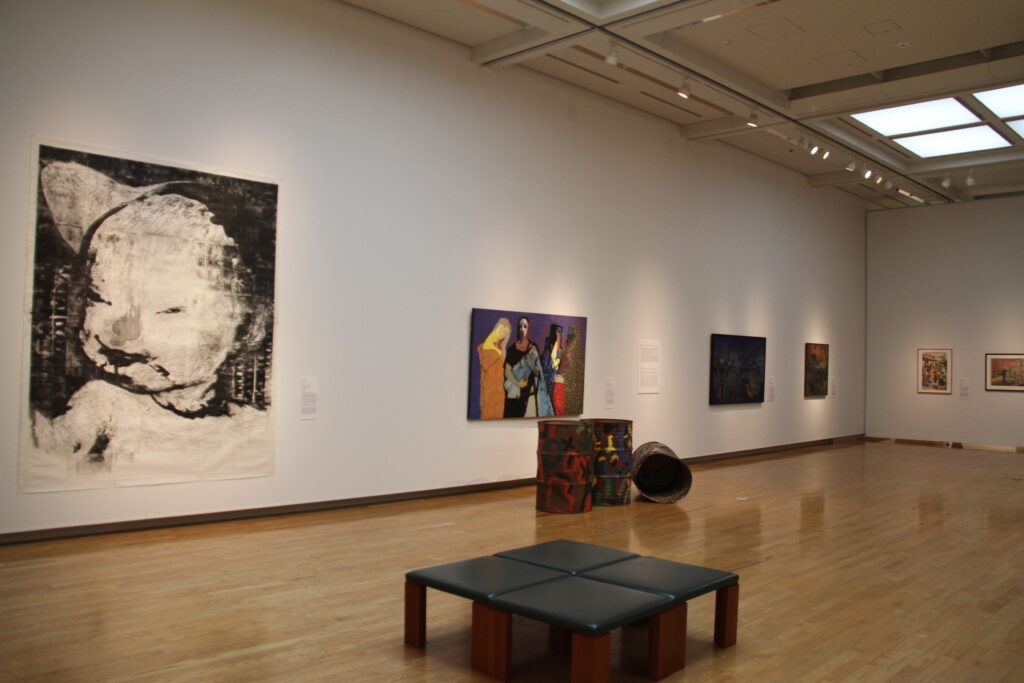
With these pieces, two artworks are specially featured here to urge us as people living in today’s world to reconsider the on-going problem of war and conflicts. One is a woodcut by Yamaguchi Keisuke, which depicts a child with birth defects, a suspected result of exposure to radiation from depleted uranium shells. Since 1991, the year of the Gulf War, depleted uranium shells have become widely used and the birth rate of children with congenital disorders and the infection rate of leukemia have increased in Iraq. To the Japanese living in the only nation that has suffered nuclear bomb attacks and experienced the Fukushima Daiichi nuclear disaster, Yamaguchi’s piece
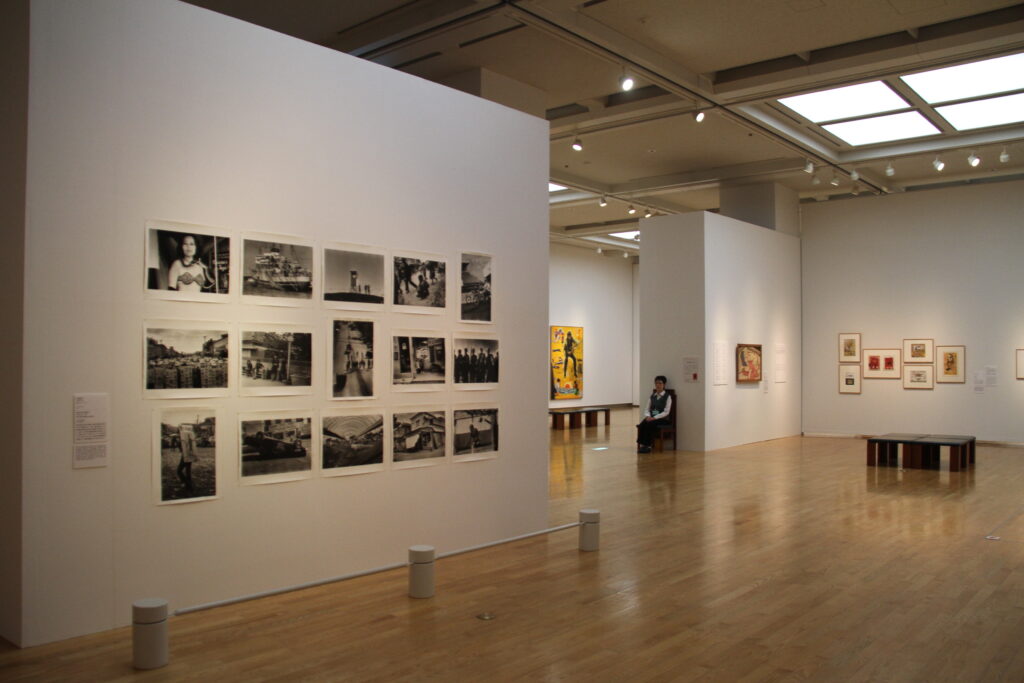
poses a serious question, on which we can’t sit on the sidelines. The other artwork is a series of photographs by Higa Toyomitsu that portray Okinawa around the time of its reversion to Japan in 1972. His Okinawa in his photographs transcend 45 years to directly connect with present-day Okinawa, which currently faces serious issues surrounding the relocation of Marine Corps Air Station Futenma.
4, IMAGINE: Visions of a World without War
Khadim Ali’s piece “Absent Kitchen” depicts bombs, guns, soldiers, and a tank, transcribing Afghan child’s drawings. Yamaguchi Keisuke’s “DC Child” portrays a child with birth defects, a suspected result of exposure to the radiation from depleted uranium shells.
Here we aspire to create a future, where there is “One World” that reaches beyond religious and national barriers and frees us from our desire to possess: where there are no more weapons and nuclear threats to any children, like the lyrics of “Imagine” tell us. A world where every parent and child could sleep no matter when and where without any fear.
| Venue | Asia Gallery |
|---|---|
| Admission | Adult \200 /College & High School \150 |
| Organiser | Fukuoka Asian Art Museum |