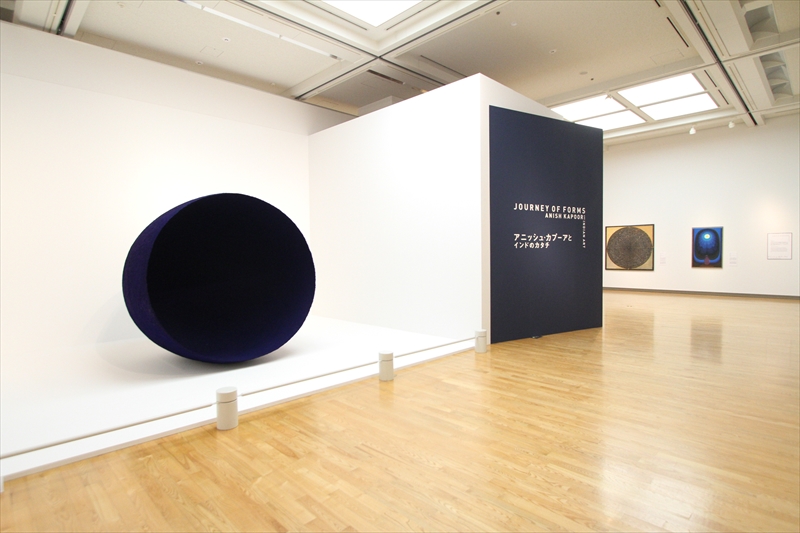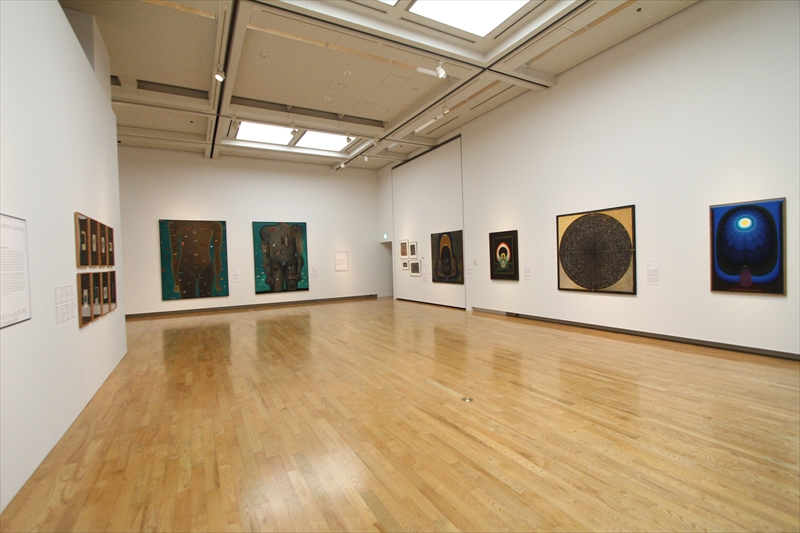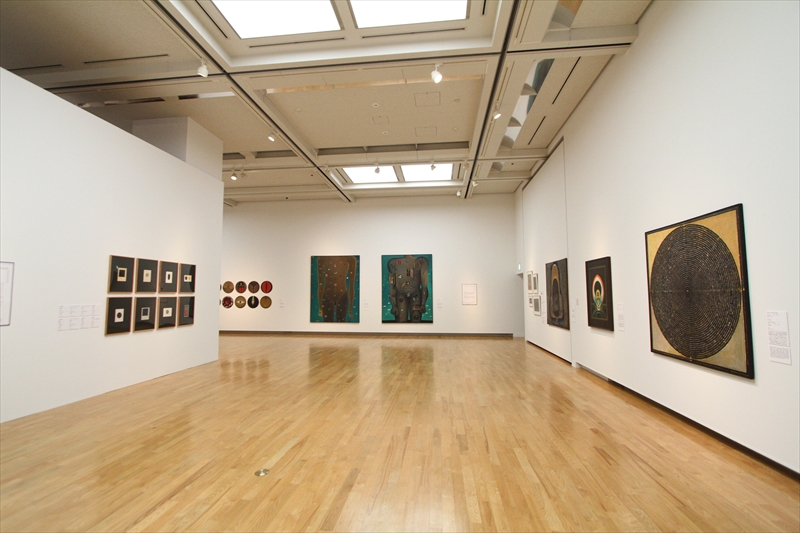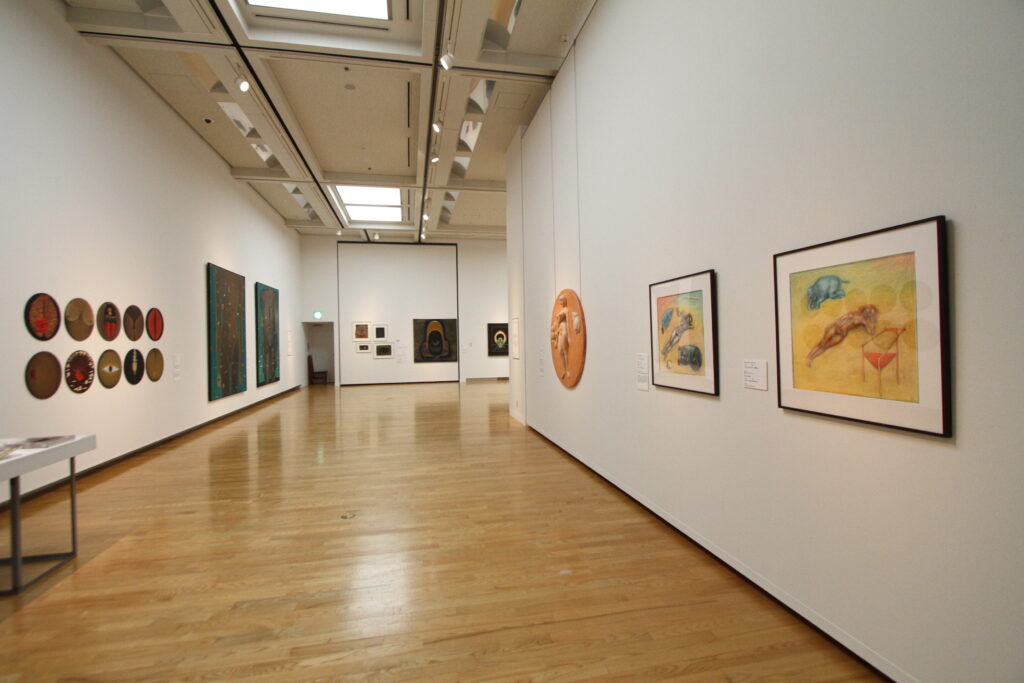
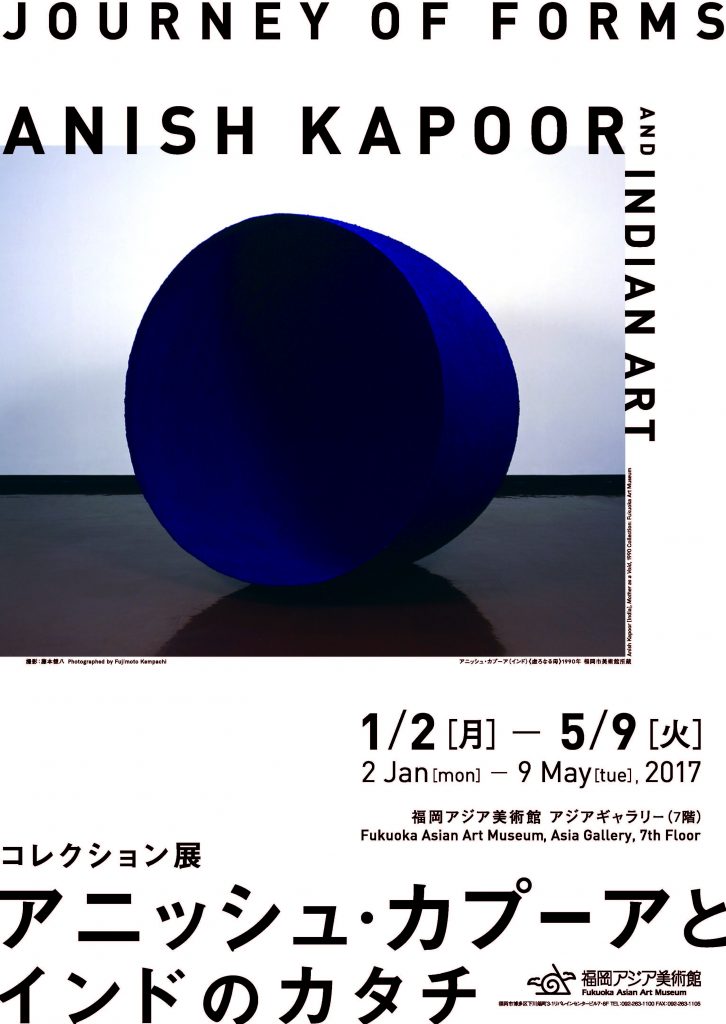
Journey of Forms – Anish Kapoor and Indian Art
- Period
- Jan 2, 2017 〜 May 9, 2017
- Venue
Asia Gallery
Foreword
As the first attempt to jointly display the collections of Fukuoka Art Museum (closed for renovation until March 2019) and Fukuoka Asian Art Museum, this exhibition focuses on Anish Kapoor, a world renowned artist who was born in India and is now based in the United Kingdom.
Since Kapoor started his artistic career in the U.K. and has recognized mainly in the Western contemporary art scene, Fukuoka Art Museum has introduced his works in the context of British art or contemporary art in general.
However, as shown in the forms, materials, and themes of the works exhibited in this exhibition, Kapoor’s work is deeply influenced by India’s religious tradition and culture, and uses Indian religious and cosmic views as well as mathematical concepts. The link between Kapoor’s work which leaves us a sense of a deep spiritual world, and Indian culture can be understood better by displaying it with various “forms” found in Indian contemporary art.
This exhibition seeks to think through Kapoor’s work according to the following four keywords.
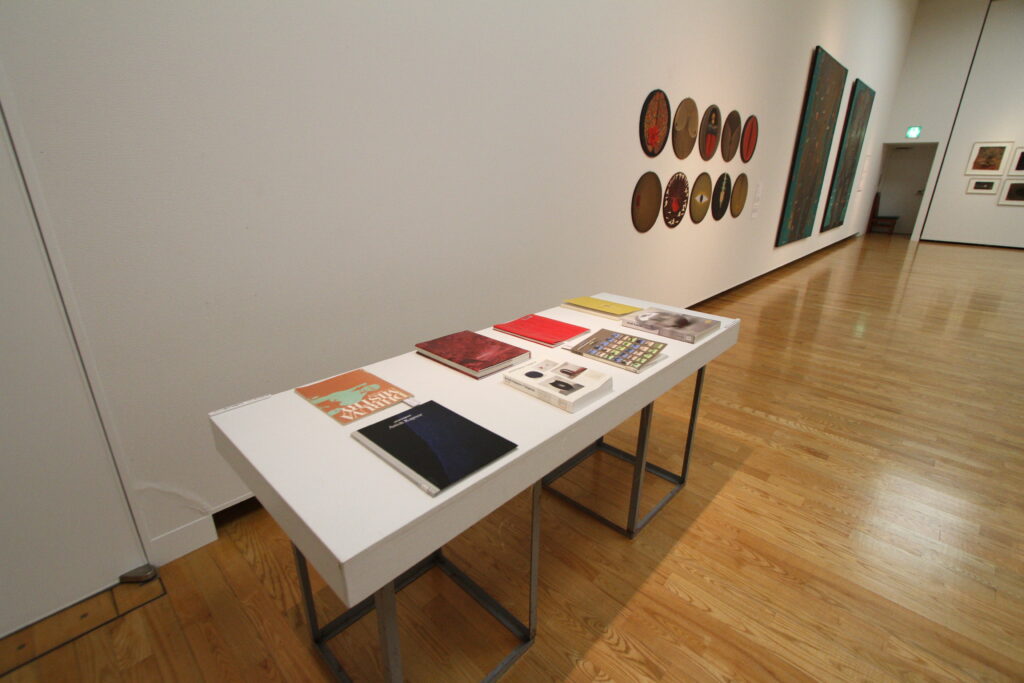
Along with “Tantric painting,” a scripture of spiritual mysticism that is considered as a major source for Kapoor’s artistic insight, “Abstraction and Form” introduces various Indian contemporary paintings that are tightly linked to religious forms. “Spirit and Body” and “Indian motherhood” introduce the works depicting religious elements that reside inside a human body, and the works focusing on mother deity, which Kapoor’s representative work, Mother as Void, seems to imply.
We hope to provide the visitors another aspect of Kapoor’s work, as well as the range of Indian contemporary art in the exhibition space different from that of Fukuoka Art Museum.
A. Anish Kapoor
Anish Kapoor was born in Bombay (current Mumbai) in 1954. After spending his childhood in India, Kapoor moved to the United Kingdom in 1973 to study art at Chelsea College of Arts in London. During the 1970s and 80s, “New British Sculpture,” an art movement that challenges a then-dominant scene of abstract sculpture was flourishing in the U.K. The artists sought to establish an innovative style that is characterized by an organic form with a symbolic or mythological meaning, or a narrative using a newly available material, such as industrial products. Kapoor built his original style through taking a part in the movement. In 1990, Kapoor was selected to represent Britain at the Venice Biennale. He was also awarded the Turner Prize in 1991, the most prominent art award for the young artists in the U.K., and concretized his position as a worldly renowned sculptor. Kapoor received the Praemium Imperiale in sculpture in 2011, and his fame continues to grow today.
While based in Europe, Anish Kapoor’s work is strongly rooted in the Indian religious worldviews. Being influenced by vivid spiritualism and monumental aspect of Hindu temples in town, Kapoor has created various works in which primary color pigment covers the sculpture. Kapoor expresses in-depth notion of spiritual in a simple form, and often creates the works that contain dual meaning, such as “inside and outside,” “light and dark,” and “physical and non-physical” for which some call him the “artist of ambivalence.” Kapoor’s work can also be seen as giving a physical form to some mathematical concepts, such as “infinity,” “void,” and “torus” by resonating to the history of India in which the concept of “zero” was invented for the first time in the world.
B. Tantric painting
“Tantra” is a scripture of traditional mysticism in India. It describes a set of stories that show the process to reach true enlightenment. Tantra has a long history, and is believed to be born around the 15th century BC with the influence of the Vedas, sacred texts of Brahmanism, and Yoga. It was then merged into esoteric Buddhism by around the 7th century. Tantric philosophy teaches male-female dualism and how to reach the state of enlightenment by uniting them together. It also teaches that there exist the same energy in both the mind and body of the human.
Tantric philosophy is described in the form of a yantra, mandala, and mantra. Yantra is a symbolic and geometric diagram used in meditation. Mandala is a circular iconography that depicts people gathering together. Mantra recites the words and phrases used in meditation.
Indian artist, Raja Babu Sharma was fascinated by the meditating images attached to tantric texts. He extracted only the figures from the page, and reproduced them in his “tantric paintings.” His works gained much attention once they were introduced in the exhibition, “Magiciens de la Terre,” in Paris in 1989.
c. Abstraction and Form
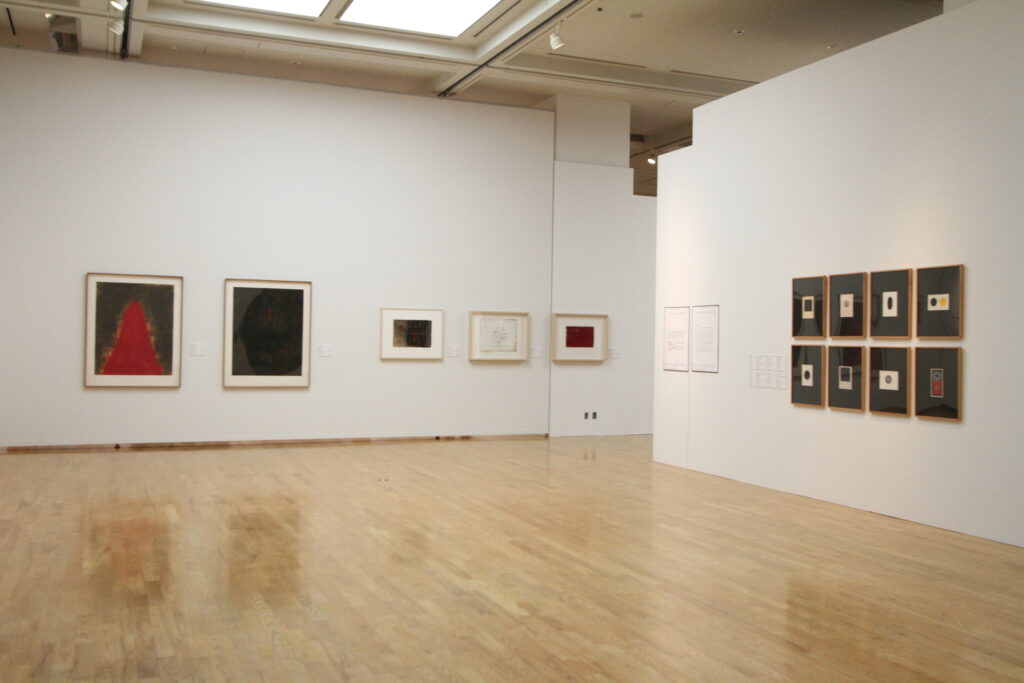
Tantric paintings where religious concepts are expressed in abstract forms, such as geometric figures and annulus images, became a source of “art” for the contemporary artists who were exploring the abstract styles in the 1960s. An art movement based on mysticism and symbolism of Tantra was named “Neo-Tantric Painting” in the history of Indian art, and created a new trend in Indian contemporary art that positively uses spiritual concepts in art.
D. Spirit and Body
According to Tantric theory, a human body is a microcosm of the universe, and each organ also contains a microcosm with infinite energy and force. In Indian contemporary art, the artists often depict human body as a container of religious concepts, which becomes a tool to relating to the world.
E. Indian motherhood
Anish Kapoor’s Mother as Void has “mother” in its title, which shows an influence of the mother goddess worship in Indian mythology. In the world of Indian mythology, “mother” is a goddess of fertility, and is believed to nurture all the living things on earth while taking the death into her body for reproducing life. Mother goddess as a representation of life and death is used in various artworks even today.
| Venue | Asia Gallery |
|---|---|
| Admission | Adult \200 /College & High School \150 |
| Organiser | Fukuoka Asian Art Museum |