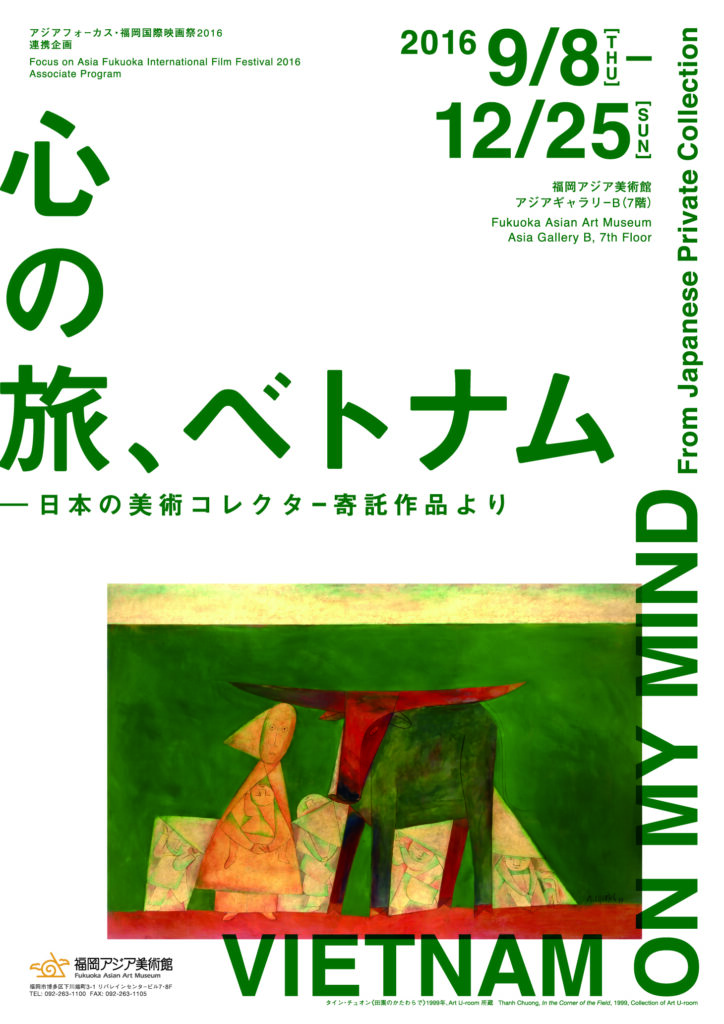
Vietnam on My Mind:
From Japanese Private Collection
- Period
- Sep 8, 2016 〜 Dec 25, 2016
- Venue
Asia Gallery
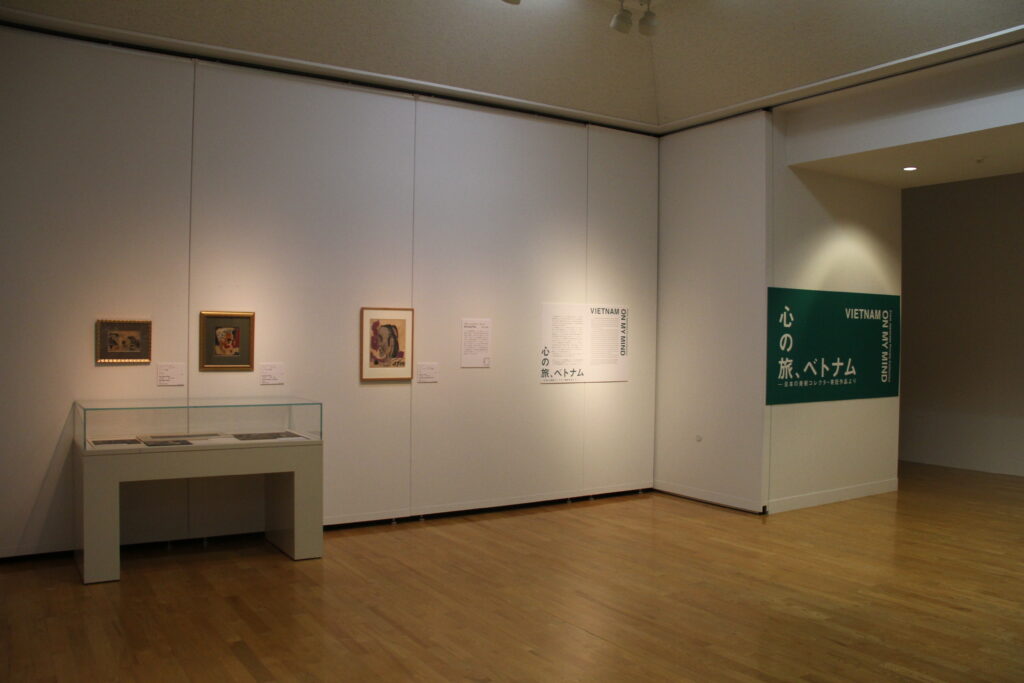
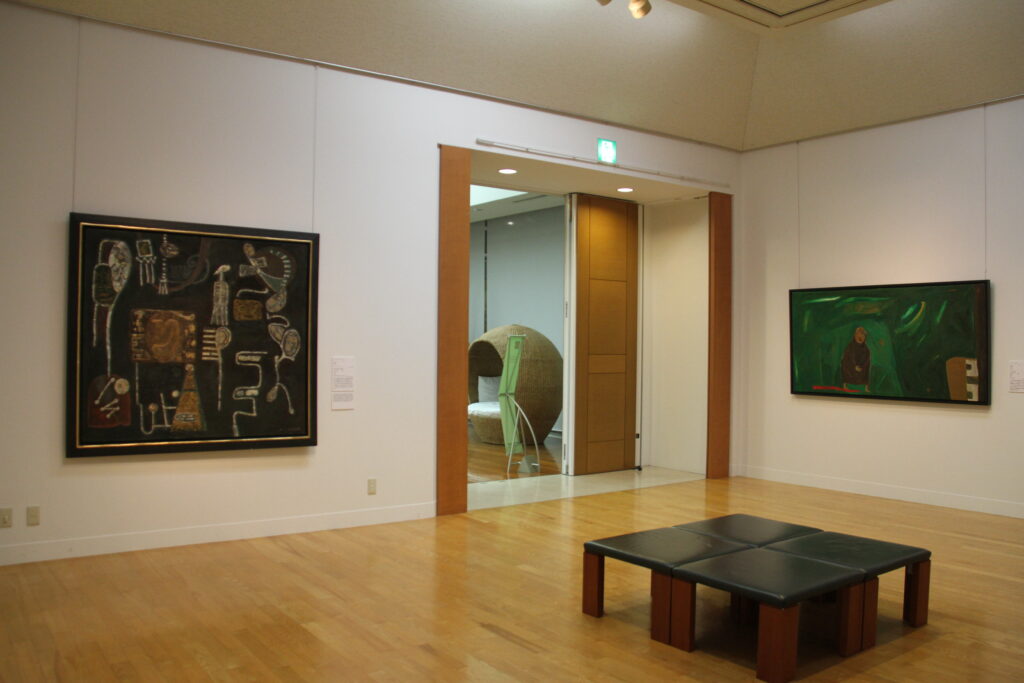
This exhibition introduces Vietnamese art from the 1940s to the present with a focus on entrusted works from three Japanese art collectors. Currently, Fukuoka Asian Art Museum obtains approximately four hundred entrusted works of Vietnamese art. This exhibition introduces about sixty works including fifty entrusted works and FAAM collections.
Three Japanese collectors visited Vietnam between the 80s and 90s, and built unique collections of their own. The first collection includes modern art between the 40s and 60s including lacquer paintings, a unique genre of Vietnamese art, and small-size oil and watercolor paintings of the wartime era. The second collection is the original of a series of propaganda posters created mainly during the Vietnam War to boost anti-U.S. sentiment. The third collection is the contemporary works in the post-war era after the country recovered its peace including landscape paintings that depicts peaceful green villages. In the midst of turbulent times, the Vietnamese artists created works that reflect their society in multiple fields of art, from traditional silk and lacquer to oil and watercolor, and by using various media, such as book illustrations, and posters.
Please enjoy the fascination of Vietnamese art through the images of Vietnam that exist in the heart of the Japanese collectors.
Vietnam on My Mind is an associate program of Focus on Asia International Film Festival Fukuoka 2016. The exhibition is assisted by a Vietnamese art specialist curator from our partnering museum, the National Gallery Singapore.
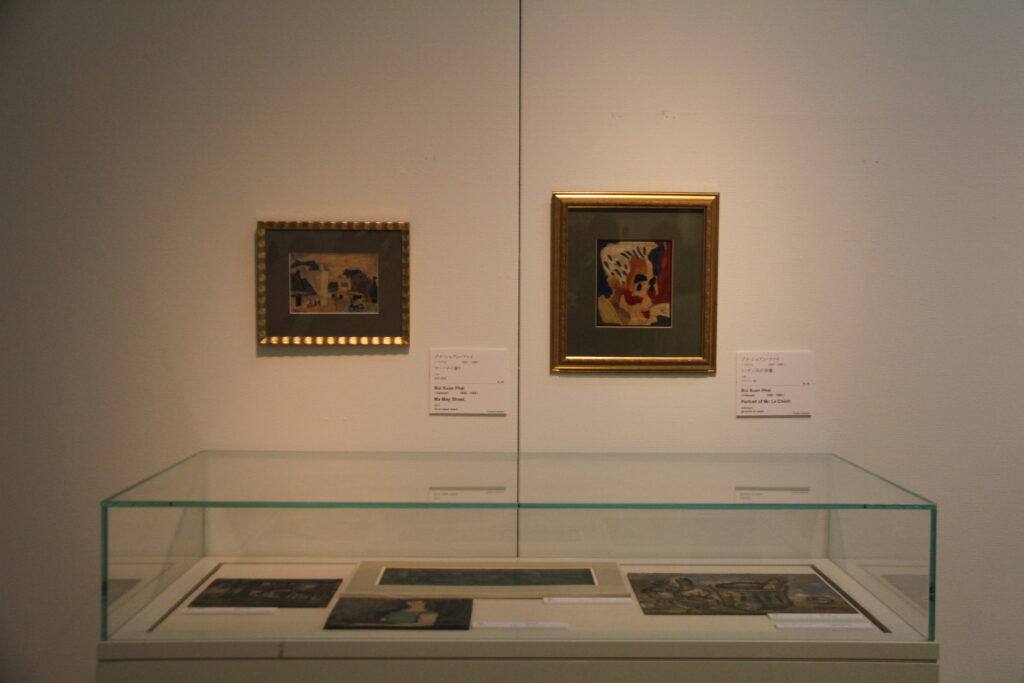
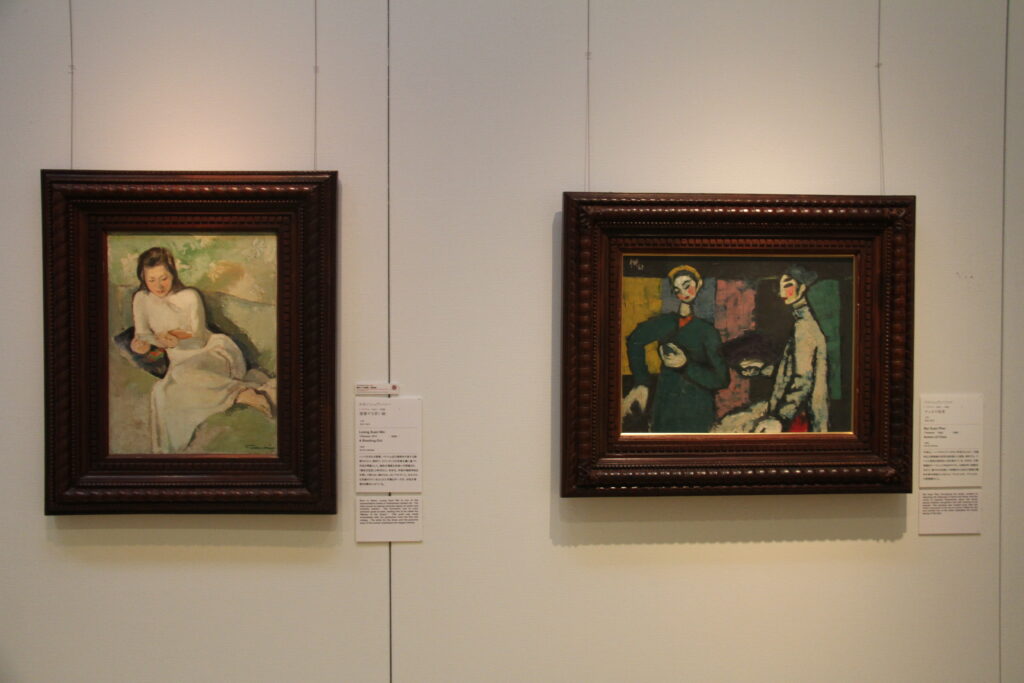
Bui Xuan Phai (1920-1988)
Bui Xuan Phai is a nationally acclaimed artist in Vietnam. He was born in Hanoi, and studied at Ecole des Beaux-Arts de I’lndochina. Throughout his long career, he painted a wide variety of subject, such as portrait, still object, theater, village and seaside landscape, townscape, and the war. Bui Xuan Phai loved Vietnamese Opera, Cheo, and painted the actors and the musicians of Cheo throughout his life. A series of his painting of Hanoi’ s old quarter became so popular that people named the street depicted in his works “Phai Street.” His style of Hanoi’ s landscape painting created numerous followers. Geometric composition and texture of the paint on the canvas show that the artist was exposed to Cubism and Fauvism.
Nguyen Quang Tho (1929-2002)
Nguyen Quang Tho is a painter born in Hanoi. Since the early years, the artist fought the First Indochina War (1946-54). In 1955, the he was sent to the secondary school of Fine Arts, and became a war painter after his graduation from the school. The artist experienced numerous battlefields as a war painter, and also as a combatant. His lacquer and oil paintings were highly regarded in its energetic style and the theme, “flight for the independence and the freedom of the home country.” The exhibited works are a series of watercolor paintings, which were a created at early stage of his career, shortly after entering the secondary school of Fine Arts.
Nguyen Sang (1923-1988)
Nguyen Sang is known as a patriotic painter, and studied at Ecole des Beaux-Arts de I’lndochina in Hanoi. He graduated the school in 1945, the same year the Democratic Republic of Vietnam was established. Nguyen Sang designed the bank bill for the new nation, and continued creating the works that show people’ s revolution and resistance to the state power as a leading figure in the resistant art in Vietnam. On the other hand, he depicted portraits of his friends, people and a woman as well as his surrounding objects like rural landscape and animal. Through his career, the artist developed his original and modern style of painting, which is characterized by his bold depiction of the object using thick black outline.
Nguyen Tu Nghiem (1922-2016)
Nguyen Tu Nghiem is a painter born in Nghe An, North Central region of Vietnam, and studied at Ecole des Beaux-Arts de I’lndochina. In 1947, the artist, with To Ngoc Van and others, joined the Leagues for Independence of Vietnam (Viet Minh), and created propaganda poster and lacquer painting applying the style of social realism. After the 1960s, Ngheim took distance from the art world of North Vietnam, and developed his unique style by researching the Vietnamese rural life and people’ s customs. He depicted Saint Giong (a mythical folk hero in the history of Vietnam), ancient dance, animals of the Chinese zodiac, and playing children in simple and rhythmic line using various media, such as lacquer, silk, oil, and watercolor. He became known after his first large-scale solo exhibition in 1985, and his works influenced the later generations.
Le Huy Hoa (1932-1997)
ベトナム北部ヴィエトバックのジャングルに開校された美術学校(旧インドシナ美術学校の流れをくみ、レジスタンス美術学校として1950年に開校)で学ぶ。1957年からはアニメーション制作所の中心的な画家として活躍した。展示中のサーカスをテーマにした作品には、アニメーションの世界に通じる色彩感覚や大胆な意匠が見られる。ベトナム戦争期には多くの画家と同様に抗米意識を宣揚する絵画を制作し、戦争終結後は抽象表現やシュルレアリスム絵画を制作するようになった。
Ta Ty (1920-2004)
Ta Ty is a painter born in Hanoi, and studied at Ecole des Beaux-Arts de I’lndochina. The artist moved to South Vietnam after the nation was divided in 1954, and then to the United States after the Vietnam War. Ta Ty brought Cubism and abstract painting to modern art scene in Vietnam. It was in his school days that Ta Ty became interested in Pablo Picasso, Georges Braque, and Henri Matisse. He then committed himself to Cubism after 1945. In his Saigon era in the 50s, the artist experimented geometric abstract style using oil and acrylic (water-resistant) paint. He also left many portraits of intellectuals in South Vietnam, and cartoons, which reflect his unique sense of humor and cynicism. While he had been forgotten in the history of Vietnamese modern art since he was active in the South, his works have been reevaluated lately.
Nguyen Gia Tri (1908-1993)
As lacquer became a subject in Ecole des Beaux-Arts de I’lndochina, a new genre of lacquer painting emerged independent of existing lacquer decoration in craft. The artist became a leading painter of this unique genre in Vietnamese modern art, and raised the aesthetic level of lacquer painting. A series of romantic and smooth depictions of female figure enveloped in shinny and fantastical atmosphere reflects a sense of modernity in new generation.
In this exhibition, you will also find a collage work, which is believed to be a concept drawing of his lacquer painting, and an
abstract painting, which shows an experimental aspect of the artist. From these works, we see that the artist continued searching for various themes and styles without staying the well-established field of female painting.
Nguyen Tien Chung (1914-1976)
Nguyen Tien Chung is a painter born in Hanoi, and studied at Ecole des Beaux-Arts de I’lndochina. He is known for his soft and idyllic depiction of Vietnamese farmer, worker, and soldier. Especially, his silk and lacquer painting of farmers working in the vast rural landscape on a wide stretched horizontal canvas is highly acclaimed. In the early stages of his career, the artist explored romantic silk painting, and later the lacquer painting and the woodcut print based on his study on the Vietnam’ s popular styles of woodcut print, such as Hang Trong and Dong Ho Painting. He also contributed to educate the young generations through the painting class he opened around 1950. Tien Chung conducted his solo exhibition in 1964, and a retrospective exhibition was done at Vietnam National Museum of Fine Arts in 1990.
Illustration for “The Tale of Kieu”
1942
woodcut on paper, Private Collection
“The Tale of Kieu” is an epic poem and is widely regarded as the most significant work of Vietnamese literature. In the early
19th century, Nguyen Du, a Vietnamese writer, made use of the plot of a Chinese novel, Kim Van Kieu. The story tells the readers the lessons in life from turbulent life of Thuy Kieu, a main female character, including her love and family troubles, and is widely known in Vietnam as a national literature. This section introduces eleven illustrations from the 1942 edition by Quang Tri-Hue Association. The illustrations are done by then popular artists, such as Nguyen Do Cung, and To Ngoc Van.
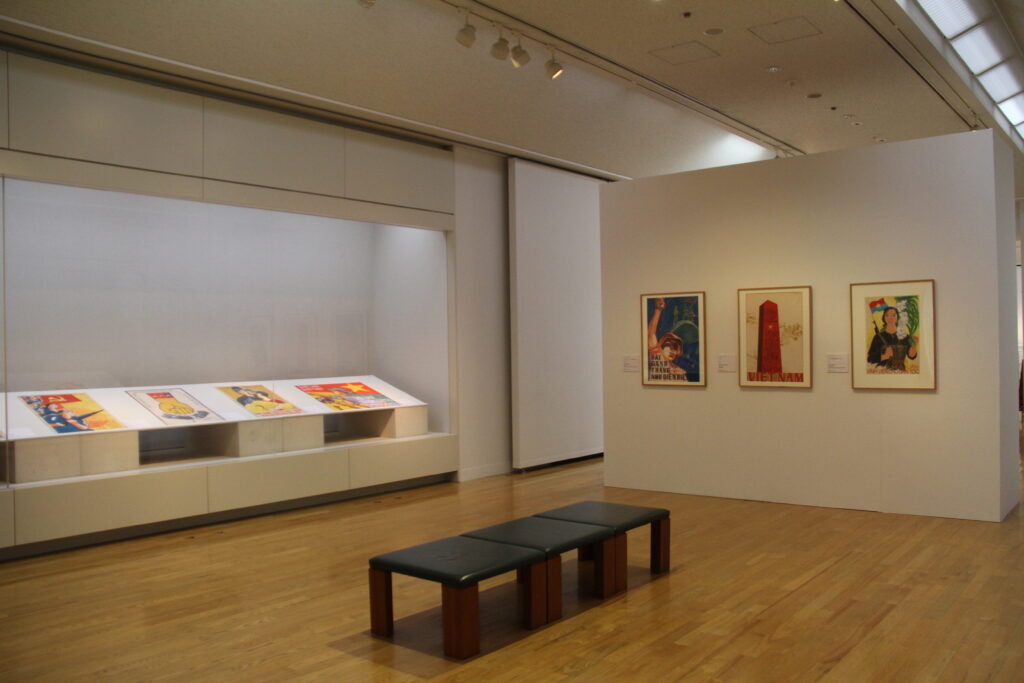
Propaganda Posters in Vietnam
In Vietnam, various propaganda posters were printed since the First Indochina War (1946-54). Especially, in the late 1960s
of the Vietnam War, mass produced posters were found everywhere in the town. These posters depicted the people fighting in the battle and working hard for boosting the anti-U.S. sentiment in the North Vietnam. The posters were distributed through the state government or the art associations belonged to the local governments. Due to the wartime shortage, the artists obtained paint and paper from
the government to create the poster. In the postwar era, the posters were used to publicize the national conventions, the national plans, and the anniversaries. This section introduces the original of the poster created between 1960 and 1980.
| Venue | Asia Gallery |
|---|---|
| Admission | Adult \200 /College & High School \150 |
| Organiser | Fukuoka Asian Art Museum |